1. At a Glance – Blink and You’ll Miss the Margins
Marvel Decor Ltd currently trades around ₹71, commanding a market cap of roughly ₹126 crore, which officially puts it in that awkward SME zone where expectations are high but patience is low. In the last three months, the stock has politely disappointed investors with a drawdown of more than 20%, while the one-year return reads like a warning label at -44%. And yet, the latest quarterly sales are ₹36.97 crore, up nearly 20% YoY, with PAT of ₹2.06 crore. The business is growing, the blinds are selling, the experience centres are opening, and clients include Reliance, Parliament of India, and Emirates NBD. On paper, Marvel Decor looks like a lifestyle success story. But then you glance at ROCE of ~8%, ROE under 7%, a P/E north of 33x, and suddenly you’re wondering: are we paying luxury-brand multiples for middle-class returns? This article is basically that curiosity turned into a full forensic audit—with jokes.
2. Introduction – When Curtains Rise, Numbers Speak
Marvel Decor is not a startup chasing buzzwords. It’s a design-meets-manufacturing company operating in the window-covering fashion blinds segment. Think blinds, not Bollywood blinds—although the valuation drama sometimes feels cinematic. The company has steadily built a wide product catalogue, pan-India presence, and even global subsidiaries. It has survived multiple cycles, pivoted from plain vanilla products to smart motorized systems, and positioned itself as a “lifestyle interiors” brand rather than a commodity supplier.
But here’s the thing, Prashant: the market doesn’t clap for effort, it claps for ratios. And Marvel Decor’s ratios are… polite, not impressive. Revenue is growing at ~19% TTM, profit growth over five years looks great at 69%, but the recent TTM profit growth is negative. Margins are shrinking, working capital is bloated, and inventory days look like a phone number.
So the question isn’t whether Marvel Decor is real—it very much is. The real question is whether the business model is scalable enough to justify its valuation without turning promoters into motivational speakers every quarter. Let’s pull the blinds up.
3. Business Model – WTF Do They Even Do?
Marvel Decor designs, manufactures, and supplies window-covering fashion blinds and components. That includes over 16 types of blinds—Roman, Roller, Vertical, Wooden, Skylight, Panel—the entire Pinterest starter pack. They also offer 10+ operating systems, from manual chains to motorized systems compatible with Alexa and Google Home. Translation: they want your curtains to listen to you.
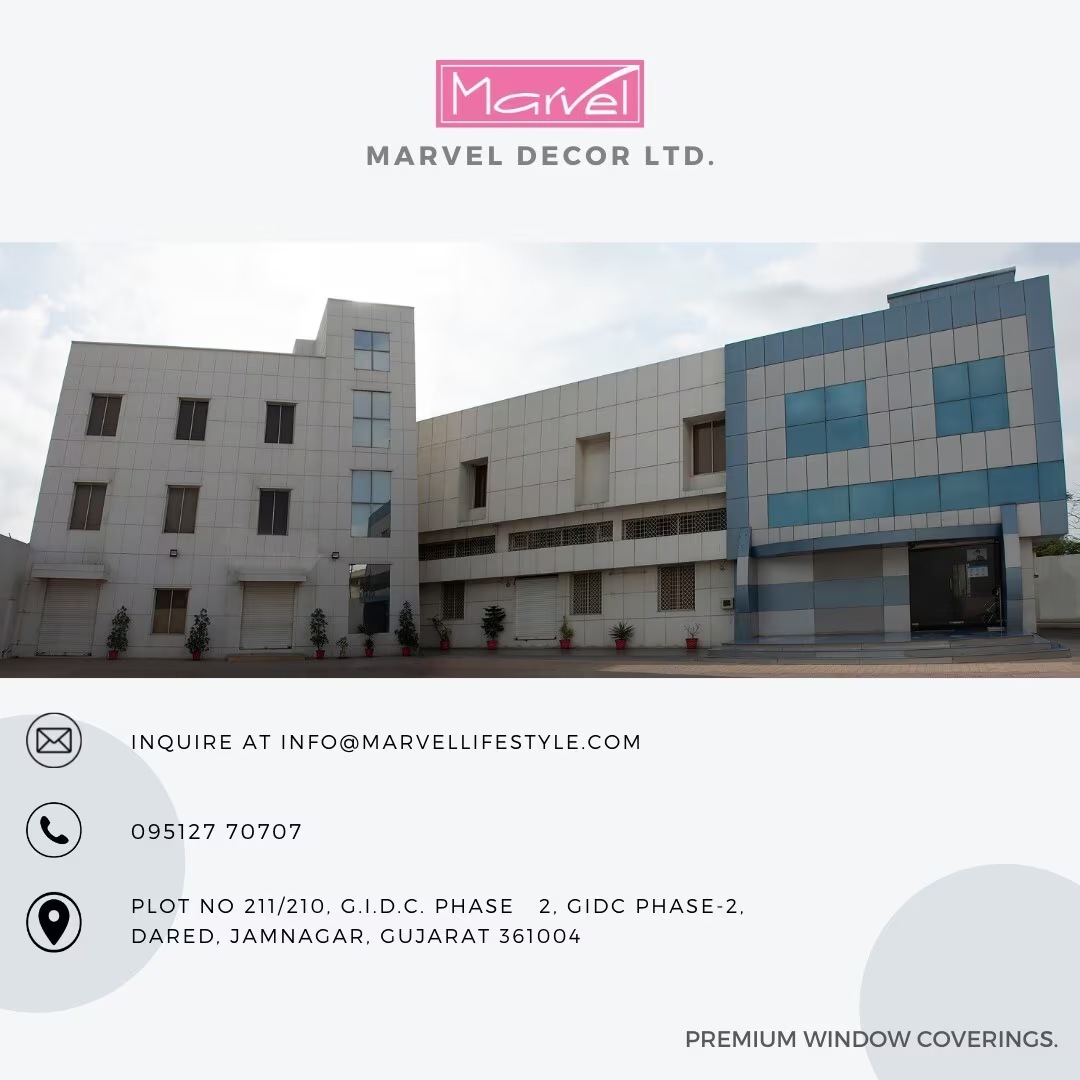
The company operates under two brands: Marvel domestically and Callistus internationally. Manufacturing facilities are in Jamnagar (Gujarat) and Dubai, while experience centres and galleries help them woo architects and interior designers. The distribution network spans 245+ Indian cities and 20+ countries globally, supported by 400+ channel partners.
The model is B2B-heavy with B2C flavour. Architects, designers, institutions, and marquee projects form the backbone. This means sales cycles are longer, working capital is higher, and receivables can test your patience. The upside? Sticky clients