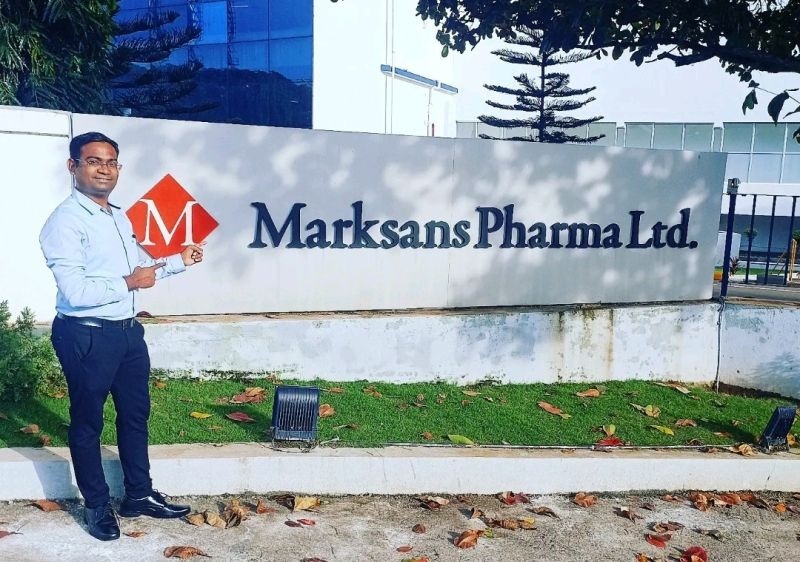
Marksans Pharma FY26: ₹990 Cr in Cash and a Sudden Urge to Shop in Europe
Date of Publishing -
Spotted a factual error — a wrong number, date, or fact? Tell us and we will check the source.
Section 1 — At a Glance
Marksans Pharma closed FY26 with a consolidated revenue of ₹2,951 Cr, marking a 12.5% jump, while profit after tax (PAT) surged to ₹420 Cr. For a generic formulations player swimming in a notoriously volatile regulatory landscape, the company has built a balance sheet that borders on defensive paranoia. They sit on approximately ₹990 Cr in net cash, rendering their ₹343 Cr in borrowings entirely superficial.
However, beneath the headline growth, there are clear friction points demanding investor attention. Management has openly flagged a 20% to 30% inflationary spike in petroleum-linked raw materials for Q1 FY27, citing geopolitical and supply chain disruptions. Furthermore, working capital days remain elevated at 138 days, largely driven by deliberate inventory hoarding to front-run these very supply shocks. On the capital allocation front, the cash pile is finally being deployed, starting with the €7.5 million acquisition of Netherlands-based QliniQ B.V. to force a foothold into the European market. A fortress balance sheet buys patience during supply shocks, but idle cash eventually dilutes return on equity. The next 12 months will test whether Marksans can protect its 20.4% operating margins while translating its cash drag into acquisitive growth.
Section 2 — Introduction
Marksans Pharma has spent the last three decades quietly manufacturing the pills that people buy when they don’t want to pay for the logo on the box. Operating out of four manufacturing facilities across India, the US, and the UK, they have scaled to a staggering capacity of 26 billion units per year. They aren’t trying to discover the next miracle molecule; they are focused on ensuring that when a headache strikes in London or a cough starts in New York, their formulations are already sitting on the shelf. The strategic playbook is distinctly straightforward: acquire scalable facilities, secure the requisite Western regulatory nods, and pump out volumes.
Section 3 — Business Model: WTF Do They Even Do?
Marksans is the ghost in the global pharmacy aisle. A massive 74% of their FY24 revenue came from Over-The-Counter (OTC) products, with the remaining 26% from prescription drugs. They are a premier private-label manufacturer. If you buy a generic painkiller from Walmart, Target, or Tesco, there is a very good chance Marksans made it in their Southport or Goa facility.
They effectively bypass the brutal marketing spend of branded pharmaceuticals by letting the world’s largest retail chains do the selling. The US accounts for roughly half their revenue, while the UK brings in nearly 40%. They produce 26 billion units of medication a year—which is enough to treat a large continent, or one very anxious hypochondriac. It’s a low-glamour, high-volume grind, and they have optimized it to an art form.
Does a business relying on retail giants for distribution actually possess pricing power, or are they just a glorified outsourced factory?
Section 4 — Financials Overview
Figures are consolidated, in ₹ crore.
Metric
Latest Quarter (Q4 FY26)
YoY
QoQ
Revenue
856
+20.9%
+13.5%
Operating Profit
195
+53.5%
+21.1%
PAT
149
+63.7%
+30.7%
EPS
3.27
–
–
The Q4 numbers are what we’d call a quietly excellent Tuesday. Revenue hit an all-time quarterly high, driven largely by the UK formulations segment, which finally shook off its early-year price pressures. The operating margin expansion to 22.8% in Q4 (up from 18% a year ago) is a testament to operating leverage kicking in at the Goa facility.
Management was remarkably candid on the concall regarding Q1 FY27 raw material inflation, acknowledging a 20-30% cost escalation. Yet, their posture was fascinatingly calm. Instead of rushing to hike prices and alienate major retail partners, management said, “we would like to wait and watch… the last thing we need is to press a panic today.” When input costs spike, true pricing power is the ability to delay renegotiations without bleeding