Manappuram Finance Ltd Q2FY26 – RBI Ban, Bain Billion-Dollar Entry & a Comedy of Cash Flows
1. At a Glance
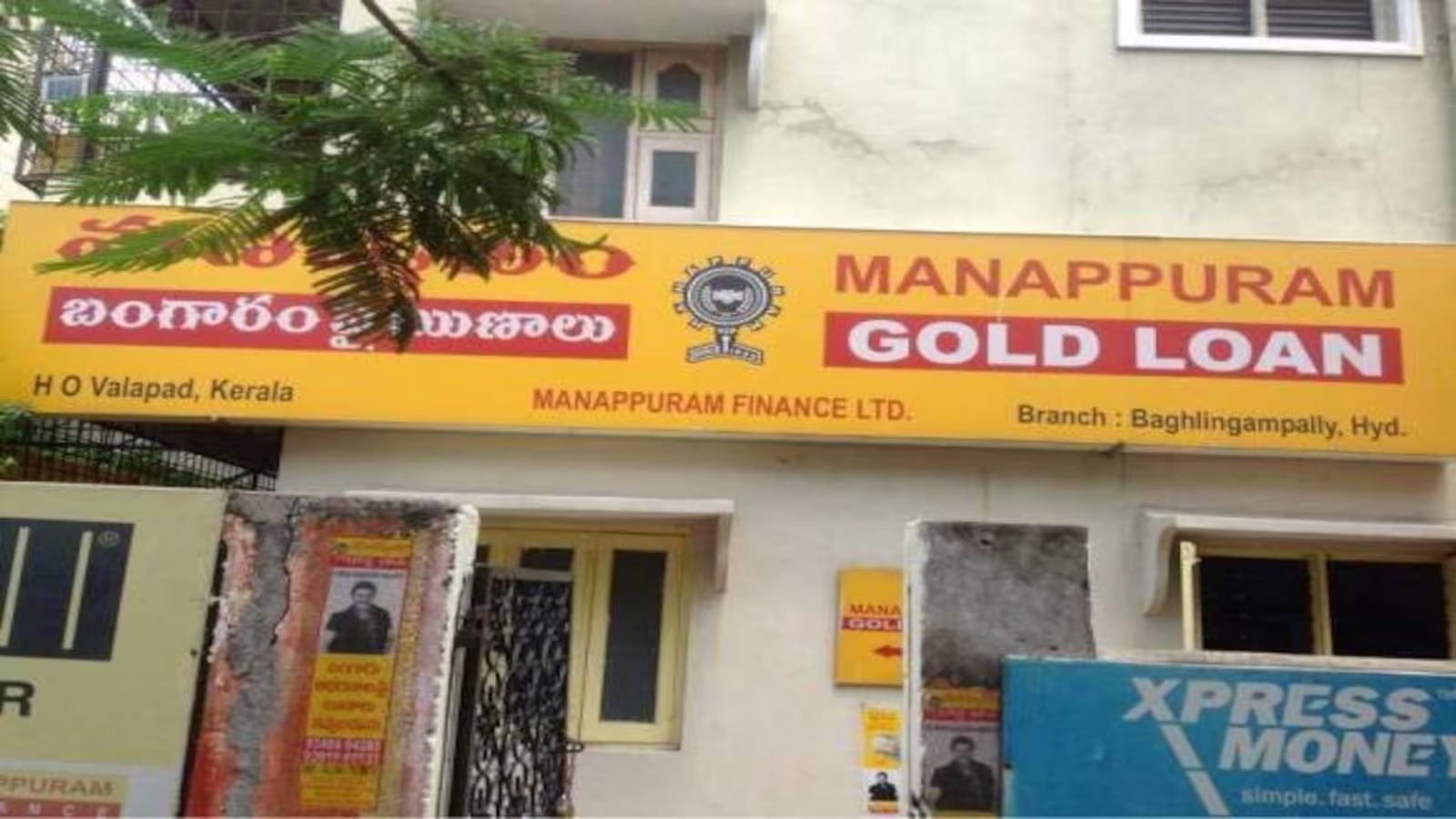
If “Gold Rush” had a South Indian remake, Manappuram Finance Ltd (MFL) would be its lead actor—wearing 24-carat confidence and 9.2% cost of borrowings. At ₹275 a share and a market cap of ₹23,268 crore, this non-banking bling machine is India’s second-largest gold loan NBFC, juggling 4,000+ branches, 45,700 crore AUM, and a headline that reads: “RBI bans microfinance arm, Bain Capital walks in with ₹4,384 crore, and profit falls 61%—all in one fiscal quarter.”
Quarterly revenue at ₹2,283 crore (down 13.3% QoQ) and PAT at ₹217 crore (down 61.5%) look like they were audited by Newton’s law of gravity. EPS too fell from ₹6.74 to ₹2.60 in just two quarters—ouch. The stock still trades at a P/E of 51.8x, because the market apparently values drama as much as gold.
But wait—amidst the chaos, ROE of 10.1% and ROCE of 11% hint that the vault isn’t empty. With borrowings rising to ₹38,366 crore and a debt-to-equity ratio of 3.02, the company remains financially leveraged like an old-school Hindi soap plot.
Question for the reader: Would you trust a company that lends money on gold and still struggles for liquidity? Let’s dig.
2. Introduction – The Gold Loan Godfather and His Moody Cousins
Manappuram Finance started off as the friendly neighbourhood lender in Kerala who’d accept your thaali chain for a quick cash fix. Today, it’s evolved into a ₹45,700 crore AUM empire that also flirts with microfinance, MSME loans, and vehicle financing.
But FY25 and FY26 have been a Netflix-worthy season:
RBI bans its microfinance arm Asirvad Micro Finance Ltd (AMFL) for overpricing loans.
Enforcement Directorate raids offices for “money laundering.”
Bain Capital swoops in with a ₹4,384 crore investment.
And the Board declares dividends because… why not?
This NBFC’s story is a mix of melodrama, margins, and metal. The gold loan segment (53% of AUM) remains the crown jewel, but the microfinance arm (24% of AUM) has been both its growth engine and its biggest compliance headache.
Meanwhile, digital transformation is happening faster than Manappuram’s auditors can keep up. Its Online Gold Loan (OGL) now accounts for 74% of total gold AUM—up from 44% just three years ago. Clearly, Indians now prefer pawning their gold from their phones rather than queuing up outside a branch.
So while the market rewards Manappuram’s tech evolution, the regulators seem to be binge-watching its mistakes.
3. Business Model – WTF Do They Even Do?
Manappuram’s business is delightfully simple to explain and devilishly complex to execute.
1. Gold Loans (53% of AUM): You pledge your family gold, they give you cash, and everyone prays gold prices don’t fall. With an average ticket size of ₹62,500 and tonnage of 59.7 tonnes (Q2FY25), it’s India’s second-largest player after Muthoot.
2. Microfinance (24% of AUM): Through its subsidiary Asirvad Micro Finance Ltd, it lends to 4.2 million low-income women entrepreneurs who repay better than some listed corporates. However, RBI found their rates a bit too spicy, leading to a temporary ban on fresh disbursements.
3. Vehicle & Equipment Finance (11%): Loans for trucks, commercial vehicles, and other assets. This is where bad loans go to take a nap—NPA pressure is higher here.
4. MSME & Housing (12% combined): Small-ticket secured loans, often against property or gold. Growth here is steady but margins thinner.
In short, it’s a gold-backed lending bazaar with fintech flair and regulatory hairpins. They make money on spreads, lose sleep over compliance, and market themselves as “digital-first” because every NBFC does that now.
Question: If 74% of gold loans are already online, will Manappuram’s next product be “Digital Pledge on UPI”?
4. Financials Overview
Metric (₹ Cr)
Q2 FY26 (Latest)
Q2 FY25 (YoY)
Q1 FY26 (QoQ)
YoY %
QoQ %
Revenue
2,283
2,633
2,262
-13.3%
+0.9%
EBITDA (Approx)
1,052
1,191
1,028
-11.7%
+2.3%
PAT
217
572
132
-62.0%
+64.4%
EPS (₹)
2.6
6.7
1.6
-61.5%
+61.5%
Quarterly earnings look like a hill slide—steep on one side, slow recovery on the other. Despite falling revenues, Manappuram remains operationally solid with financing profit margins back to 17% after dipping to 8% last quarter.
5. Valuation Discussion – The Fair Value Guessing Game
Let’s put on our auditor glasses and estimate a fair value range, purely for educational amusement.
P/E Approach: FY26 annualised EPS = ₹2.6 × 4 = ₹10.4 Industry P/E ≈ 23× ➡️ Fair Value Range (P/E): ₹240 – ₹300