Mahindra EPC Irrigation Limited is currently standing at a fascinating, albeit precarious, crossroads. On one hand, you have the muscle of the Mahindra & Mahindra brand—a name that carries weight in every rural pocket of India. On the other, you have a business model that is effectively a hostage to state government budgets and the wild swings of global crude oil prices.
The latest numbers are out, and they tell a story of a company sprinting to stand still. While the Trailing Twelve Months (TTM) profit growth is a staggering 97%, the ground reality is far more complex. We are seeing a massive surge in receivables (₹217 crore), mostly tied up in government subsidies. The company is essentially selling products and then waiting nearly 254 days to see the cash. That is not just a “working capital cycle”; that is a test of endurance.
Investors are taking notice. The company is shifting its weight, trying to lean less on the erratic “Subsidy Business” and more on “Non-Subsidy” segments, which have grown from a negligible 2% to 35% of revenue in six years. This is a bold move to shock-proof the balance sheet, but with raw material costs (HDPE) spiking by nearly 60% in early 2026, the margin for error has vanished.
1. At a Glance – The Mahindra Shield vs. The Subsidy Sword
Let’s be brutally honest: Mahindra EPC Irrigation is a small fish in a very regulated pond. With a Market Cap of just ₹322 Cr, it is a micro-cap play inside a mega-cap ecosystem. The connection to Mahindra & Mahindra (which holds 54.2%) is the only reason this company isn’t being crushed by the weight of its own receivables.
The Red Flags are waving high:
- The Debtors Demon: Imagine running a shop where your customers take 8 months to pay you. That is the reality here. The debtor days have ballooned to 254 days.
- Cash Flow Crisis: For years, the Free Cash Flow (FCF) has been negative. In FY26, the CFO/OP ratio was -76%. The company is making “paper profits,” but the cash is stuck in government files.
- The Commodity Trap: They make pipes from plastic resins (derivatives of crude). In February 2026, prices jumped nearly 60%. Since the government fixes the selling price for the subsidy business, Mahindra EPC can’t just hike prices to protect its margins. They have to swallow the cost.
The Silver Lining: The management isn’t blind. They are aggressively pushing into “Non-Subsidy” streams, which now contribute 35% of the topline. They are moving toward a “Cash and Carry” model. If they can successfully pivot away from being a “government contractor” to a “retail agri-solution provider,” the valuation narrative changes completely.
The industry itself is a goldmine of potential. Only 18% of India’s 72 million hectares of potential land is under micro-irrigation. The “whitespace” is massive, but as we’ve seen, potential doesn’t pay the bills—collections do.
2. Introduction – A 40-Year Journey in the Dust
Incorporated in 1981, this company has seen every cycle of Indian agriculture. Originally known as EPC Industries, it was the classic turnaround bet when Mahindra & Mahindra stepped in 2011. Since then, it has been integrated into the Mahindra “Agri-Business” vertical.
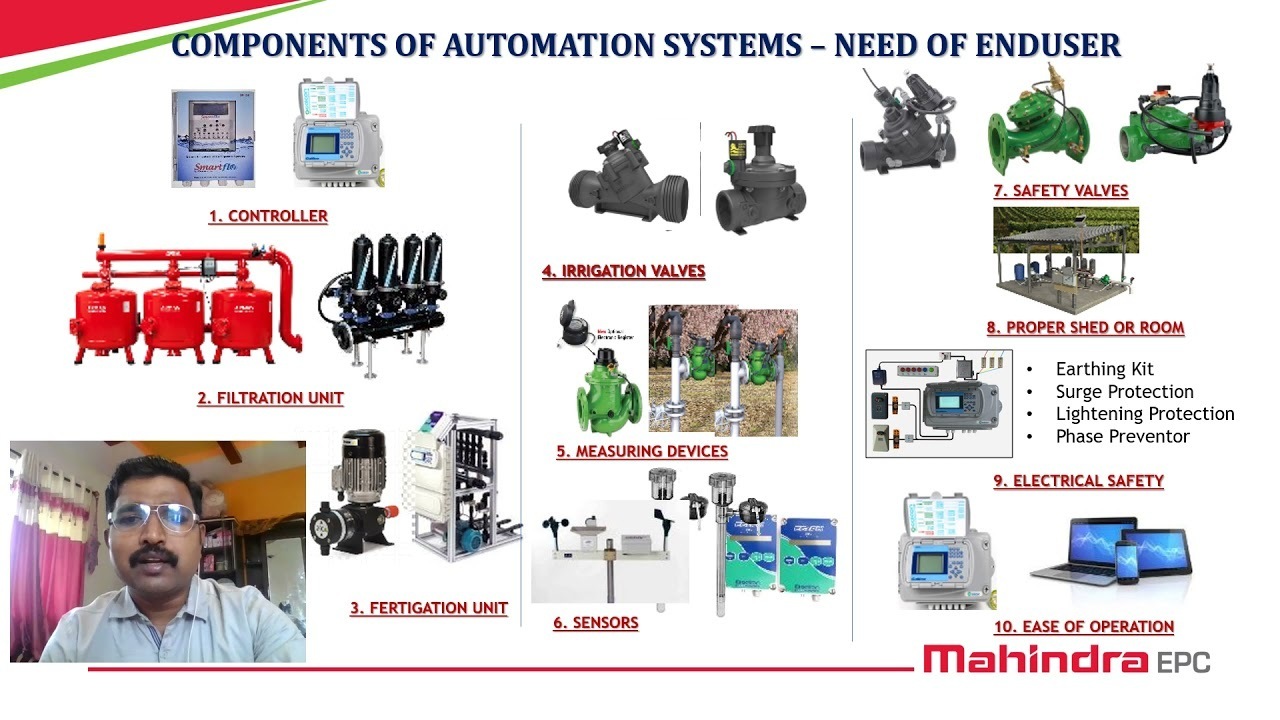
They don’t just sell pipes; they sell “precision farming.” From Drip Irrigation and Sprinklers to HDPE pipes and Automation Systems, they provide the nervous system for a modern farm.
The company operates out of three main hubs: Nashik, Vadodara, and Coimbatore. This distributed manufacturing is their secret weapon to keep freight costs low. However, the business is seasonal. H1 is often washed out by monsoons (as seen in FY26), and H2 is a mad scramble to meet government targets before the fiscal year ends.
3. Business Model – WTF Do They Even Do?
Think of Mahindra EPC as the plumber for India’s farmers. They manufacture the tubes, the emitters, and the filters that ensure water reaches the root of a plant rather than just flooding the field.
The Revenue Split:
- Sale of Products (~99%): The bread and butter. Selling the hardware.
- Services (~1%): Installation and scrap.
The Real Split (The one that matters):
- Subsidy Business: High margin, but you wait forever for the money. The government pays a huge chunk of the farmer’s cost, but “files don’t move” fast.
- Non-Subsidy Business: Lower margin but “Cash and Carry.” This includes exports to Africa (currently <1% but a focus area) and high-tech community irrigation projects.
They also had a Joint Venture with an Israeli firm, Mahindra Top Greenhouses, which was supposed to be the “next big thing” in protected cultivation. Update: It failed. The operations were discontinued in FY24 due to weak performance. It’s a reminder that even the “Mahindra touch” doesn’t turn everything to gold.
4. Financials Overview – The Q4 FY26 Breakdown
The latest quarter was a mix of volume growth and margin pain. While sales were up, the “Resin Shock” of early 2026 took a bite out of the bottom line.
Key Financial Comparison (₹ Crores)
| Metric | Q4 FY26 (Latest) | Q4 FY25 (YoY) | Q3 FY26 (QoQ) |
|---|---|---|---|
| Revenue | 107.00 | 95.89 | 93.47 |
| EBITDA | 7.04 | 9.59 | 10.46 |
| PAT | 4.79 | 6.25 | 6.49 |
| EPS (Quarterly) | 1.71 | 2.24 | 2.32 |
| Annualised EPS | 4.54 | – | – |
Export to Sheets
Witty Commentary: The revenue grew 11.6% YoY, but the Profit After Tax (PAT) fell by 23.4%. Why? Because in February 2026, raw material prices behaved like a rocket ship while their selling prices were stuck on the launchpad. Management did manage to save 1% on material costs over the full year, but Q4 was a different beast entirely.
Financial Wisdom: Revenue is vanity, Profit is sanity, but Cash is reality. Mahindra EPC has the vanity, is struggling for sanity, and is searching for reality.
5. Valuation Discussion – What’s the Fair Price?
Calculating the value of a micro-cap with erratic cash flows is like trying to catch a greased pig.
Method 1: Price to Earnings (P/E)
- Current Stock P/E: 22.7
- Industry P/E: 32.8
- Annualised EPS: ₹4.54
- Applying a conservative P/E of 20x to 25x (given the debt collection risks).
- Range: ₹90.80 – ₹113.50
Method 2: EV/EBITDA
- FY26 EBITDA: ₹22 Cr
- Enterprise Value (EV): ₹365 Cr
- Current EV/EBITDA: ~16.5x
- If we normalize EBITDA to ₹25 Cr (assuming better RM prices).
- Range: ₹95 – ₹115
Method 3: DCF (Discounted Cash Flow)
Given the negative Free Cash Flow history, a DCF requires a “leap of faith” that receivables will normalize. Using a 12% discount rate and a 4% terminal growth.
- Range: ₹105 – ₹125
Fair Value Range: ₹95 – ₹120
Disclaimer: This fair value range is for educational purposes only and is not investment advice.
6. What’s Cooking – News, Triggers, and Drama
The board meeting on April 21, 2026, was a busy one. Not only did they approve the results, but they also dropped a bombshell: a Material Related Party Transaction (RPT) contravention. They’ve actually filed a settlement application with SEBI. It’s a classic “oops” moment for a corporate giant.
The Order Book: As of April 2026, they have a pipeline of ₹54 Cr with another ₹20 Cr potential upside. They are winning decent government contracts, like the ₹17.95 Cr order in March for pressurized systems.
Management Shakeup: They also announced changes in the Company Secretary and KMP (Key Managerial Personnel) positions. When the “back office” shifts during a period of financial stress, it usually means a tightening of internal controls.
7. Balance Sheet – The Weight of the Wait
We are looking at the Consolidated figures for March 2026.
| Particulars | Mar 2026 (₹ Cr) | Mar 2025 (₹ Cr) | Mar 2024 (₹ Cr) |
|---|---|---|---|
| Total Assets | 352 | 292 | 257 |
| Net Worth | 185 | 173 | 165 |
| Borrowings | 45 | 25 | 16 |
| Other Liabilities | 121 | 94 | 76 |
| Total Liabilities | 352 | 292 | 257 |
Export to Sheets
The Sarcastic Auditor’s Take:
- Borrowings jumped from ₹25 Cr to ₹45 Cr. Why? Because the government hasn’t paid their bills, so Mahindra has to borrow to buy more plastic.
- Total Assets grew by ₹60 Cr, but ₹76 Cr of that is just people who owe them money (Receivables).
- The Net Worth is growing slower than the liabilities. It’s like buying a bigger house by taking a bigger loan while your salary stays the same.
8. Cash Flow – Sab Number Game Hai
The Cash Flow statement is where the “Mahindra Magic” meets the “State Government Reality.”
| Year | Operating Cash Flow (₹ Cr) | Investing Cash Flow (₹ Cr) | Financing Cash Flow (₹ Cr) |
|---|---|---|---|
| Mar 2026 | -16 | -2 | 17 |
| Mar 2025 | -4 | -2 | -4 |
| Mar 2024 | 2 | -2 | 12 |
Export to Sheets
The Story: In FY26, the company generated negative ₹16 Cr from operations. Where did the money go? It’s sitting in the “Receivables” bucket. To keep the lights on, they had to bring in ₹17 Cr from Financing (Borrowings). Essentially, they are borrowing money to fund the government’s delay.
9. Ratios – Sexy or Stressy?
| Ratio | Mar 2026 | Mar 2025 | Witty Judgement |
|---|---|---|---|
| ROE (%) | 7.93 | 4.57 | Better, but still below a fixed deposit rate. |
| ROCE (%) | 10.3 | 7.0 | Improving, but the capital is “lazy.” |
| Debt to Equity | 0.24 | 0.14 | Creeping up. Keep an eye on this. |
| PAT Margin (%) | 4.55 | 2.64 | Skinny margins in a fat-risk business. |
| Debtor Days | 254 | 232 | This is a heart attack waiting to happen. |
Export to Sheets
10. P&L Breakdown – Show Me the Money
| Year | Revenue (₹ Cr) | EBITDA (₹ Cr) | PAT (₹ Cr) |
|---|---|---|---|
| Mar 2026 | 312 | 22 | 13 |
| Mar 2025 | 273 | 14 | 7 |
| Mar 2024 | 262 | 6 | 2 |
Export to Sheets
Commentary: The revenue has grown from ₹262 Cr to ₹312 Cr in two years. That’s the “Mahindra Sales Engine” at work. However, the PAT at ₹13 Cr is still lower than what the company was making back in 2021 (₹19 Cr). It’s a recovery story, not a growth story yet.
11. Peer Comparison – The Smallest in the Yard
| Name | Revenue (₹ Cr) | PAT (₹ Cr) | P/E |
|---|---|---|---|
| Honeywell Auto | 1168 | 121 | 49.8 |
| Kaynes Tech | 1242 | 91 | 59.8 |
| Mahindra EPC | 107 | 4.79 | 22.7 |
Export to Sheets
Notes: While Honeywell and Kaynes are in different manufacturing niches, Mahindra EPC is the “budget” option in the industrial products space. It trades at a lower P/E because its business model is far more volatile. Mahindra EPC is the one crying in the corner while the tech-heavy manufacturers are throwing a party.
12. Miscellaneous – Shareholding and Promoters
- Promoters (Mahindra & Mahindra): 54.20% (Solid, no pledges).
- FIIs: 0.02% (Foreigners have left the building).
- Public: 45.76% (Mostly retail investors hoping for the Mahindra moonshot).
Promoter Roast: M&M is like the rich father who gives his son (EPC) a great brand name and a small allowance (₹20 Cr ICD) but refuses to pay for his fancy new toys (Capex) until he proves he can collect his pocket money (Receivables) on time.
13. Corporate Governance – Angels or Devils?
Being a Mahindra group company usually means top-tier governance. However, the recent Material Related Party Transaction (RPT) contravention is a smudge on the white shirt. They are settling with SEBI, which is better than fighting them, but it shows that even the big guys can trip over the fine print.
The auditors are standard, and board meetings are frequent. There are zero pledges on the promoter shares, which is the ultimate sign of financial health in a small-cap.
14. Industry Roast and Macro Context
The micro-irrigation industry is the definition of “Great Idea, Bad Business.”
- The Idea: Save water, increase crop yield. It’s noble!
- The Business: You sell to farmers who can’t afford it without subsidies. The state government promises the subsidy but pays you when they feel like it. Meanwhile, oil prices (your input cost) change every minute.
It’s a sector where you need the patience of a saint and the pockets of a billionaire. New innovations like Automation and DIY Kits are cool, but until the “Subsidy Raj” is replaced by a direct benefit transfer (DBT) to farmers, this industry will remain a working capital nightmare.
15. EduInvesting Verdict
Mahindra EPC Irrigation is a high-quality name in a low-quality sector. The management is doing the right things—diversifying into non-subsidy business, expanding into North India (UP grew 28%), and keeping debt relatively low.
SWOT Analysis:
- Strengths: Mahindra Brand, 54% promoter holding, zero pledges.
- Weaknesses: 254-day debtor cycle, negative Free Cash Flow.
- Opportunities: 82% of the market is still untapped, potential for Africa exports.
- Threats: Raw material price shocks, state government budget delays.
The Final Word: If you believe in the “Premiumization” of Indian agriculture and think the government will eventually fix the subsidy payment pipeline, this is a recovery play. But if you hate watching your cash get stuck in a government file for 8 months, look elsewhere.
Are you ready to wait 250 days for your paycheck? Let us know in the comments.