Mahindra EPC Irrigation Ltd Q3 FY26 – ₹93.5 Cr Quarterly Sales, 25.7% Profit Jump, and a Balance Sheet That Still Drinks More Water Than the Crops
1. At a Glance
Mahindra EPC Irrigation Ltd is that one stock which looks agri-tech-ish on the outside but behaves like a government tender contractor on the inside. With a market capitalisation of ₹366 crore, a current price of ₹131, and a trailing P/E of 23.4, this Mahindra group subsidiary just posted Q3 FY26 standalone results that finally made shareholders blink twice. Quarterly sales came in at ₹93.47 crore, up 14.8% YoY, while PAT jumped 25.7% YoY to ₹6.49 crore. For a company that has spent multiple years oscillating between losses, break-even quarters, and “bhai next year pakka” optimism, this quarter actually looks… respectable.
ROCE stands at 6.85%, ROE at 4.27%, debt-to-equity is a manageable 0.21, and enterprise value is ₹401 crore. Sounds fine, right? Except returns over 5 years are still -4%, debtor days are a stomach-churning 232 days, and the company hasn’t paid a dividend in ages. This is less “steady Mahindra tractor vibes” and more “irrigation business stuck in monsoon dependency therapy”.
Still, with repeated order wins, margin recovery, and a parentage that scares bankers into behaving politely, the story has entered its interesting phase. Curious whether this is a turnaround irrigation pipe or just another leaky hose? Let’s dig.
2. Introduction – Welcome to the खेत, But With Excel Sheets
Mahindra EPC Irrigation Ltd was incorporated in 1986, back when drip irrigation was considered witchcraft and farmers trusted clouds more than PVC pipes. Fast forward to FY26, and the company sits inside the Mahindra Agriculture Business, under Mahindra & Mahindra Limited’s Farm Equipment Sector, selling micro-irrigation systems, sprinklers, pipes, pumps, and greenhouse solutions.
On paper, this sounds like a dream business. Water scarcity? Check. Government subsidies? Check. Climate change panic? Double check. So why has shareholder wealth creation been flatter than a drought-hit field?
Because Mahindra EPC is not a SaaS startup. It is a tender-driven, working-capital-hungry, subsidy-linked manufacturing business where cash arrives late, margins are seasonal, and execution decides everything. One bad monsoon, one delayed government payment, and suddenly your ROE goes from “meh” to “please don’t ask”.
That said, FY25 and FY26 are showing signs of life. Revenue growth has returned, margins have improved in spurts, and the order book keeps getting replenished with micro-irrigation contracts from state water departments. The question is simple: is this a structural turnaround or just a good monsoon quarter?
Before answering that, let’s first understand what the company actually does when it says “micro-irrigation”.
3. Business Model – WTF Do They Even Do?
Mahindra EPC Irrigation’s core business is selling water in a disciplined manner. Not water itself, but systems that ensure every drop goes exactly where the crop needs it—no drama, no wastage, no neighbour jealousy.
The company operates across multiple product categories:
Drip irrigation systems (flat & round inline driplines)
Sprinkler irrigation systems (including mini-impact sprinklers)
HDPE pipes and coils (3 mm to 315 mm – basically pipes for every mood)
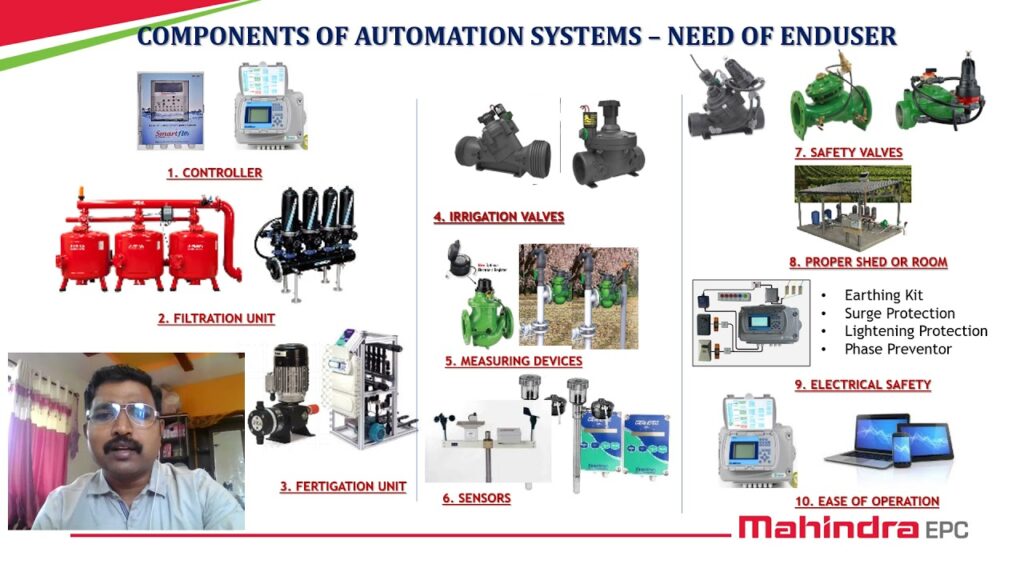
Automation solutions (for farmers who trust sensors more than intuition)
DIY kits, mulch sheets, and accessories that make farming look like IKEA assembly.
Beyond products, the company also offers design services, project management, crop advisory, and technical services, which is a polite way of saying: “We don’t just sell pipes; we also hold your hand till water flows.”
A key strategic element is its Indo-Israel joint venture, Mahindra Top, with TOP Greenhouses Limited from Israel, focused on protected cultivation. Israel, after all, knows a thing or two about farming with no water and lots of hope.
Revenue-wise, FY23 was ~99% product sales, with installation services and scrap contributing just 1%. Translation: this is still a hardcore manufacturing-and-supply business, not a services cash machine.
Exports exist (Uganda, Nigeria, Bangkok), but let’s be honest—this is largely an India-focused, government-linked agri infrastructure play. Which means patience is not optional; it’s mandatory.