Mahindra EPC Irrigation Ltd (MEPCL) just dropped its Q2 FY26 results, and oh boy — it’s like watching a drip irrigation pipe trying to fill a dam. The company reported Revenue of ₹49.6 crore, a marginal dip of 0.88% QoQ, and a PAT of ₹0.43 crore, up 116% — basically, the profits doubled but only because they were tiny to begin with. The Operating Profit Margin (OPM) shrunk to 2.72%, hinting that operational efficiency is still evaporating faster than irrigation water under an Indian summer.
The stock trades at ₹130, with a P/E of 25.8, Market Cap ₹362 crore, and Book Value ₹62.2. It’s modestly valued compared to industry peers like Kaynes Tech (P/E 98) or Honeywell Auto (P/E 61), but those are tech gladiators while MEPCL is a farmer’s wrench in the mud.
The ROCE stands at 6.85% and ROE at 4.27% — the kind of numbers that make your bank FD look adventurous. The company hasn’t paid a dividend since your old Nokia phone had buttons, and Debt stands at ₹36.6 crore, with a comfortable Debt-to-Equity of 0.21.
Still, Mahindra EPC is one of those companies where the “story” keeps investors hooked — irrigation, sustainability, government projects, Indo-Israel JV, and of course, that irresistible Mahindra surname.
So, is it watering profits or just watering hopes? Let’s dig in.
2. Introduction
If micro-irrigation is the art of giving water drop-by-drop to crops, Mahindra EPC seems to have applied the same principle to its profits — drip by drip. Incorporated in 1986, this Mahindra Group entity has been trying to make Indian farming smarter, efficient, and less dependent on the monsoon mood swings of the gods.
But it’s not been an easy harvest. Between subsidy delays, bureaucratic bottlenecks, and fierce competition from other irrigation brands, the company’s journey has been more about endurance than explosive growth. Still, the narrative has shifted recently — as India pushes toward water efficiency, precision agriculture, and PMKSY (Pradhan Mantri Krishi Sinchai Yojana) projects, MEPCL has been quietly bagging government orders like a discount shopper on Diwali.
Over the past year, MEPCL has received multiple micro-irrigation contracts — from ₹3.4 crore to ₹19.2 crore in value — awarded by Water User Associations across different districts. These aren’t blockbuster orders, but in this business, volume and consistency matter more than one flashy jackpot.
And yet, profitability remains fragile. Even though FY25 closed with ₹289 crore in sales and ₹14 crore PAT, margins are still thinner than a dripline tube.
But you’ve got to admire their hustle — a company that has crawled out of consecutive loss years (FY21–22) to now posting consistent quarterly profits, even if small, deserves applause.
Now, let’s see what they actually do — and whether they can make micro-irrigation macro-profitable.
3. Business Model – WTF Do They Even Do?
Mahindra EPC Irrigation Ltd deals in Micro Irrigation Systems — basically, it sells the pipes, sprinklers, driplines, valves, filters, and fittings that make modern farming water-efficient. The company operates under Mahindra & Mahindra’s Farm Equipment Sector, aligning with the group’s grand “Farm-to-Fork” vision.
Here’s the short version: They help farmers use less water, grow more crops, and worry slightly less about the monsoon.
Their product portfolio is extensive:
Drip Irrigation: For water-efficient row crops.
Sprinkler Systems: The classic overhead “rain dance” setup for broadacre crops.
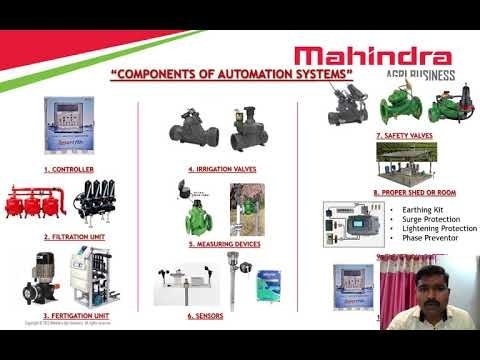
Automation Solutions: IoT-enabled control of irrigation schedules — so the farm can water itself while you scroll Reels.
HDPE Pipes & Coils: Infrastructure backbone of irrigation setups.
Protected Cultivation (Greenhouses): For those growing exotic veggies and Instagram content.
DIY Kits & Mulch Sheets: For small farmers and agripreneurs who like doing it themselves.
They even offer design, crop advisory, and project management — essentially turning irrigation into a service business.
And let’s not forget the Indo-Israel JV — Mahindra Top Greenhouses, which brings advanced greenhouse technology to India. Israel, after all, is the Harvard of irrigation.
But the real charm lies in their execution muscle — contracts with government agencies for Community Micro Irrigation Projects. These bulk projects may be low-margin but keep the factory wheels spinning.
So yeah, it’s not glamorous like EVs or AI, but it’s noble, necessary, and occasionally profitable — kind of like your neighbourhood doctor.
4. Financials Overview
Let’s look at the numbers from Q2 FY26 (ending September 2025):