1. At a Glance
Mahindra EPC Irrigation Ltd (MEPCL) just dropped itsQ2 FY26results, and oh boy — it’s like watching a drip irrigation pipe trying to fill a dam. The company reportedRevenue of ₹49.6 crore, a marginal dip of0.88% QoQ, and aPAT of ₹0.43 crore, up116%— basically, the profits doubled but only because they were tiny to begin with. TheOperating Profit Margin (OPM)shrunk to2.72%, hinting that operational efficiency is still evaporating faster than irrigation water under an Indian summer.
The stock trades at₹130, with aP/E of 25.8,Market Cap ₹362 crore, andBook Value ₹62.2. It’s modestly valued compared to industry peers like Kaynes Tech (P/E 98) or Honeywell Auto (P/E 61), but those are tech gladiators while MEPCL is a farmer’s wrench in the mud.
TheROCE stands at 6.85%andROE at 4.27%— the kind of numbers that make your bank FD look adventurous. The company hasn’t paid a dividend since your old Nokia phone had buttons, andDebt stands at ₹36.6 crore, with a comfortableDebt-to-Equity of 0.21.
Still, Mahindra EPC is one of those companies where the “story” keeps investors hooked — irrigation, sustainability, government projects, Indo-Israel JV, and of course, that irresistible Mahindra surname.
So, is it watering profits or just watering hopes? Let’s dig in.
2. Introduction
If micro-irrigation is the art of giving water drop-by-drop to crops, Mahindra EPC seems to have applied the same principle to its profits — drip by drip. Incorporated in1986, this Mahindra Group entity has been trying to make Indian farming smarter, efficient, and less dependent on the monsoon mood swings of the gods.
But it’s not been an easy harvest. Between subsidy delays, bureaucratic bottlenecks, and fierce competition from other irrigation brands, the company’s journey has been more about endurance than explosive growth. Still, the narrative has shifted recently — as India pushes towardwater efficiency,precision agriculture, andPMKSY (Pradhan Mantri Krishi Sinchai Yojana)projects, MEPCL has been quietly bagging government orders like a discount shopper on Diwali.
Over the past year, MEPCL has received multiplemicro-irrigation contracts— from₹3.4 crore to ₹19.2 crorein value — awarded by Water User Associations across different districts. These aren’t blockbuster orders, but in this business, volume and consistency matter more than one flashy jackpot.
And yet, profitability remains fragile. Even though FY25 closed with₹289 crore in salesand₹14 crore PAT, margins are still thinner than a dripline tube.
But you’ve got to admire their hustle — a company that has crawled out of consecutive loss years (FY21–22) to now posting consistent quarterly profits, even if small, deserves applause.
Now, let’s see what they actually do — and whether they can make micro-irrigation macro-profitable.
3. Business Model – WTF Do They Even Do?
Mahindra EPC Irrigation Ltd deals inMicro Irrigation Systems— basically, it sells the pipes, sprinklers, driplines, valves, filters, and fittings that make modern farming water-efficient. The company operates under Mahindra & Mahindra’sFarm Equipment Sector, aligning with the group’s grand “Farm-to-Fork” vision.
Here’s the short version:They help farmersuse less water,grow more crops, andworry slightly less about the monsoon.
Their product portfolio is extensive:
- Drip Irrigation:For water-efficient row crops.
- Sprinkler Systems:The classic overhead “rain dance” setup for broadacre crops.
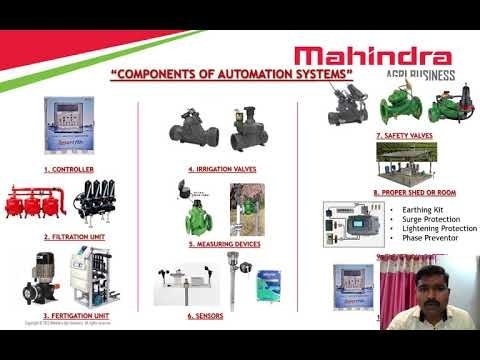
- Automation Solutions:IoT-enabled control of irrigation schedules — so the farm can water itself while you scroll Reels.
- HDPE Pipes & Coils:Infrastructure backbone of irrigation setups.
- Protected Cultivation (Greenhouses):For those growing exotic veggies and Instagram content.
- DIY Kits & Mulch Sheets:For small farmers and agripreneurs who like doing it themselves.
They even offerdesign, crop advisory, and project management— essentially turning irrigation into a service business.
And let’s not forget theIndo-Israel JV — Mahindra Top Greenhouses, which brings advanced greenhouse technology to India. Israel, after all, is the Harvard of irrigation.
But the real charm lies in theirexecution muscle— contracts with government agencies forCommunity Micro Irrigation Projects. These bulk projects may be low-margin but keep the factory wheels spinning.
So yeah, it’s not glamorous like EVs or AI, but it’s noble, necessary, and occasionally profitable — kind of like your neighbourhood doctor.
4. Financials Overview
Let’s look at the numbers fromQ2 FY26(ending September 2025):
| Metric | Latest Qtr (Sep 25) | YoY Qtr (Sep 24) | Prev Qtr (Jun 25) | YoY % | QoQ % |
|---|---|---|---|---|---|
| Revenue | ₹49.6 Cr | ₹50.02 Cr | ₹62.04 Cr | -0.8% | -20.0% |
| EBITDA | ₹1.35 Cr | ₹-2.95 Cr | ₹2.74 Cr | — | -50.7% |
| PAT | ₹0.43 Cr | ₹-2.76 Cr | ₹0.98 Cr | — | -56.1% |
| EPS (₹) | ₹0.15 | ₹-0.99 | ₹0.35 | — | -57.1% |
Annualised EPS =
₹0.15 × 4 =₹0.60, which gives us a recalculatedP/E of ~217x. That’s right — technically, it’s expensive for the current quarter run-rate, but since FY25 EPS was ₹5.02, the P/E normalises to 25.8x.
Interpretation:Revenue is stagnant, profit is microscopic, but at least it’s not red ink anymore. The company is managing a slow turnaround, supported by steady order inflow and tighter cost control.
But yes, margins are still like watered-down chai — weak, but getting there.
5. Valuation Discussion – Fair Value Range Only
Let’s triangulate MEPCL’s fair value using three lenses:
a) P/E Method:FY25 EPS = ₹5.02Industry P/E = 34.4Company P/E = 25.8
👉 Fair Value Range = ₹5.02 × (25–35) =₹125 – ₹176 per share
b) EV/EBITDA Method:EV = ₹397 CrEBITDA (TTM) = ₹23 CrEV/EBITDA = 17.3xIndustry Average = ~15xFair EV = 15 × 23 = ₹345 CrEquity Value = 345 – 36 (Debt) = ₹309 CrFair Value per share ≈ ₹110
c) Simplified DCF Method (Educational):Assume 10% growth, 10% discount rate, 5-year horizon → Intrinsic range ≈ ₹115 – ₹165
📘Fair Value Range (Educational Purpose Only): ₹110 – ₹175Disclaimer: This range is purely educational and not investment advice.
6. What’s Cooking – News, Triggers, Drama
Mahindra EPC’s newsfeed looks like a government tender newsletter. BetweenJanuary 2024 and November 2025, the company received a steady stream of orders:
- Nov 2025:₹19.21 crore Community Micro Irrigation Project (12-month term)
- Jun 2025:₹4.32 crore irrigation contract (5-month term)
- Feb–Mar 2025:Multiple contracts for Micro Irrigation Systems
- Jan 2025:Change in CFO (because why not keep it dramatic?)
- FY24:Service tax demand of ₹12.74 crore — a reminder that government paperwork never dies.
These orders cumulatively add up to~₹70–80 croreworth of contracts in less than two years. The average tenure ranges from 4 to 12 months, meaning steady order book visibility.
If executed efficiently, these projects could push FY26 revenue above ₹300 crore. But the big question — can margins improve? Historically, OPM has oscillated between2% and 8%, depending on how subsidies and receivables behave.
Still, the Indo-Israel JV remains a wildcard. If greenhouse adoption scales, MEPCL could see high-margin exports to Africa and Asia — Uganda, Nigeria, and Bangkok are already in