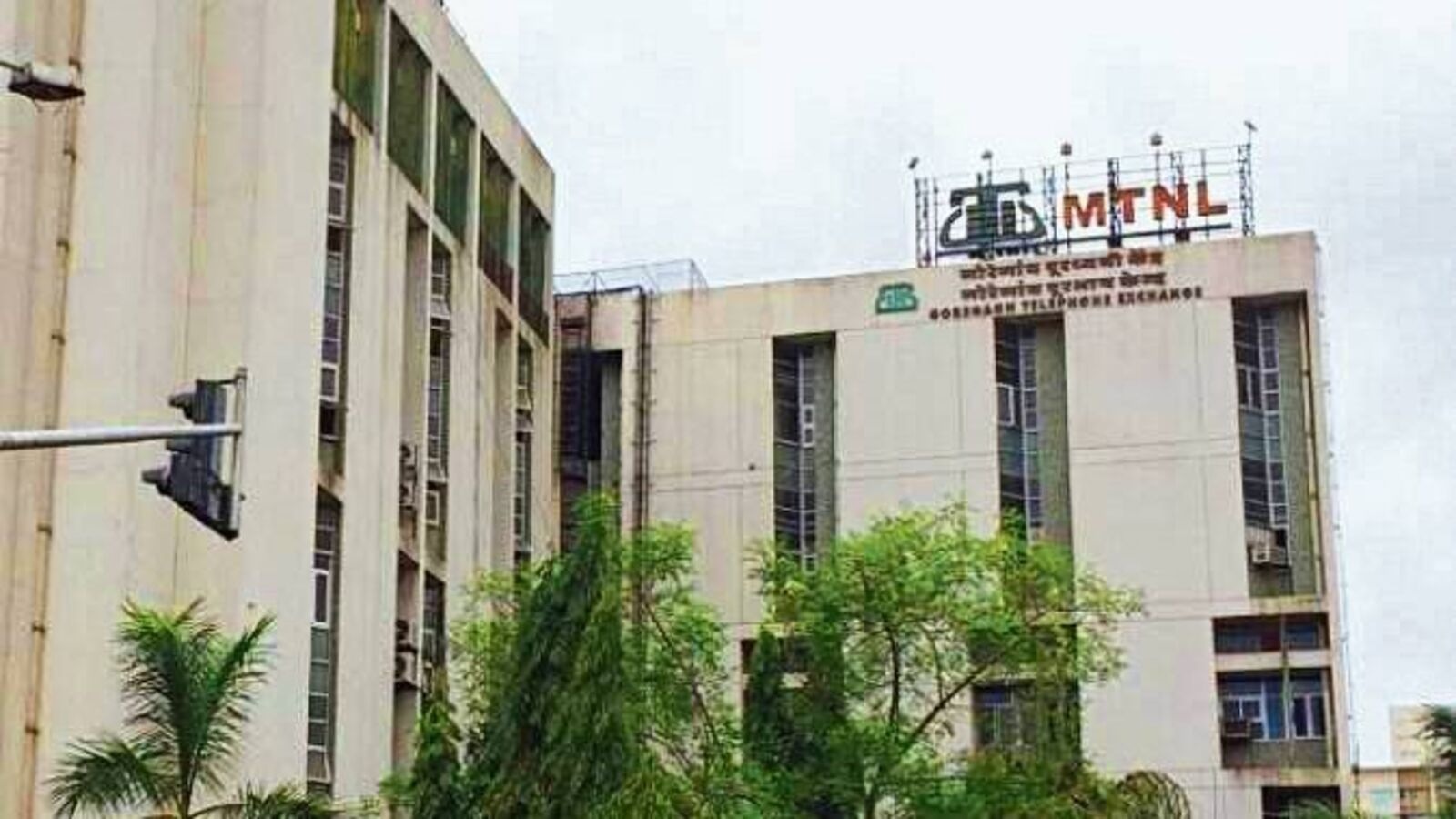
1. At a Glance – The Telecom Zombie That Refuses to Die
₹31.2 stock price. ₹1,971 crore market cap. ₹34,064 crore debt. Quarterly loss of ₹897 crore. Operating margin at -21%. Interest coverage negative. Net worth wiped out at negative ₹29,723 crore.
Ladies and gentlemen, meet Mahanagar Telephone Nigam Ltd — once a proud Navratna, now a financial patient on life support.
In the last 3 months, the stock is down 21%. Over one year? Down 36%. Yet over 5 years it’s up 20.5%. Welcome to Indian PSU volatility — where fundamentals cry and price charts occasionally dance bhangra.
Latest Q3 FY26 (Dec 2025) numbers:
- Revenue: ₹198 crore
- Net Loss: ₹897 crore
- EPS: -₹14.24
- Interest cost alone: ₹749 crore
Let me repeat that.
They earned ₹198 crore and paid ₹749 crore in interest.
That’s not business. That’s financial cardio.
And if you’re still reading — good. Because this isn’t just a company analysis.
This is a post-mortem.
2. Introduction – From Telecom King to Museum Exhibit
Back in 1986, when landline phones were a status symbol and STD booths were social hubs, MTNL was born.
It served Delhi and Mumbai. Got Navratna status in 1997. Life was good.
Then came private players.
Then came mobile.
Then came 4G.
Then came Jio.
And MTNL? It mostly came late.
Subscriber base declined sharply over the years. Landline market share dropped from 55.27% in FY17 to 38% in FY22.
Imagine losing one-third of your dominance in five years.
What happened?
- Lack of investment
- Obsolete network
- Massive debt
- Relentless competition
Meanwhile, telecom evolved from voice to data to streaming to 5G to AI-enabled networks.
MTNL is still trying to breathe on copper cables.
Let me ask you something:
Would you invest in a telecom company that can’t even fund interest payments?
Because recently, MTNL failed to fund semi-annual interest payments on multiple bond series. Loan defaults crossed ₹9,000+ crore.
This is not a small red flag.
This is a parade of red elephants.
3. Business Model – WTF Do They Even Do?
Officially?
They provide telecom services in Delhi and Mumbai.
That’s it.
No pan-India presence. No aggressive expansion. No spectrum dominance.
Just