01 — At a Glance
The Gas Pipe Dream: Steady, Boring, Slightly Suffocating
- 52-Week High / Low₹1,587 / ₹1,009
- 9M FY26 Revenue₹6,213 Cr
- 9M FY26 PAT₹715 Cr
- TTM EPS₹97.91
- Annualised EPS (Q3×4)₹81.8
- Book Value₹629
- Price to Book1.64x
- Dividend Yield2.90%
- Debt / Equity0.03x
- Return (1 Year)-18.3%
Opening Note: Mahanagar Gas closed 9M FY26 with ₹6,213 crore revenue (+14.8% YoY), ₹715 crore PAT, 22.9% ROCE, and an interim dividend of ₹12/share. The stock returned -18.3% in one year. Why? Because gas economics are like a bad marriage — sometimes both parties are profitable, but the relationship is perpetually stressed.
02 — Introduction
Where Pipes Meet Politics, And Everyone Loses Margins
Mahanagar Gas is the CGD (City Gas Distribution) operator for Mumbai, Raigad, and several other districts across Maharashtra and Karnataka. It pipes natural gas to homes, industries, and vehicles. Exciting? No. Essential? Absolutely. Profitable? Yes, but increasingly with the stress of a financial auditor watching your quarterly earnings call like it’s the quarterly earnings call.
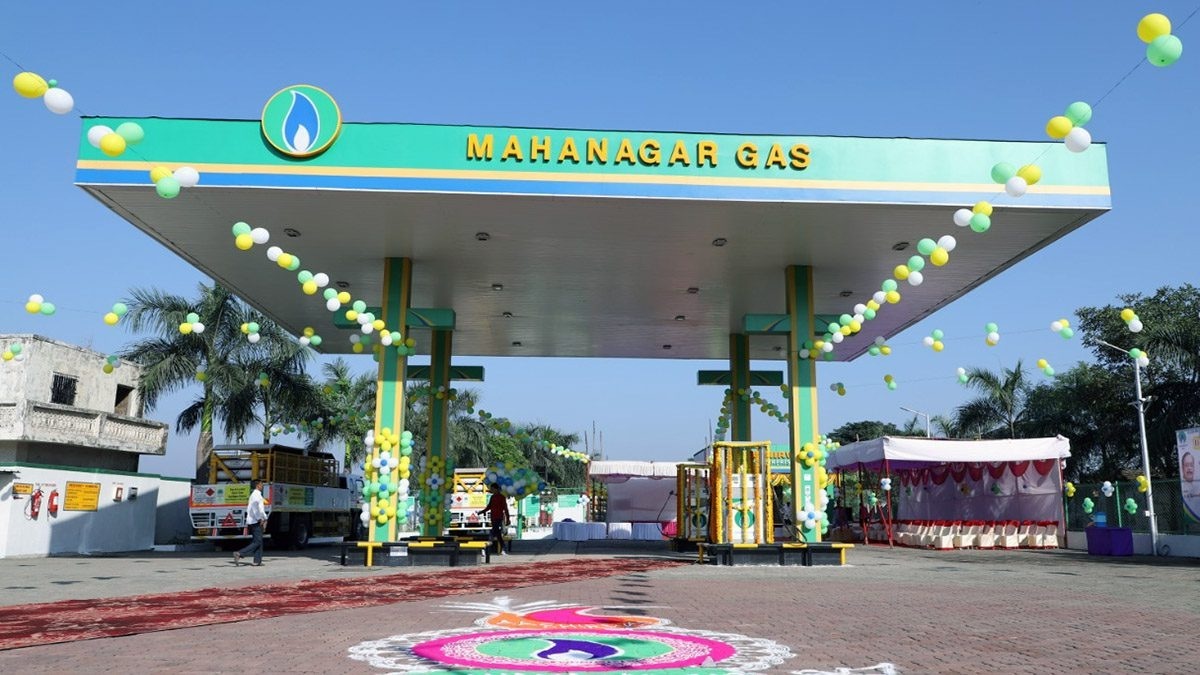
The company has been around since 1995, controls ~70% of CNG station retail volumes in its geographies, and supplies gas to 3.07 million households. It has also aggressively expanded via the Unison Enviro acquisition (₹562 crore in Feb 2024), adding 100+ CNG stations and stretching into new territories. Good acquisition. Bad timing for margins.
Q3 FY26 delivered Q3 PAT of ₹202 crore. That’s down 10.4% YoY from ₹225 crore in Q3 FY25. Yes, despite 17% YoY sales growth. Welcome to the gas distribution paradox: volume growth meets input cost compression, and everyone suffers politely.
The February 2026 concall revealed something more uncomfortable: management is actively pivoting gas sourcing away from Henry Hub towards Brent-linked contracts, reducing station additions in Mumbai, restructuring the battery cell manufacturing project, and guiding margins downward for FY27. In other words, this is no longer a simple “boring utility” story. This is a company in active transition, playing 4D chess with commodity markets while trying to pay dividends.
Concall Highlight (Feb 2026): “We will have a portfolio… directly or indirectly linked to Brent.” — MD. Translation: Henry Hub is no longer our squeeze toy. We’re becoming a Brent baby.
03 — Business Model: Pipes, Politics & Procurement
How To Make Money Selling Invisible Gas In A Visible Economy
MGL operates as a franchisee of the Petroleum and Natural Gas Regulatory Board (PNGRB) across six geographical areas: GA-1 (Greater Mumbai, 465 sq km), GA-2 (Thane Urban, Mira-Bhayander, Panvel, 1,000 sq km), GA-3 (Raigad, 6,864 sq km), and post-Unison acquisition: Ratnagiri, Latur-Osmanabad, and Chitradurga-Davanagere. It has network/infrastructure exclusivity in all GAs (until 2030–2040), which is a moat wider than the Arabian Sea.
Revenue comes from three buckets: CNG (69% of volumes), Domestic PNG (14%), and Industrial & Commercial PNG (17%). CNG is the bread. I&C is the butter. Domestic PNG is the steady hum that pays the office manager’s salary.
The sourcing model is the fascinating part — and the part that keeps CFOs awake at 3 AM. For CNG and Domestic PNG, gas comes from the Ministry of Petroleum via GAIL under the APM (Administrative Price Mechanism), which is supposed to be cheap but actually gets cheaper or more expensive based on geopolitical winds and government whim. For I&C PNG, MGL buys from BPCL, IOCL, HPCL, and GAIL via term contracts or spot purchases, which means it chases global indices like Henry Hub and Brent. The company also pays Castrol-style royalty to GAIL (3.5% of turnover) for the gas sourcing privilege. Think of it as paying GAIL’s maintenance fee on the privilege of selling gas.
CNG Stations491As of Dec 31, 2025
PNG Households3.07 MMillions Connected
I&C Customers5,618Industrial/Commercial
Gas Volume4.62 MMSCMDQ3 Average Sales
💬 How much of your commute expense goes into MGL’s GAIL royalty payments? Probably none. But statistically, someone’s paying for it. Comment if it’s you!
04 — Financials Overview
Q3 FY26: The Numbers That Make Auditors Squint
Continue reading with a premium membership.