1. At a Glance – Teekha Snapshot, No Extra Namak
Madhusudan Masala Ltd is one of those companies that quietly sits on Indian kitchen shelves while investors loudly argue on Twitter about tech stocks. At a current price of ₹128 and a market capitalisation of roughly ₹186 crore, this SME-listed spice maker has managed to do something rare in smallcap land — grow steadily without screaming too much. The latest quarterly numbers show sales of ₹118.22 crore and a PAT of ₹7.66 crore, translating into a respectable 18.7% YoY sales growth and 17.3% profit growth. Stock P/E sits at around 13.4, which is much lower than the broader FMCG food products industry P/E of ~24. The last six months have not been kind to the stock price, with a negative return of about 13.8%, and the one-year return is an even spicier -37%. Yet operationally, the company seems busy expanding capacity, adding SKUs, and dreaming of a bigger branded future. Promoters hold a chunky 68.1%, debt stands at ₹75.4 crore, and EV/EBITDA is around 9.26. On paper, it looks like a mid-sized masala grinder trying to punch above its weight. The real question is — is this growth sustainable masaledar flavour, or just a temporary tadka?
2. Introduction – From Jamnagar Kitchens to Investor Watchlists
Founded in 1982, Madhusudan Masala Ltd is older than most Instagram finfluencers explaining compounding with background lo-fi music. For over four decades, the company has been grinding, blending, packing, and selling spices across western India. This is not a startup story with VC funding and buzzwords like “AI-driven turmeric optimisation.” This is a family-run, execution-heavy, feet-on-the-ground FMCG business where margins are fought one basis point at a time.
The company operates in one of the most brutally competitive segments of Indian FMCG — spices. This is a market where brand loyalty is strong, price sensitivity is real, and shelf space is a battlefield. Giants like MDH, Everest, Tata Sampann, and regional powerhouses dominate consumer mindshare. Yet Madhusudan Masala has carved out a meaningful presence, especially in Gujarat. A ~35% market share in Saurashtra is not a joke; it means that in that region, if food is cooking, Madhusudan is probably involved.
In recent years, the company has been transitioning from a largely regional, partly unbranded player into a more structured branded FMCG company. Branded products now contribute 63% of H1 FY25 revenue, which is a crucial shift because brands, not commodities, pay the bills long term. The company has also been busy adding capacity, launching new plants, and expanding distribution beyond its traditional comfort zones. Naturally, this has come with higher working capital needs and debt.
So, is Madhusudan Masala becoming a serious FMCG contender, or is it just adding more chillies to the same curry? Let’s break it down slowly, like a proper Gujarati thali.
3. Business Model – WTF Do They Even Do?
At its core, Madhusudan Masala does one thing very well: it takes agricultural produce and turns it into kitchen-ready products. The company manufactures and processes over 32 types of ground spices, blended spices, whole spices, and a long list of grocery products. Think chilli powder, turmeric, coriander, garam masala, hing, papad, rajgira flour, kasuri methi, tea, soya products, and even niche items like katlu powder and black salt.
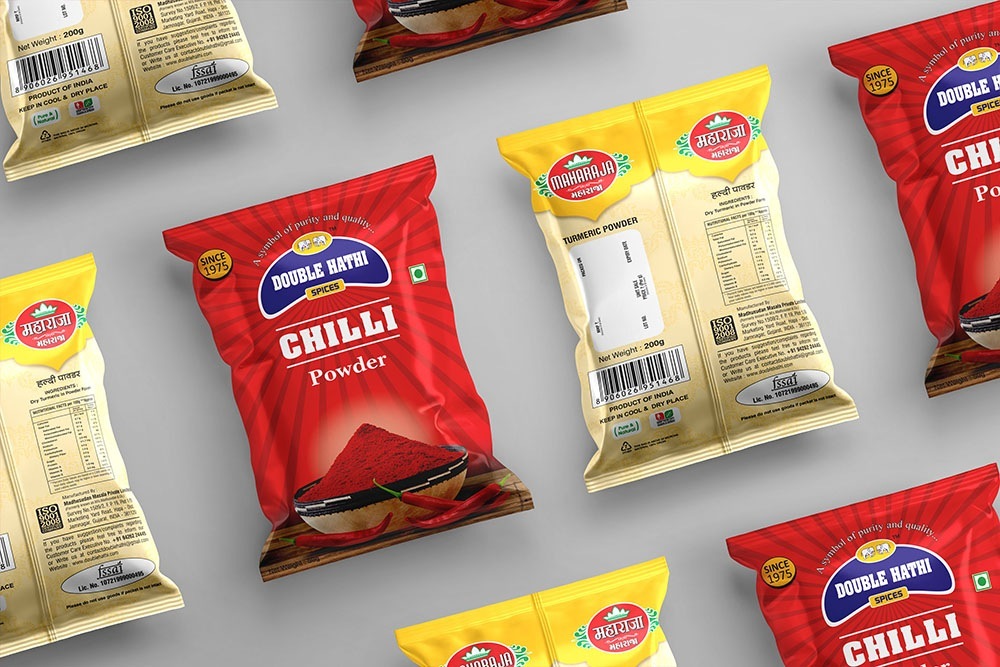
The product portfolio spans over 500 SKUs across four brands — Double Hathi, Maharaja Mantavya, 77 Green, and a few others. This SKU explosion helps penetrate multiple price points, from ₹5 sachets for mass consumption to bulk packs for institutional and wholesale buyers.
Distribution is old-school but effective. The company reaches over 12,000 retail grocery stores through 200+ distributors, primarily across Gujarat, Maharashtra, Goa, and Telangana. Recently, it has also appointed a super stockist in Chandigarh and a sales team in Uttar Pradesh to push into North India, covering Punjab, UP, Bihar, Jharkhand, and Jammu & Kashmir. Expansion, clearly, is the flavour of the season.
On the manufacturing side, Madhusudan operates two main facilities. The Jamnagar unit spans 1 lakh sq. ft. with an annual capacity of 4,800 MT and includes a massive 4,029 MT cold storage facility. This reduces dependence on rented storage and helps manage raw material volatility. Capacity utilisation here was 50.2% in FY24 — meaning there is room to grow without immediate heavy capex. The Rajkot facility, smaller at 600 MT capacity, ran at a much healthier 80% utilisation.
Add to this a wholly owned subsidiary, Vitagreen Products Pvt. Ltd, operating under the brand 77 Green, targeting health-conscious and value-seeking consumers with spices, instant mixes, and grocery items. This subsidiary is also setting up a massive 200,000 sq. ft. spice facility in Jamnagar with a planned phase-1 capacity of 6,000 MT.
In simple terms, Madhusudan Masala is trying to move from “local spicewala” to “regional FMCG brand with ambition.” Execution will decide whether this becomes a success story or a case study in overextension. Do you think Indian spice brands still have room for new serious players, or is the shelf already