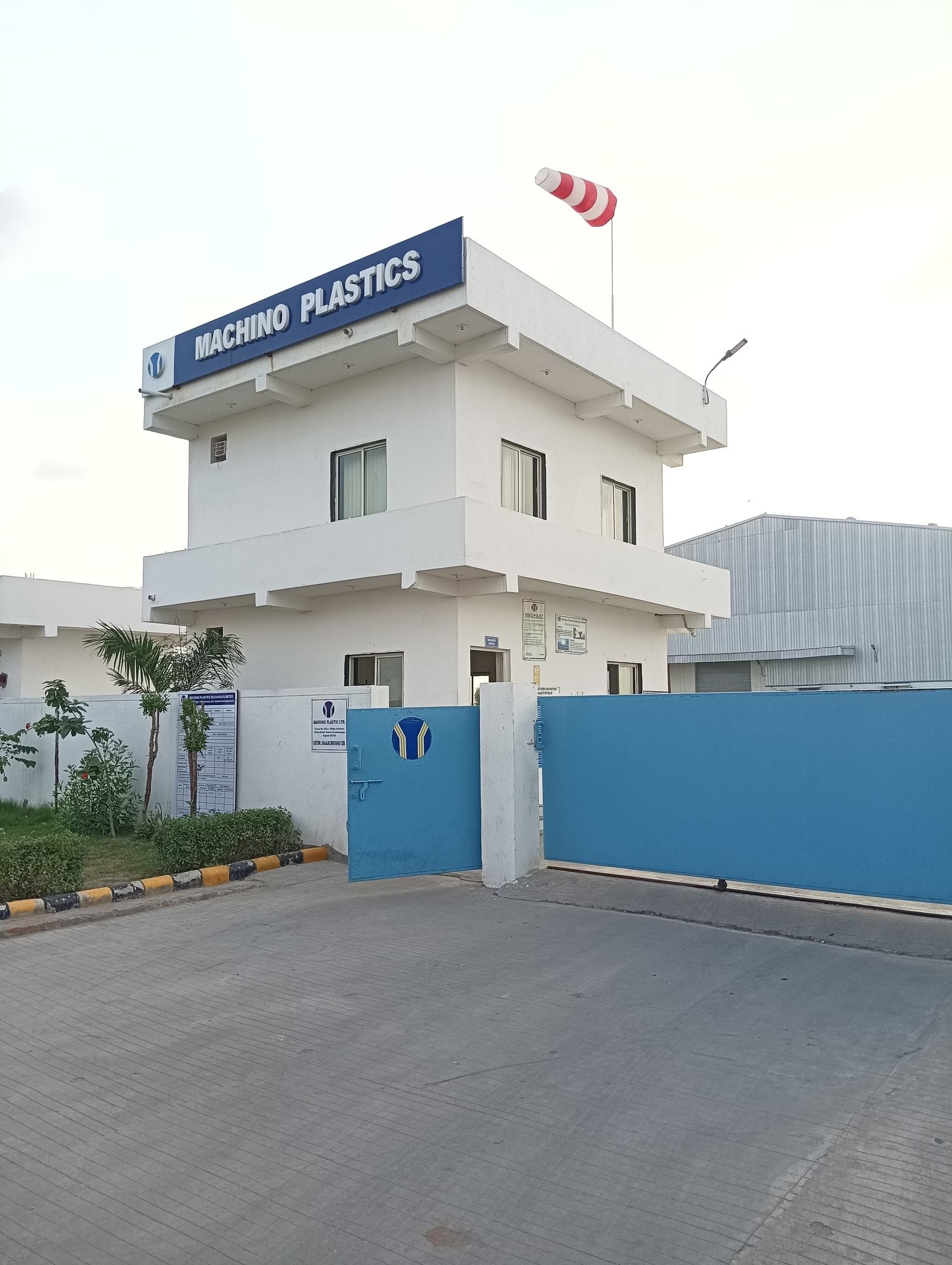
Machino Plastics FY26: Revenue Up 27%, Profit Down 85%, and a Rating Agency That Stopped Getting Its Calls Returned
Spotted a factual error — a wrong number, date, or fact? Tell us and we will check the source.
General information and entertainment, not investment advice. The author is not a SEBI-registered adviser or research analyst. No recommendation, no promised returns. Markets carry risk including loss of capital. Figures may not be current. Consult a registered adviser before acting.
1. At a Glance
Machino Plastics closed FY26 with revenue of ₹492.16 crore, up from ₹388.74 crore a year earlier — a 26.6% jump that any auto-component maker would frame proudly. Then the profit line arrives: net profit of ₹1.32 crore, down from ₹8.56 crore, an 84.6% fall. The top line grew a quarter; the bottom line lost five-sixths of itself. Between those two numbers sits the whole entry.
The gap has a paper trail. Interest cost rose from ₹11.65 crore to ₹18.51 crore, and depreciation from ₹10.07 crore to ₹15.25 crore — the twin bills for a debt-funded plant expansion. Borrowings climbed to ₹250.06 crore against a net worth of roughly ₹137 crore. Meanwhile, in March 2026, both ICRA and CRISIL downgraded the company and parked it in the “Issuer Not Cooperating” category, ICRA citing a management that stopped answering its requests.
A company can grow sales, add capacity, keep an unmodified audit opinion, and still end the year worth watching for reasons that have nothing to do with demand. How much of a ₹492 crore business survives an interest bill that doubled in two years? The sections below keep count.
2. Introduction
Machino Plastics Limited was incorporated in the late 1980s to make plastic injection-moulded automotive parts — bumpers, dashboards, instrument panels — and the moulds and dies that shape them. It was built as a joint venture involving the Machino Group, Suzuki Motor Corporation, and Maruti Suzuki India Limited, and that lineage still defines it. Maruti Suzuki and Suzuki Motor each hold 15.35% of the equity, and Maruti remains the customer around which the entire business orbits.
That orbit is tight. Maruti Suzuki accounts for close to 90% of sales, which makes Machino less a diversified supplier than a dedicated appendage of one carmaker’s production schedule. When Maruti announced a new manufacturing facility at IMT Kharkhoda, Machino laid a foundation stone in May 2024 for a new plant to feed it — a project costed near ₹120 crore, the larger part debt-financed.
The recent record is a study in that decision playing out. Revenue has climbed steadily; so have borrowings, interest, and depreciation. FY26 is the year all three arrived at the profit line together. Layered on top: an MCA inquiry initiated back in October 2023, and the March 2026 twin downgrades. The business kept moulding plastic; the financing around it did the talking.
3. Business Model: WTF Do They Even Do?
Machino melts plastic pellets, injects them into steel moulds under pressure, and pops out the large exterior and interior panels of a car — the bumper you scuff parking, the dashboard you rest a coffee on. It also makes the moulds themselves, a smaller but higher-craft line. FY26 split cleanly: plastic moulded parts contributed ₹434.70 crore and moulds & dies ₹57.45 crore of the ₹492.16 crore total.
The operation is genuinely industrial — 63 injection-moulding machines ranging from 100 to 3,150 tons, Japanese robotic pick-up systems, a tool room handling tools up to 30 tons, across plants in Gurugram and beyond. This is not an asset-light story pretending to make things. It makes things.
The catch is who it makes them for. With roughly nine of every ten rupees coming from Maruti Suzuki, Machino’s business model is essentially “be indispensable to exactly one customer.” That customer is also a shareholder and a JV parent, which is either the ultimate moat or the ultimate single point of failure, depending on the week. There is no Machino-branded product on any shelf; the company sells into Maruti’s assembly lines and Maruti’s spare-parts channel, full stop.
The economics follow from that. Prices to Maruti are subject to periodic revision, and the filing notes the FY26 revision added just 0.31% of turnover — down from 2.84% two years earlier. A supplier this concentrated negotiates from a chair, not a throne. Volume growth is welcome, but margin is set at someone else’s table. Does a supplier that grows only when its single customer grows own a business, or rent one?
4. Financials Overview
Figures are standalone, in ₹ crore. The latest period is the quarter ended March 2026.
Metric
Latest Q (Mar’26)
YoY
QoQ
Revenue
143.41
+33.8%
+14.0%
Operating Profit
12.20
+50.6%
+40.7%
PAT
0.25
−92.9%
turned positive (from −1.47)
EPS (₹)
0.41
5.71 (Q4FY25)
−2.40 (Q3FY26)
The quarter itself was operationally strong — record revenue and the highest operating profit in the visible series at ₹12.20 crore. The PAT line, though, tells a different story: ₹0.25 crore against ₹3.50 crore a year earlier. The gap