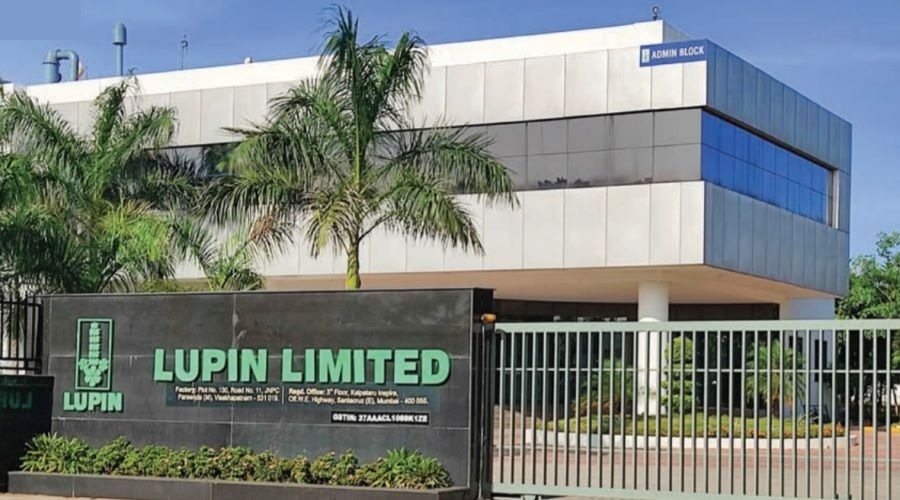
1. At a Glance
The pharmaceutical landscape is often a game of regulatory Russian roulette, but Lupin Ltd seems to have found a way to rig the chamber in its favor. We are looking at a company that has transformed from a domestic pill-maker into a ₹1,08,795 Cr market cap transnational beast. But don’t let the shiny skyscraper headquarters in Mumbai fool you; the real story is in the grit of the numbers. In the latest fiscal wrap, Lupin reported a PAT surge of 62%, yet the market remains a skeptics’ paradise.
Why? Because for years, Lupin was the poster child for USFDA “naughty lists.” Five of their facilities were slammed with compliance issues back in 2019-2020. They’ve spent the last few years in a grueling redemption arc, cleaning up shop across 15 manufacturing sites. Today, they boast of being the 3rd largest generic player in the US by prescriptions. They aren’t just selling tablets; they are dominating the respiratory, cardiac, and anti-TB segments globally.
Investors are currently salivating over a ROE of 29.1% and a ROCE of 30.3%. These are elite-tier numbers for a generic pharma player. But here is the red flag that should keep you awake: the US business accounts for 46% of their revenue. In the pharma world, that is a massive dependency on a market that is notorious for “price erosion” and “legal warfare.”
They are pivoting hard toward “Complex Generics”—think inhalers and injectables that are harder to copy. They want to launch 20 of these by 2028. It’s a bold gamble. If they succeed, they own the high-margin mountain. If they fail, they are just another commodity seller fighting for pennies in a crowded market. The company is currently sitting on a Cash and Cash Equivalent pile that gives them a net cash position of ₹2,879 Cr, up from just ₹310 Cr a year ago. They are armed for an acquisition spree, recently swallowing VISUfarma to plant their flag in the European ophthalmology market.
Is this a sustainable turnaround or a temporary peak before the “Mirabegron” patent cliff hits? The numbers are screaming, but the history of regulatory stumbles looms like a shadow.
2. Introduction
Lupin is no longer just a “local” company; it is an innovation-led transnational engine. Headquartered in Mumbai, it develops everything from basic APIs to high-end biotechnology products. They operate in over 100 markets, with a heavy footprint in the US, India, and South Africa.
The company’s leadership hierarchy is impressive: they are Rank #2 in Respiratory, #3 in Diabetes, and #3 in Cardiac Care in India. In the US, they are the 3rd largest generic company, a position built on a massive portfolio of 457 ANDA filings.
The management is currently obsessed with “Specialty Pharma.” They are moving away from the “me-too” generics that everyone and their cousin can manufacture. Instead, they are focusing on long-acting injectables and biosimilars.
They recently secured a 900% dividend recommendation, a move that signals extreme confidence—or a desperate attempt to keep shareholders happy while they navigate the transition to complex drugs.
The operational scale is massive: 24,000+ employees, 15 manufacturing facilities, and 7 research centers. They’ve managed to turn a 78% TTM profit growth into a narrative of operational efficiency.
How long can a company maintain 30%+ margins in a sector defined by cutthroat competition?
3. Business Model – WTF Do They Even Do?
Lupin is essentially a giant chemical kitchen that specializes in “Reverse Engineering.” They take expensive, branded drugs and figure out how to make them cheaper and better.
Their business is split into four main buckets:
- India Formulations (26%): Selling branded medicines directly to doctors and hospitals in India.
- US Generics (46%): The “Big Brother” segment. They sell generic versions of massive drugs like Albuterol (Respiratory) and Mirabegron (Overactive bladder).
- APIs (3%): Selling the “raw ingredients” to other pharma companies. This is a low-margin but essential utility business.
- EMEA & ROW (25%): Spreading the risk across Europe, South