Lokesh Machines Ltd Q2 FY26 – From Laser Glory to Sanction Story: The CNC Saga That Turned into a Geopolitical Thriller
1. At a Glance
Lokesh Machines Ltd (LML) — once the cool kid in the CNC playground, co-developing India’s first laser-based hybrid additive manufacturing machine — now finds itself in a dramatic soap opera featuring OFAC sanctions, rating downgrades, and profit shrinkage worthy of a crime documentary. The ₹307 crore market cap company, trading at ₹153 (down a brutal 55% YoY), seems to have swapped its laser for a magnifying glass to find its own profitability.
The latest quarterly results (Q2 FY26 ended September 2025) show sales of ₹50.43 crore — down 33% YoY and profits collapsing 81.7% to just ₹0.63 crore. A company that once boasted of 6 manufacturing units, 900 machine capacity, and a MoU with IIT Madras, is now running on a return on equity of just 0.26% and a debt-to-equity ratio of 0.71.
Its promoters hold 53.6%, some shares are pledged (14.5%), and the rest of the public seems to be holding on for nostalgia. The story of Lokesh Machines is one of engineering excellence tangled in bureaucratic quicksand.
2. Introduction
What happens when an engineering firm that makes “machines that make machines” suddenly finds itself on the U.S. Treasury’s radar? You get the Lokesh Machines saga — a story with all the elements of a modern Indian business thriller: laser tech, defence orders, preferential warrants, and a side serving of sanctions.
Incorporated in 1983, Lokesh Machines started as a respectable machine tool manufacturer. Over decades, it earned certifications from ISO and AS9100, supplied to legends like John Deere, Tata Motors, and Mahindra, and even exported CNC systems to places like Germany and Russia. Then, somewhere between a defence contract and a new laser machine launch, the plot twisted — Acuite and CARE Ratings downgraded it, citing “OFAC sanctions”.
Now, imagine being a midcap machine manufacturer whose client list includes half the Indian auto industry, and suddenly you’re on a sanctions list because of international linkages or suppliers. Even your CNC turning center starts turning away.
The company’s financials reflect this turmoil — while it maintains operations across Hyderabad and Pune, revenue has been yo-yoing like a child’s mood on exam day. FY24 saw sales of ₹293 crore but FY25 collapsed to ₹189 crore, a chilling 38% decline. Profit? Gone faster than investor confidence in a penny stock rally.
But hey, in true Indian business style — instead of panicking, Lokesh Machines did what any jugaadu engineer would: kept building machines, kept filing petitions to OFAC, and even bagged fresh orders worth ₹7.96 crore from Kirloskar and ₹7.83 crore from Sundaram-Clayton. Because if there’s one thing Indian SMEs know — it’s how to run a factory even while the roof is on fire.
3. Business Model – WTF Do They Even Do?
Let’s decode Lokesh Machines like you’re five but own a Demat account.
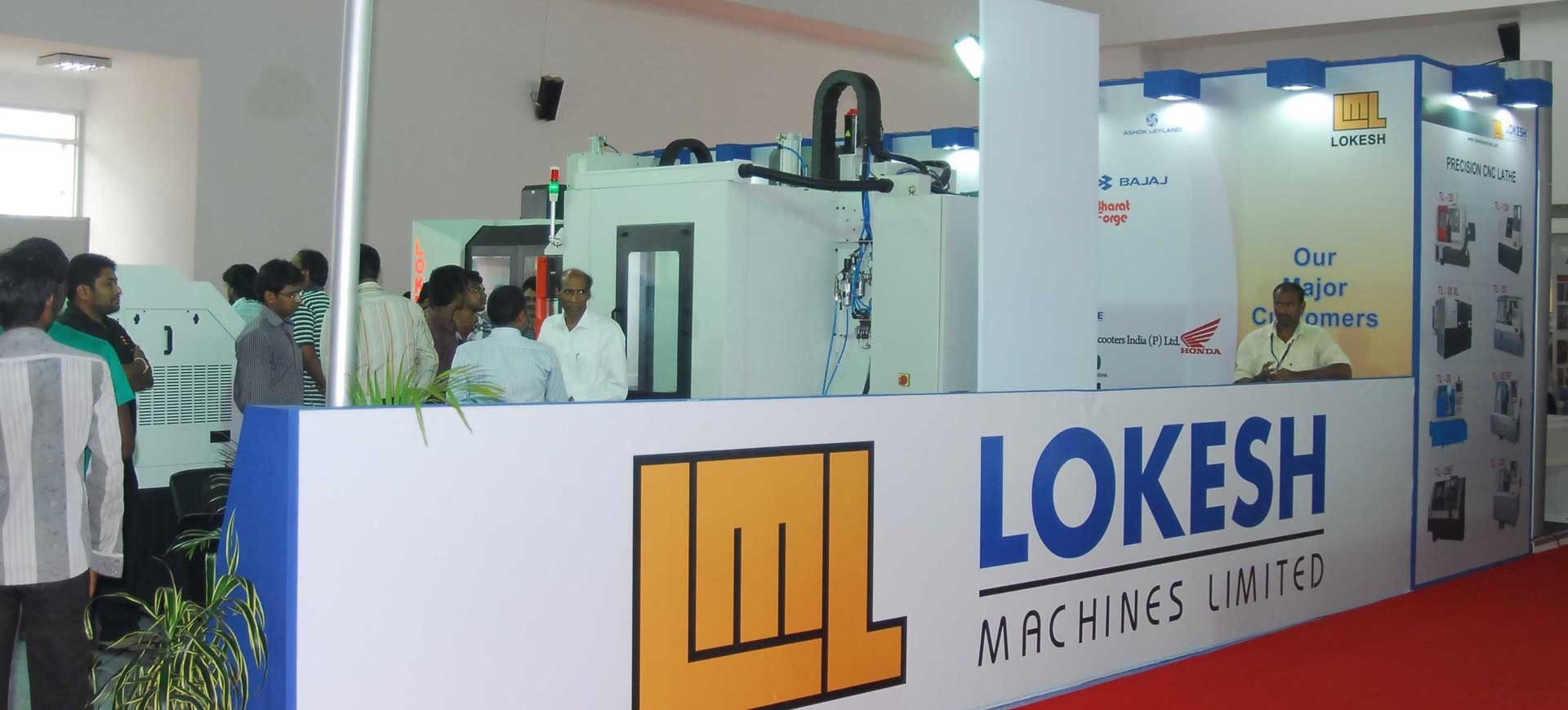
The company’s bread and butter is manufacturing Special Purpose Machines (SPMs) and General Purpose CNC Machines. These aren’t your average factory toys — we’re talking about massive automated systems used in the precision machining of engine blocks, cylinder heads, and crankshafts. If you’ve ever driven a tractor or a truck in India, there’s a chance one of its parts was machined on a Lokesh-built machine.
The company operates through two core divisions:
Machine Tools Division (56% of FY23 revenue) – makes CNC lathes, machining centres, and SPMs.
Automotive Components Division (44%) – manufactures connecting rods, cylinder blocks, and heads for OEMs like Ashok Leyland and Honda.
The diversification doesn’t stop there. Lokesh Machines also does automation systems — robotic gantries, 4th-axis automation, and customized setups for complex assembly lines. Recently, it stepped into defence and aerospace components manufacturing, which would have been a brilliant move… had it not been for those pesky sanctions.
They also co-developed India’s first indigenous laser-based Direct Energy Deposition Hybrid Additive Manufacturing Machine — fancy talk for a metal 3D printer that can also machine surfaces. In other words, it’s like having Tony Stark’s workshop in Hyderabad.
With six factories (five in Hyderabad and one in Pune), and exports spanning Europe, the Middle East, and Asia, Lokesh Machines was positioning itself as India’s Haas or DMG Mori. But right now, it’s more like a Tesla stock chart — high innovation, low cash flow, and everyone waiting for the next quarterly miracle.
4. Financials Overview
Quarterly Results Lock: Q2 FY26 (Half-Yearly Label Not Found)