Lokesh Machines Ltd Q2 FY26 – The Hyderabad Lathe Kings Get Sanctioned, Fined, and Still Keep Machining
1. At a Glance
If drama had a BSE code, it would probably be 532740 — Lokesh Machines Ltd (LML). From being Hyderabad’s proud manufacturer of CNCs and special-purpose machines to finding itself accidentally rubbing shoulders with OFAC’s sanctions list — this company’s last few quarters have been more thrilling than a Rajamouli plot twist.
At a market cap of ₹292 crore, Lokesh trades around ₹146/share, a far cry from its ₹398 high. Its sales this quarter (Q2 FY26) came in at ₹50.43 crore, while PAT crawled to ₹0.63 crore — an 81.7% drop QoQ. Even a humble dosa vendor would be ashamed of that margin fall. The ROE stands at a tragic 0.26%, ROCE barely 4.87%, and the Debt-to-Equity ratio loiters around 0.71 — clearly, leverage is doing more of the heavy lifting than profits.
Despite this, Lokesh keeps rolling — both literally and figuratively. Orders worth ₹7.96 crore from Kirloskar Oil Engines and ₹7.83 crore from Sundaram-Clayton have kept its machines buzzing. Add to that a recent DGQA licence to manufacture defence items valid till 2030, and you know this is no small-town lathe shop. But the OFAC sanctions drama and multiple credit downgrades from Acuite and CARE have made this one of the most “engineered soap operas” in Indian midcap history.
So what’s really happening under the metal and grease? Let’s unscrew this machine and take a look.
2. Introduction
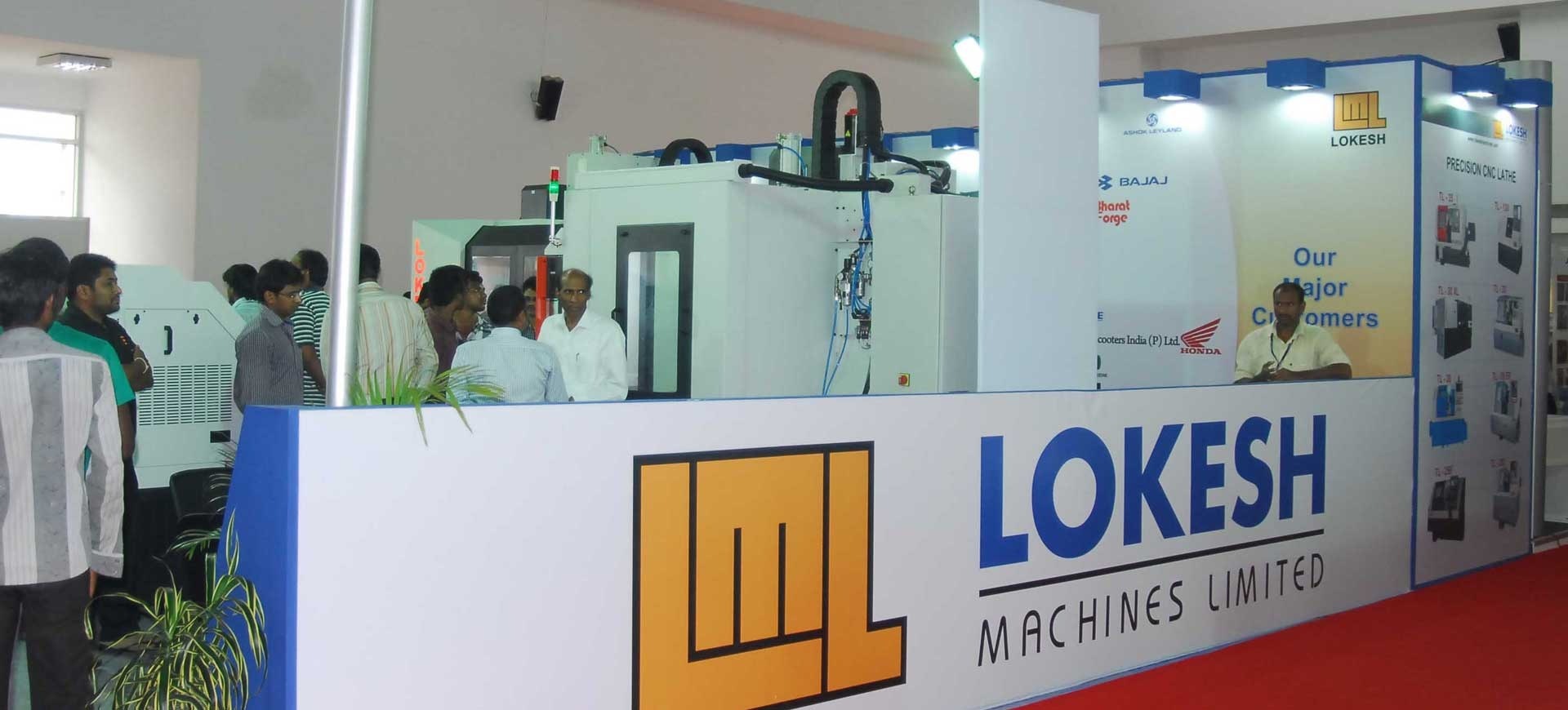
Lokesh Machines Ltd is one of those rare Indian manufacturing companies that actually makes machines — not just “assembles components sourced from somewhere near Shenzhen.” Incorporated in 1983, LML manufactures Special Purpose Machines (SPMs), CNC lathes, machined components like connecting rods and cylinder heads, and more recently, even defence and aerospace parts.
They’ve got six manufacturing plants — five in Hyderabad and one in Pune — producing around 900 general-purpose machines annually. The company’s customers list reads like a who’s who of Indian automotive manufacturing: Tata Motors, Mahindra, Honda, Ashok Leyland, Volvo, and Eicher — basically every company that’s ever made something with a crankshaft.
But while the machines keep spinning, the numbers are starting to squeak. Sales fell 33% YoY, PAT crashed 81.7% QoQ, and interest coverage ratio is just 0.75 — which basically means the bank calls, not the CFO.
To make matters more dramatic, the company was fined ₹3.71 lakh each by BSE and NSE for not appointing enough independent directors (Reg. 17(1) violation). Oh, and did we mention? It was placed on the OFAC sanctions list in late 2024, leading to credit downgrades and reputational oil spills.
But amidst the chaos, Lokesh keeps signing MoUs (like with IIT Madras for advanced manufacturing), developing India’s first indigenous laser-based hybrid additive manufacturing machine, and getting fresh orders from defence and automotive clients. It’s the perfect desi mix — part innovation, part jugaad, part “arre yaar phir notice aa gaya.”
3. Business Model – WTF Do They Even Do?
Let’s simplify: Lokesh Machines makes machines that make machines.
At its core, LML operates through two main verticals:
Machine Tools (around 56% of FY23 revenue) — this includes CNC turning centres, vertical machining centres, and boring/drilling machines.
Automotive Components (around 44% of FY23 revenue) — think cylinder blocks, heads, connecting rods, and other parts that go into vehicles and engines.
Machine manufacturing cycles are long — 8 to 10 months — and that’s part of the reason the company’s working capital days (69) look like a government project timeline.
Recently, they’ve diversified into defence and aerospace manufacturing — a natural evolution since the same precision machining used for engines can be adapted for fighter jet parts. In August 2025, they even got DGQA approval to produce defence components till 2030.
They’re also trying to automate their future: gantry systems, robotics, and 4th-axis automation lines — all part of their play to move beyond traditional lathes. The partnership with AIC IT-HUB, RRCAT Indore produced India’s first metal-based hybrid additive manufacturing machine. Sounds like fancy stuff, until you see their net profit margin of 1.25%.
So yes — great machines, terrible margins. Typical engineering student story.
4. Financials Overview
Let’s look at the Q2 FY26 results (ended September 2025).