1. At a Glance
There are struggling companies. Then there are companies that somehow manage to combine luxury salons, imported shaving creams, French beauty brands, IPO money, ESOPs, preferential allotments, write-offs, promoter dilution, and SEBI summons into one business model. Lloyds Luxuries has managed exactly that.
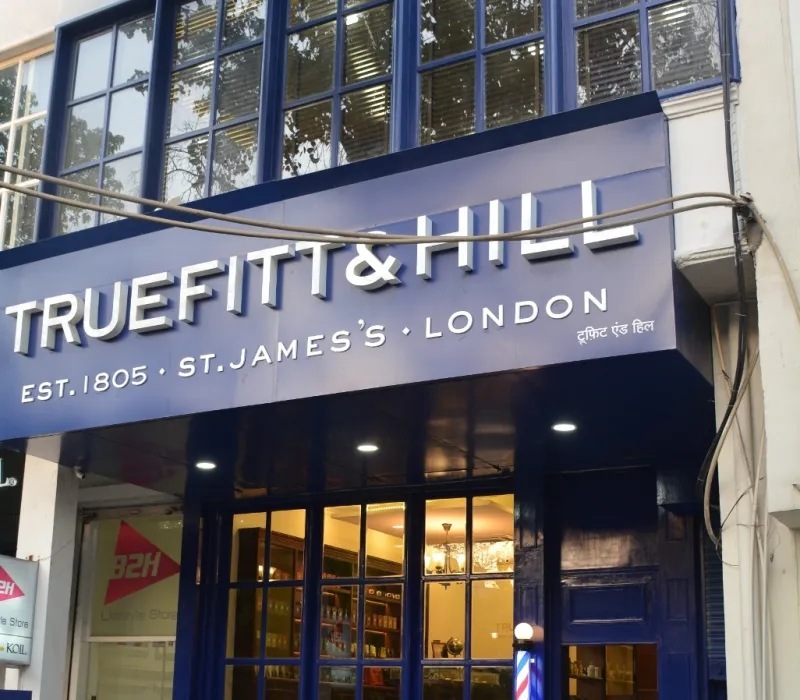
On the surface, this is supposed to be India’s premium grooming story. The company owns the master franchise rights for Truefitt & Hill, the so-called “oldest barbershop in the world,” and Mary Cohr, a French salon brand. It runs luxury salons, sells products, earns franchise fees, and dreams of opening 50 barber shops over the next few years.
Sounds glamorous.
But FY26 looked less like a premium salon and more like a financial exfoliation session.
The company reported revenue of ₹61 crore for FY26, which is respectable growth from ₹46 crore in FY25. Sales in H2 FY26 alone rose 36% year-on-year to ₹33.22 crore. Yet despite this revenue growth, Lloyds Luxuries still ended FY26 with a net loss of ₹34.37 crore.
Why?
Because management had to write off ₹32.20 crore of previously capitalized branding, marketing and pre-operative expenses after reassessing whether these expenses should have been sitting on the balance sheet in the first place.
That one accounting adjustment wiped out most of the company’s net worth.
Reserves collapsed from ₹43 crore in FY25 to just ₹10 crore in FY26. Total assets fell from ₹74 crore to ₹42 crore. Book value is now around ₹14 per share while the market price is still near ₹80. That means investors are paying over 5.7 times book value for a company that has negative ROE, negligible operating margins, and is being investigated by SEBI for accounting treatment.
That is not a typo.
In March 2026, SEBI summoned both the promoter-chairman and the CFO over the company’s accounting treatment and financial statements.
Now, to be fair, the company did receive an unmodified audit opinion. Auditors clearly highlighted the write-off issue, but they did not qualify the accounts. Management also insists there was no deviation in IPO fund utilization.
Still, when a company selling luxury beard oils ends up discussing AS-26 accounting standards more than shaving cream, investors should probably pay attention.
The real question is this:
Is Lloyds Luxuries just cleaning up past accounting mistakes before a new growth phase begins?
Or is this one of those stories where the brand is luxurious but the balance sheet looks like it survived a bar fight?
2. Introduction
Lloyds Luxuries is not a traditional salon company.
It is basically trying to become the premium grooming and wellness equivalent of a franchise-heavy retail chain.
The company operates premium men’s grooming salons under Truefitt & Hill and women’s beauty salons under Mary Cohr. It earns money from salon services, product sales, franchise fees, and royalties.
Revenue mix in FY23 was fairly diversified:
- Sale of services: 65%
- Sale of products: 26%
- Royalty: 5%
- Franchise fees: 3%
That means most of the business still depends on people physically visiting salons.
This is important because salon businesses are tricky. They look asset-light in PowerPoint presentations, but in reality they involve expensive rentals, high employee costs, interior expenses, customer acquisition costs, store-level losses, and endless marketing.
Lloyds Luxuries is learning that the hard way.
The company currently has around 17 owned stores and 14 franchise stores across major cities including Mumbai, Delhi, Bangalore, Hyderabad, Ahmedabad, Surat, Pune, Kolkata, Gurgaon and Noida.
Over the years, store count has increased steadily from just 1 store in FY14 to 34 stores in FY25.
That is decent growth.
But there is a problem.
Scale has not translated into profitability.
Revenue has gone from ₹21 crore in FY22 to ₹61 crore in FY26, yet operating profit margins remain extremely weak. FY26 OPM was just 2%.
Employee expenses alone were ₹20.41 crore in FY26, which means one-third of sales are disappearing into salaries.
Other expenses remain heavy because salons are not cheap to run. Fancy interiors, premium staff, imported products, celebrity grooming branding and luxury positioning all cost money.
Now add the ₹32.20 crore write-off and suddenly the company looks less like a luxury chain and more like a case study for why aggressive capitalization policies can backfire.
The funny part is that the company still wants to expand aggressively.
It wants to open more barber shops, increase digital marketing, expand shop-in-shop formats, and build a stronger online presence.
That ambition is good.
But when the balance sheet just lost more than half its net worth in one year, expansion becomes harder. Growth is easy when you have investor money. Growth becomes far more difficult when you need every new store to actually make money.
So investors are stuck watching a strange contradiction:
The business is growing.
The brand portfolio is premium.
But the financial statements look like they were styled by a horror movie makeup artist.
3. Business Model – WTF Do They Even Do?
Lloyds Luxuries is basically a luxury grooming company.
Think premium barber shops, imported shaving creams, expensive haircuts, skincare products, facials, spa services and franchise outlets.
The biggest brand is Truefitt & Hill.
This is marketed as the oldest barbershop brand in the world. Lloyds holds the master franchise rights in India until 2043.
The company operates stores directly and also gives sub-franchise rights to franchise partners.
That means Lloyds earns in four different ways:
- Salon services like haircuts, beard styling, facials and grooming.
- Product sales including haircare, skincare and shaving products.
- Franchise fees from new franchise partners.
- Royalty income from ongoing franchise operations.
Then there is Mary Cohr, which focuses on women’s beauty services and skincare.
This brand has a much smaller presence in India compared to Truefitt & Hill, but it gives Lloyds exposure to the female salon market as well.
The company’s long-term plan seems to be simple:
Use flagship salons to create brand visibility.
Then use franchise stores to scale faster without spending too much capital.
That sounds good in theory.
But the problem with franchise models is that they only work when the unit economics are strong.
If franchisees are not