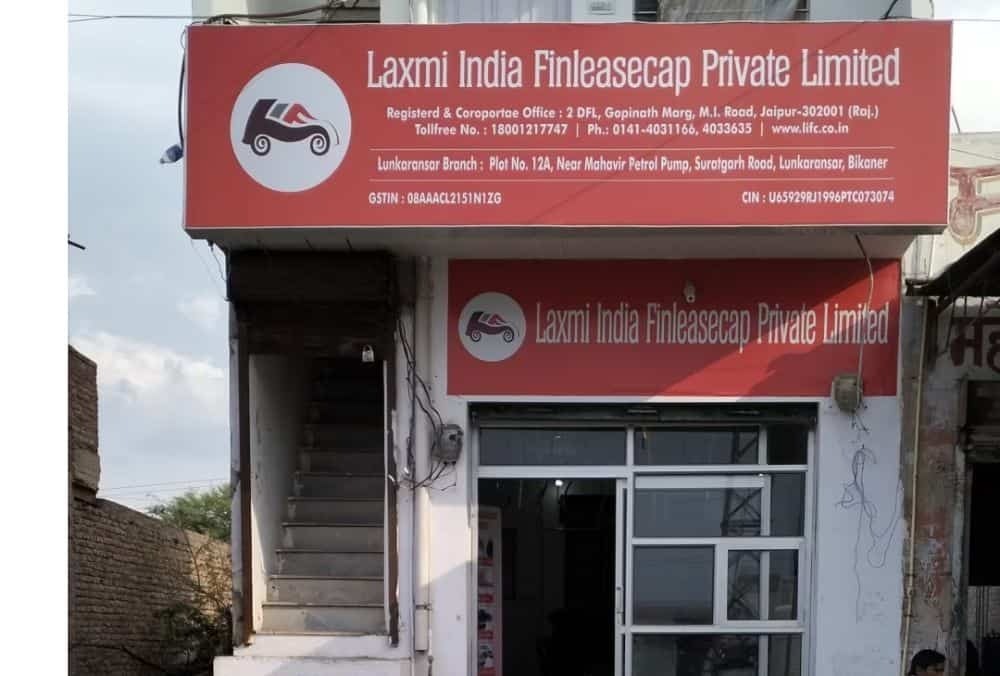
Laxmi India Finance Limited (LIFL) has closed the final chapter of its first year as a listed entity with a performance that highlights both the aggressive scaling of its branch-led model and the inevitable friction of high-growth lending. The company reported a consolidated Net Profit of ₹20.52 crore for the quarter ended March 31, 2026, marking a significant 40.8% YoY jump. While the headline numbers suggest a smooth ride, a deeper look into the P&L reveals that a sizeable portion of this quarter’s profitability was fueled by a one-off gain from a Direct Assignment (DA) pool sale.
The Non-Banking Financial Company (NBFC), which focuses on the “underbanked Bharat” across six states, saw its Assets Under Management (AUM) swell to ₹1,626.26 crore, a 27.3% increase over the previous fiscal. However, this growth has come at a cost. Gross Non-Performing Assets (GNPA) surged to 2.13%, largely attributed to a specific stressed exposure. As the company pivots from a Rajasthan-centric player to a multi-state institution, the management’s ability to “walk the talk” on risk discipline is being tested.
1. At a Glance
The financial narrative of Laxmi India Finance is currently a tug-of-war between impressive operational scaling and emerging asset quality red flags. On one hand, the company is successfully institutionalizing its operations post-IPO, with its net worth jumping to ₹465.47 crore and its credit rating receiving an upgrade to ACUITE A (Stable). On the other hand, the credit cost trajectory is starting to look volatile.
In the world of finance, high yields usually hide high risks, and Laxmi is no exception. Operating in the MSME and used vehicle segment—often without formal income proof—requires a “boots on the ground” approach that is expensive and difficult to scale. The company’s Financing Margin improved to 29% in the latest quarter, but investors must realize this was heavily aided by an ₹8.66 crore upfront profit from a pool sale. Without this one-off, the core earnings would have looked far more modest.
The most glaring concern is the jump in GNPA from 1.07% to 2.40% during the nine-month period, eventually settling at 2.13% by March 2026. Management has pointed to a specific default in a DA pool of Up Money Limited, where an exposure of ₹19 crore required an accelerated provision of ₹11 crore. While they expect a recovery through legal recourse, it serves as a stark reminder that even “secured” portfolios can face liquidity chokepoints when the counterparty fails to remit proceeds.
Can a company that still derives 82% of its AUM from a single state (Rajasthan) truly claim to be a diversified regional powerhouse? The geographic concentration remains a massive structural risk. While they are planting flags in Maharashtra and Uttar Pradesh, these new territories come with localized legal idiosyncrasies and different property documentation standards. The transition from a local champion to a systemic player is often where the most skeletons are found in the closet.
2. Introduction
Laxmi India Finance Limited (LIFL) started its journey in 1996 but effectively took its current shape in 2011 after merging with Deepak Finance & Leasing. Based out of Jaipur, it has carved a niche by lending to small traders, shop owners, and transport operators—the segments that traditional banks often shun due to lack of formal documentation.
The company’s philosophy is built on the belief that “documentary poverty” does not equal “credit unworthiness.” By conducting physical field visits to shops and assessing family-level leverage rather than just relying on CIBIL scores, Laxmi has built a book that is 98% secured. This collateral-heavy approach (with a reported average LTV of 45%) is their primary defense against the inherent volatility of their borrower base.
Post its August 2025 IPO, the company has been flush with capital, which it has used to expand its network to 176 branches. The strategy is clear: build density in clusters to maintain local underwriting knowledge. However, as the organization grows, the challenge moves from “sourcing” to “monitoring.” The latest results show that while the engine is running fast, the friction is heating up the components.
3. Business Model – WTF Do They Even Do?
Laxmi India Finance is essentially a “high-yield bridge” for the informal economy. They take money from big banks and institutional lenders and pass it on to people who buy used tractors, electric three-wheelers, or need working capital for their kirana stores.
The Product Mix
- MSME Finance: This is the bread and butter, making up the lion’s share of the AUM (₹1,298 crore). These are secured loans against property (LAP) given to micro-entrepreneurs.
- Vehicle Finance: They finance the “wheels of the economy”—used commercial vehicles, tractors, and increasingly, EVs.
- Construction Loans: Retail loans for residential property renovation or extension.
- Wholesale Lending: They also play “big brother” by lending to other smaller NBFCs.