Lakshmi Electrical Control Systems Ltd Mar 2026: The 165x P/E Mirage on a 0.44% Return on Equity
Section 1 — At a Glance
A structural contraction in operational efficiency has culminated in Lakshmi Electrical Control Systems Limited (LECS) reporting a net profit of just ₹1.19 crore for the financial year ended March 31, 2026. This represents an acute multi-year degradation from the ₹13.96 crore posted in FY24 and ₹3.47 crore in FY25, highlighting a severe compression in earnings power despite minor top-line recoveries. While annual revenue experienced a moderate 11.9% rebound to ₹237.58 crore in FY26, the company’s operating profit collapsed to a mere ₹1.00 crore, leaving the operational core highly exposed to structural overheads and raw material volatility.
Investor attention remains intensely anchored to the massive structural divergence between the company’s market valuation and its underlying capital efficiency. At a current market price of ₹802.85, the public equity markets price this business at an extraordinary price-to-earnings (P/E) multiple of 164.59 times, even as its fundamental Return on Equity (ROE) has dropped to an institutional low of 0.44%. The primary support structure for the valuation remains its net asset base, with the stock trading at a discount to its book value of ₹1,038 per share, backed by substantial non-operational liquid investments.
Compounding these structural balance sheet concentrations is a profound client reliance threat: a single counterparty, Lakshmi Machine Works Ltd (LMW), consistently commands approximately 80% of total revenue streams. When capital returns deteriorate below risk-free rates, asset discounts reflect long-term structural constraints rather than short-term market inefficiencies. The forward outlook hinges on whether management can successfully navigate severe customer concentration while stemming systemic cash conversion cycles.
Section 2 — Introduction
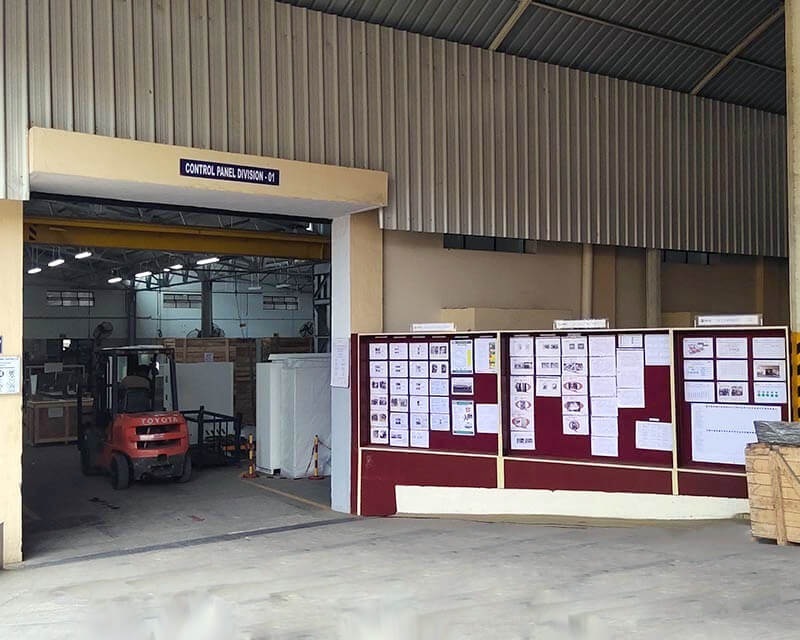
Welcome to the fascinating world of Lakshmi Electrical Control Systems (LECS), an engineering entity established in 1981 that has mastered the rare corporate art of moving forward while technically standing still. Headquartered in the textile hub of Coimbatore, Tamil Nadu, the company operates across two manufacturing facilities, fabricating control panels and industrial plastics.
If you glance casually at their corporate history, you will discover a respectable heritage tied closely to the prominent Lakshmi Group. They have historically partnered with European players like Sprecher+Schuh Switzerland, highlighting a sophisticated technical lineage. However, modern performance has evolved into a masterclass in financial eccentricity. The company currently exists as a pristine, nearly debt-free fortress wrapped inside an incredibly volatile operational envelope. For long-term shareholders, looking at the stock ticker requires a steady stomach and an absolute willingness to look past conventional economic logic.
Section 3 — Business Model: WTF Do They Even Do?
To understand LECS, one must understand that it is essentially a highly specialized, outsourced engineering department masquerading as an independent public corporation. Their primary business consists of putting together complex electrical control panels, automation systems, and power control centers. They also run a division that molds engineering plastic components for the automotive and industrial machinery sectors.
But here is the structural twist that makes the business model truly wild: the company derives roughly 80% of its total revenue from a single customer—its group parent, Lakshmi Machine Works (LMW). When LMW sells textile machinery, LECS builds the control panels that go inside them. If LMW catches an economic cold, the LECS factory floor falls into a state of deep, reflective silence.
The remaining fragments of their revenue are divided between commercial toolrooms, selling smart energy meters, and running a microscopic wind power generation business that contributes exactly 1% to the top line. It is a business model built entirely on maximum codependency.
Section 4 — Financials Overview
Figures are standalone, in ₹ crore.
Metric
Latest Quarter (Mar 2026)
YoY
QoQ
Revenue
₹68.47
Up 17.85%
Up 17.26%
Operating Profit
₹1.38
Down 58.05%
Up 220.00%
PAT
₹1.19
Down 55.93%
Up 213.33%
EPS
₹4.84
Down 55.93%
Up 213.33%
The final quarter of FY26 brought a desperate sigh of relief from the accounting team, as revenue climbed to ₹68.47 crore,