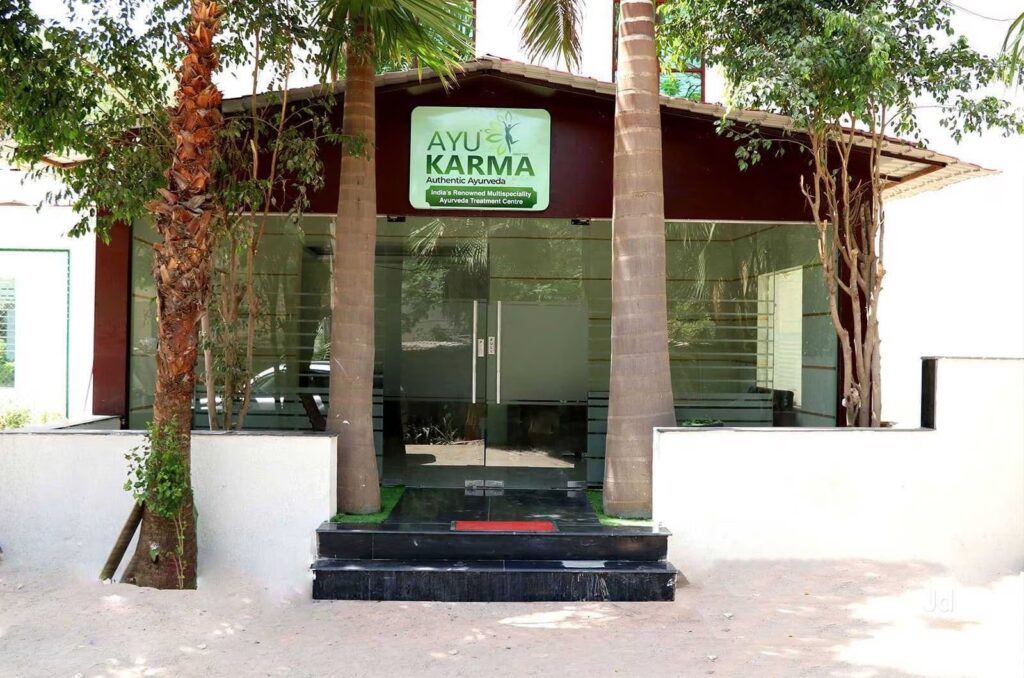
KRM Ayurveda IPO is not coming quietly. It’s walking in with a ₹287 crore market cap, a ₹135 price band, and the confidence of someone who just discovered turmeric latte on Instagram. The issue size is ₹77.49 crore, fully fresh, which means no promoter is cashing out (yet). Retail investors are asked to bring a minimum of ₹2.7 lakh to the table—this is SME IPOs reminding you that gareeb log kripya door rahein.
On paper, the company looks profitable, asset-heavy, and ROE-positive. On valuation, it’s asking for a post-IPO P/E of ~23.7x, which is bold for an Ayurveda hospital chain that hasn’t yet proven long-term consistency. Telemedicine dreams, hospital beds, Panchakarma units, and CRM software all bundled into one IPO thali. Sounds exciting. Or spicy. Or both.
So the real question: is this a genuine healthcare scale-up story or an Ayurveda-flavoured valuation experiment?
2. Introduction – Ancient Science, Modern Pricing
Ayurveda is 5,000 years old. IPO bankers, however, are very modern.
KRM Ayurveda Ltd., incorporated in 2019, has grown aggressively in a short span. Six hospitals, five clinics, telemedicine outreach, in-house medicine manufacturing, and overseas consultations. This is not your neighbourhood vaidya with a notebook. This is Ayurveda with PowerPoint slides.
But here’s where investors should slow their pranayama breathing. The financials show wild swings. Revenue fell from ₹89 crore in FY23 to ₹67 crore in FY24, then bounced to ₹76.9 crore in FY25. PAT jumped sharply in FY25. ROE dropped from a comical 67% to a more realistic 21.8%.
Whenever profitability suddenly improves right before IPO, the seasoned investor’s left eyebrow automatically lifts. Is this operational maturity? Or pre-IPO yoga?
Let’s dig deeper.
3. Business Model – WTF Do They Even Do?
Think of KRM Ayurveda as a vertically integrated Ayurveda healthcare chain.
They don’t just consult. They:
Diagnose patients
Admit them into hospitals
Put them through Panchakarma detox
Feed them Ayurvedic diets
Sell them in-house medicines
Offer yoga & meditation
And now… telemedicine
Revenue streams include:
In-patient treatments
Out-patient consultations
Panchakarma packages
Wellness programs
Medicine sales
Diet & lifestyle counselling
This is good old ARPU maximisation. One patient, many invoices.
The risk? This model is people-intensive, regulation-sensitive, and highly dependent on brand trust. You can’t franchise Ayurveda like coffee. One wrong treatment story and WhatsApp University will do the rest.
4. Financial Overview – Numbers Don’t Lie, But They Do Stretch
(₹ in Crore)
Metric
FY25
FY24
FY23
Revenue
76.95
67.57
89.38
EBITDA
19.11
7.34
11.03
PAT
12.10
3.41
7.60
EBITDA Margin
24.96%
10.86%
12.34%
PAT Margin
15.80%
5.04%
8.50%
Sudden margin expansion in FY25 is the headline act here. EBITDA margin jumped sharply, PAT almost quadrupled from FY24.
Question for you: did costs permanently reduce or did revenues temporarily inflate?
Because sustainability is everything.
5. Valuation Discussion – Expensive Chyawanprash?
Post-IPO metrics (at ₹135):
EPS (post): ₹5.69
P/E: ~23.7x
Price to Book: 5.27x
For an SME healthcare company with:
Inconsistent revenue history
High working capital needs
Debt still on books
This is not cheap.
Fair Value Thinking (Educational Only):
P/E sanity range: 15–18x
EV/EBITDA comfort: 10–12x
At IPO pricing, it’s clearly asking for future perfection