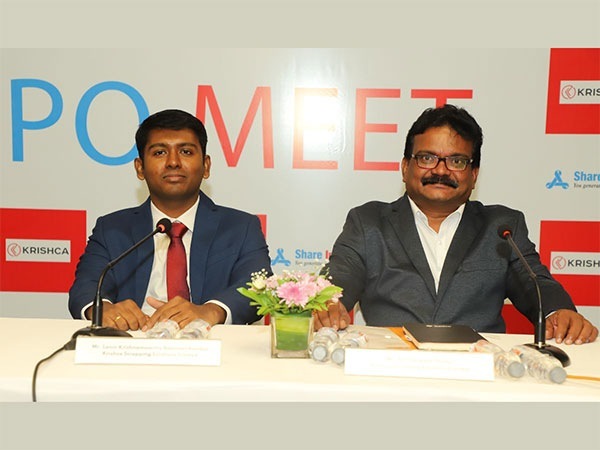
Chennai’s very own Krishca Strapping Solutions Ltd (KSSL) has quietly been strapping up India’s industrial packaging scene with more discipline than a GST audit. The company, with a market cap of ₹269 crore, runs on the fuel of steel, sweat, and slightly obsessive efficiency. As of H1 FY26, it clocked revenues of ₹92.7 crore, EBITDA of ₹15 crore, and PAT of ₹6.18 crore — all while plotting an ambitious ₹80 crore capex for a shiny new 60,000 TPA cold rolling complex.
The stock currently trades at ₹186, down nearly 45% in a year (probably because investors confused “strapping” with “strapped for cash”). With a P/E of 21.5, ROCE of 20.4%, and ROE of 16.6%, this is one of those SMEs that behaves like a listed conglomerate but gets priced like a bored smallcap.
Quarterly sales jumped 45.6% YoY, profits rose 13.6%, and debt climbed to ₹82.8 crore, suggesting the company is playing in the “grow now, chill later” league. Promoters still hold 51.9%, DIIs have entered with 2.35%, and an order book of ₹180+ crore plus Vedanta contracts worth ₹65.75 crore ensures that the machines won’t be sleeping any time soon.
2. Introduction
If you’ve ever opened a package wrapped in steel straps and wondered, “Who even makes these?” — meet Krishca Strapping Solutions Ltd, a company that’s literally binding India’s industrial sector together. Founded in 2017, this Chennai-based outfit has gone from a local supplier to a 10% market share holder in India’s steel strapping universe — and they did it without any flashy IPO buzz or viral “Shark Tank” moment.
Their real flex? An eco-friendly, lead-free heat treatment line (first of its kind in India) that makes steel straps without poisoning the planet — or the auditors. From JSW, SAIL, Hyundai Steel, and Jindal to Vedanta Group, Krishca’s client list reads like a who’s who of Indian metallurgy.
But don’t let the industrial jargon fool you — this company isn’t just tightening straps; it’s tightening its hold on the packaging value chain. With forays into HDPE tarpaulins, PET straps, and dunnage airbags, Krishca is quietly morphing from a steel product manufacturer into a full-stack packaging solutions brand.
The only catch? The expansion costs money — a lot of it. Debt has gone up nearly 4x since FY24, and the cash flow from operations has turned negative (₹–20 crore in FY25). But that’s what happens when you dream big and sign Vedanta-sized contracts before lunch.
3. Business Model – WTF Do They Even Do?
Let’s simplify. Krishca Strapping Solutions isn’t making your courier box straps. They’re building industrial-strength steel straps that can hold tons of rolled steel, pipes, and coils in place during transport — the kind of stuff that literally keeps factories safe and ports running.
Their core product portfolio revolves around:
Steel Straps: The heavy-duty, high-tensile kind that doesn’t snap even when a forklift driver sneezes too hard.
Steel Seals: The final boss of packaging — locking those straps so that cargo stays tighter than your last budget.
Strapping Tools: Manual and pneumatic tools designed to help companies secure packages faster and smarter.
The real twist? Krishca’s pivot toward primary packaging products like HDPE Tarpaulins, VCI coatings, PET straps, and automation tools. In short, they’re not just selling steel straps anymore; they’re selling peace of mind to every logistics manager who’s ever been yelled at for damaged cargo.
With a 30,000 MTPA strap capacity and 120 million seal capacity, their Chennai facility is humming like a TATA steel mini-version. Add 450 employees and two new subsidiaries in UAE and Singapore, and you realize Krishca is going global while many SMEs are still fighting GST portals.
4. Financials Overview
Metric
H1 FY26 (Sep 2025)
H1 FY25 (Sep 2024)
Prev Half (Mar 2025)
YoY %
QoQ %
Revenue
₹92.7 Cr
₹64 Cr
₹86 Cr
+45.6%
+7.8%
EBITDA
₹15.0 Cr
₹9 Cr
₹13 Cr
+66.7%
+15.4%
PAT
₹6.18 Cr
₹5 Cr
₹6 Cr
+23.6%
+3.0%
EPS (₹)
4.34
3.83
4.44
+13.3%
–2.3%
Annualised EPS (₹4.34 × 2) = ₹8.68, which aligns with the TTM EPS of ₹8.78. So yes, the math checks out — and no, they’re not cooking the books (at least not visibly).
Commentary: Revenue is rising faster than my blood pressure during tax filing, and while the margins are stable around 16%, the real magic is in the order book pipeline — ₹180+ crore worth of contracts, including Vedanta’s ₹65.75 crore bonanza.
The only red flag? Working capital days have almost doubled from 52 to 99. Translation: Krishca’s customers are paying slower, probably because everyone wants the packaging but no one wants to pay for it yet.
5. Valuation Discussion – Fair Value Range Only
Let’s keep this academic and drama-free (unlike the SME price charts).
(a) P/E Method TTM EPS = ₹8.78 Industry P/E = 21.0 So, fair range = 18× to 25× EPS = ₹158 – ₹220 per share
(b) EV/EBITDA Method EV = ₹351 Cr EBITDA (TTM) = ₹28 Cr EV/EBITDA = 12.5× Sector median = 10–14× Fair value range = ₹170 – ₹230 per share
(c) DCF (Simplified) Assume FCF stabilizes post capex in FY27, with growth of 15%, discount rate 12%, terminal growth 4%. Intrinsic value band: ₹165 – ₹225 per share
👉 Educational Fair Value Range: ₹160 – ₹225 (For educational purposes only, not investment advice. Because your CA will blame me