KPT Industries Q4 FY26: Revenue Hits a Record ₹174 Cr While Profit Quietly Walks Backwards
Spotted a factual error — a wrong number, date, or fact? Tell us and we will check the source.
General information and entertainment, not investment advice. The author is not a SEBI-registered adviser or research analyst. No recommendation, no promised returns. Markets carry risk including loss of capital. Figures may not be current. Consult a registered adviser before acting.
1 — At a Glance
KPT Industries closed FY26 with the highest revenue in its history — ₹173.77 crore — and a smaller profit than the year before. Net profit slipped to ₹12.07 crore from ₹13.93 crore, and EPS fell in step, from ₹40.97 to ₹35.50. Both moved down together, so this is a genuine profit dip, not a share-count illusion — the count sat unchanged at 34 lakh shares all year.
The March quarter carries the tension. Revenue jumped 26% year-on-year to ₹50.07 crore, the best quarter on record, yet operating profit fell to ₹5.08 crore and the operating margin thinned to 10.15% — the lowest quarterly reading in over two years, down from the 16–18% band the company printed through FY25.
Underneath the numbers, the year was eventful in ways a spreadsheet doesn’t show: the Executive Chairman died in January, the foreign promoters exited entirely, and a new CEO and non-executive Chairperson stepped in. The market currently pays about 13x earnings for all of this, against a peer median above 32x. A four-decade-old power-tools maker growing its top line while its margin and boardroom both reshuffle — that’s the entry.
2 — Introduction
KPT was incorporated in 1976 as Kulkarni Black & Decker Limited, a joint venture between the Kulkarni family and Black & Decker of the USA. In 1993 the family bought out the American partner, and the name became Kulkarni Power Tools Limited, later KPT Industries. Nearly fifty years on, it still makes electric power tools from a base in Shirol, Kolhapur.
FY26 was the year the founding generation formally handed over. Executive Chairman Prakash Arvind Kulkarni died on 3 January 2026 at the age of 83. In February the board appointed Prabha Kulkarni as Non-Executive Chairperson and brought in Mayur Mandlekar as CEO, effective 17 February 2026. The CFO seat had already turned over more than once in prior years.
The register also lost its foreign promoters. Across late FY26, promoters Nirmala Dilip Kulkarni and Dilip Arvind Kulkarni sold down their entire stake, and by 31 March 2026 held no shares under the promoter category. The company itself flagged that part of this selling happened without the pre-clearance its own insider-trading framework requires — a disclosure it made to the exchange in April.
So the year’s story runs on two tracks: a record revenue line, and a leadership and ownership table that looks materially different than it did twelve months earlier.
3 — Business Model: WTF Do They Even Do?
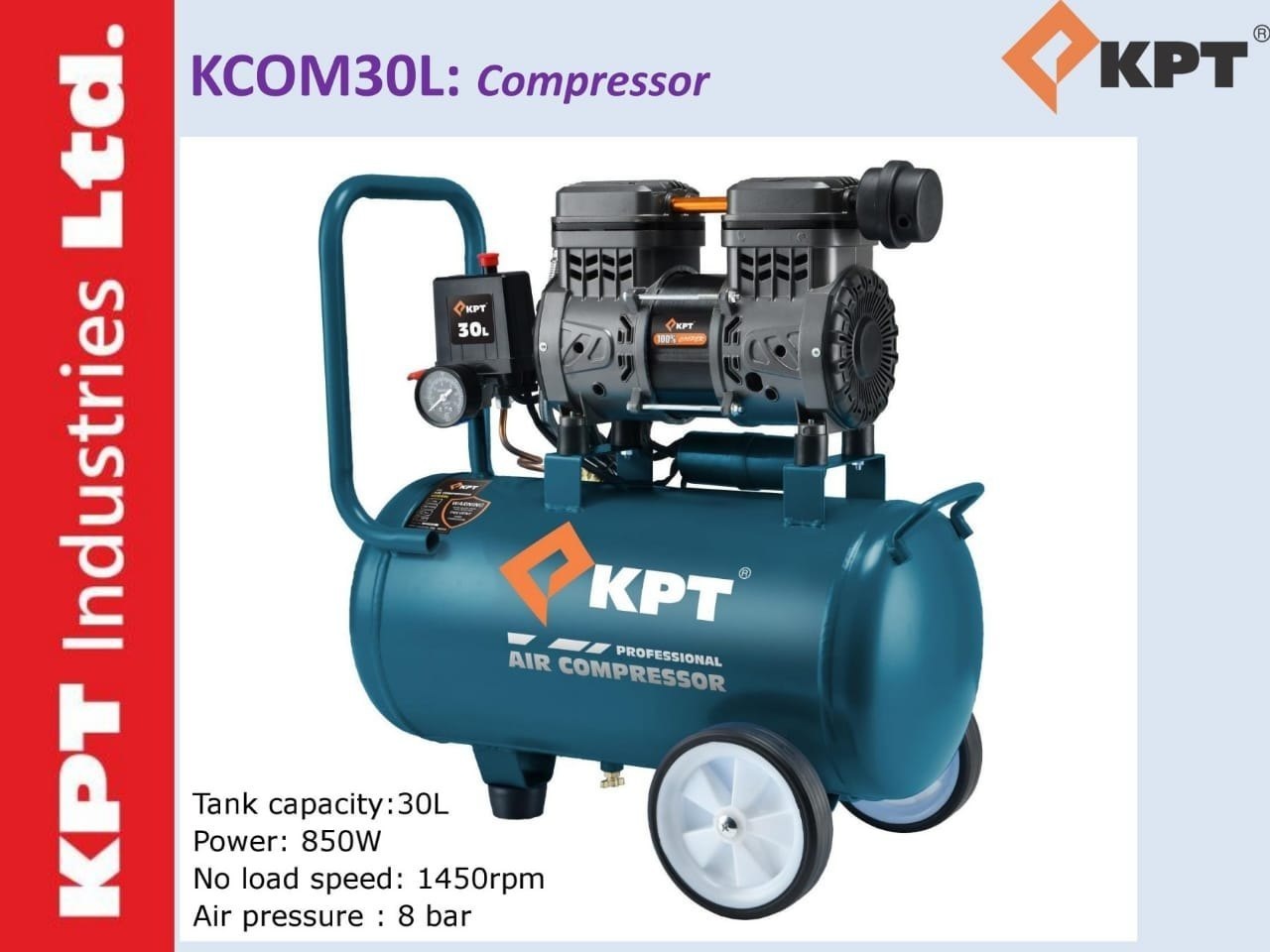
KPT makes things that spin, grind, blow, and — more recently — haul garbage.
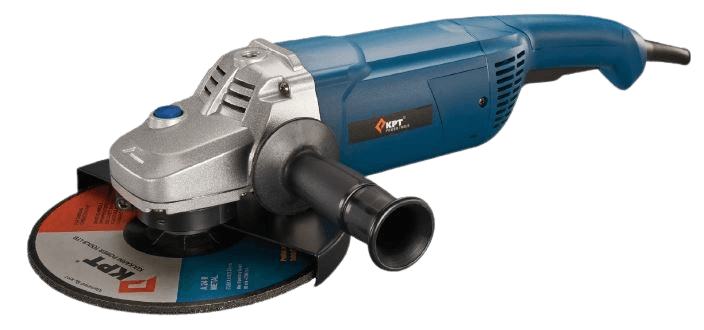
The core is portable power tools: drills, angle grinders, sanders, polishers, tile cutters, cut-off saws. These go into bus-body building, rail coaches, shipyards, refinery pipe-laying, and the general electrician-plumber-carpenter economy. In FY26 the Power Tools segment brought in ₹114.42 crore of the ₹173.77 crore total — roughly two-thirds of the company, and the reason its fortunes rise and fall on this one line.
The second leg is Blowers and exhausters, ₹42.46 crore in FY26 — machines for effluent and sewage treatment, pneumatic conveying, dairies, bakeries, petrochem, power plants. This division largely works make-to-order, which is a polite way of saying revenue arrives when someone places an order and not a day sooner.
Then there’s the third act everyone likes to talk about: the E-Cart ‘Pushpak’, a hydraulic electric vehicle built to carry and dump municipal garbage. It’s the growth story management points to — but at ₹16.38 crore in FY26, roughly 9% of sales, it’s still the garnish, not the meal. A windmill segment exists too, at ₹0.51 crore, which is less a business division and more a rounding error with blades.
Raw materials — ferrous and non-ferrous castings, steel, copper wire — run about 65% of sales, and the company competes against a fragmented crowd of unorganised players. When your biggest cost is metal and your industry has low entry barriers, the model is: buy metal, add engineering, sell before someone cheaper does.
Does a two-thirds dependence on power tools make E-Cart a diversification, or just a hopeful press release with wheels?
4 — Financials Overview
Figures are standalone, in ₹ crore.
Metric
Latest Q (Mar ’26)
YoY
QoQ
Revenue
50.07
+26.2%
+22.0%
Operating Profit
5.08
−10.1%
−10.2%
PAT
2.83
−6.0%
+10.1%
EPS (₹, not annualised)
8.32
vs 8.85
vs 7.56
The quarter is a study in divergence: revenue at a record high, operating profit lower than both the year-ago and the prior quarter. Sales