The renewable energy sector in India is currently witnessing a massive transformation, but few players are sprinting as fast as the one we are discussing today. While most firms struggle with land acquisition and evacuation bottlenecks, this Gujarat-based powerhouse has just reported its seventh consecutive quarter of record-breaking revenue. With a consolidated PAT of ₹509 crore for the full year FY26—a 57% jump over the previous year—the company is no longer just a regional player; it is morphing into a utility-scale giant.
However, behind the glittering profit numbers lies a massive surge in debt, which has ballooned to over ₹5,100 crore to fund an aggressive 2.17 GW IPP portfolio. The management has successfully “energized” 965 MWp as of March 2026, yet the market remains cautious about the high promoter pledge and the “lumpy” nature of execution reporting. Can this firm sustain its 92% five-year sales CAGR while maintaining a debt-to-equity ratio that is already testing the limits of its balance sheet?
1. At a Glance
The numbers coming out of this renewable energy specialist are designed to turn heads, but they also demand a closer look at the underlying risks. We are looking at a company that has scaled its revenue from a mere ₹34 crore in 2019 to a staggering ₹2,696 crore in 2026. That is not just growth; it is an explosion. Investors have been drawn to the “Solarism” brand like moths to a flame, pushing the market capitalization to nearly ₹9,100 crore.
But here is the catch: to fuel this fire, the company has leveraged itself to the hilt. Total borrowings have surged to ₹5,197 crore, up from just ₹1,475 crore a year ago. While the management boasts of a “best-in-industry” debt-equity ratio for a capex-heavy firm, the reality is that interest costs have skyrocketed by 130% year-on-year, eating into the operational gains.
Furthermore, the promoter pledge stands at a staggering 44.7%. In the high-stakes world of infrastructure, a pledged holding of nearly half the promoter’s stake is a red flag that cannot be ignored. The management has tied the release of these pledges to the completion of their 1 GW project—a promise that hinges entirely on execution timelines that are often at the mercy of government sub-stations and grid readiness.
The company is currently operating at a Stock P/E of 20.3, which looks optically “cheap” compared to the industry median of 31.0. However, the aggressive capitalization of interest costs and the reliance on a few massive orders from giants like Adani and GUVNL create a concentration risk that would make a conservative auditor lose sleep. Is this a multi-bagger in the making, or a highly leveraged bet on a sunny future that might see some clouds?
2. Introduction
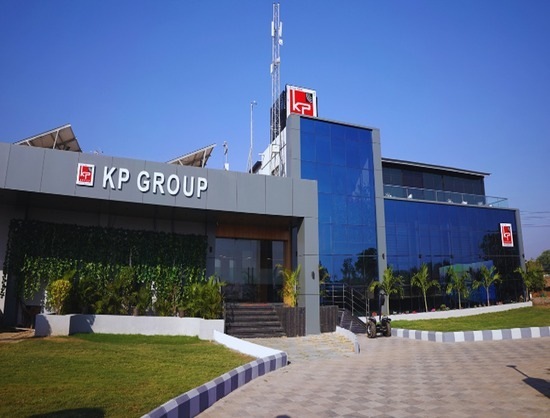
KPI Green Energy Limited, the crown jewel of the Surat-based KP Group, has evolved from a small-scale solar developer into a multi-vertical renewable energy major. Founded by Dr. Faruk G. Patel, the company operates primarily through two distinct business models: the Independent Power Producer (IPP) segment and the Captive Power Producer (CPP) segment.
While the CPP segment remains the primary revenue driver, contributing roughly 91% of the top line in FY26, the strategic pivot is clearly toward the IPP model. This shift is aimed at creating a long-term annuity income stream where the company owns the assets and sells power through 25-year Power Purchase Agreements (PPAs).
The company’s footprint is heavily concentrated in Gujarat, but it has recently begun aggressive expansion into Maharashtra, Rajasthan, and even international markets like Botswana. With an ambitious target to reach 10,000 MW (10 GW) of capacity by 2030, the management is positioning KPI Green as an “all-weather” energy player, integrating solar, wind, and the latest buzzword in the industry: Battery Energy Storage Systems (BESS).
The latest financial results for FY26 show a company in a hurry. However, as any seasoned investor knows, speed in the infrastructure sector often comes at the cost of balance sheet stability. We will now dive into the “what” and “how” of their business to see if the foundation is as strong as the superstructure.
3. Business Model – WTF Do They Even Do?
If you think this is just a company that puts panels on a roof, you are mistaken. KPI Green is essentially a real-estate-cum-energy-tech firm. They find the land, secure the “power evacuation” (fancy word for getting a plug into the national grid), and then either sell