Kothari Petrochemicals Ltd H1 FY26 – Polyisobutylene Profits Rise 14%, Margins at 17%, and a ₹74 Cr Land Grab for Expansion!
1. At a Glance
Kothari Petrochemicals Ltd (KPL), the not-so-silent chemical ninja of Chennai, just dropped its H1 FY26 numbers — and the data smells like freshly distilled Polyisobutylene (PIB). For the half year ended September 2025, the company reported a revenue of ₹30,369.38 lakh (₹303.7 Cr) and a PAT of ₹3,599.21 lakh (₹36 Cr), clocking an EPS of ₹6.12, despite an exceptional loss of ₹25.82 lakh. The stock, however, doesn’t seem to be celebrating — sitting sulky at ₹130 per share, down nearly 35% over the past year, giving the company a market cap of ₹764 Cr.
But here’s the kicker: the company’s ROE stands tall at 23.8% and ROCE at a bossy 30%, all while carrying a debt of barely ₹2.6 Cr. That’s right — this is a company with the leverage of a monk and the margins of a mafia. It’s generating Operating Profit Margins (OPM) around 15–17%, and with a stock P/E of just 11.5, it trades cheaper than a Manali roadside tea stall.
And in a bold corporate move, Kothari just approved a ₹74 Cr land purchase in Andhra Pradesh for capacity expansion — a clear sign that this PIB party isn’t stopping anytime soon.
2. Introduction
If there was an “Introverts Hall of Fame” for Indian chemical companies, Kothari Petrochemicals would be leading the nominations. Quietly operating from Manali (the Chennai one, not the hill station), KPL is a part of the HC Kothari Group, and it has managed to monopolize the Indian Polyisobutylene (PIB) market without a whisper of drama.
For those not in the chemical cult — PIB is that sticky, viscous polymer that makes everything from your engine oil smoother, your paint glossier, to your rubber stronger. You may not know it, but there’s a good chance your car engine owes its smooth performance to these folks.
The company’s journey from a modest 30,000 TPA plant to a 48,000 TPA approved capacity by the Central Pollution Control Board is nothing short of impressive. Its export network now stretches to 20 countries including Belgium, Japan, and the USA — basically, PIB with a passport.
However, while the products go global, the stock seems to be stuck in local traffic. Despite stellar fundamentals — 30% ROCE, 0.01 debt-to-equity, and a five-year profit growth of over 30% CAGR — the market’s been giving it side-eye. Perhaps investors haven’t forgiven the “petrochemical” tag yet, or maybe they’re waiting for that Andhra Pradesh land to start producing magic.
Either way, with consistent profitability, zero pledges, and promoters slowly increasing their stake, this polymer prince is playing a long game.
3. Business Model – WTF Do They Even Do?
Let’s break this down like PIB molecules — slow, stretchy, and resistant to nonsense.
Kothari Petrochemicals is India’s largest manufacturer of Polyisobutylene (PIB), a non-drying, highly viscous polymer used across multiple industries — from lubricants, adhesives, rubber compounding, plastics, and fuel additives to some food-grade packaging.
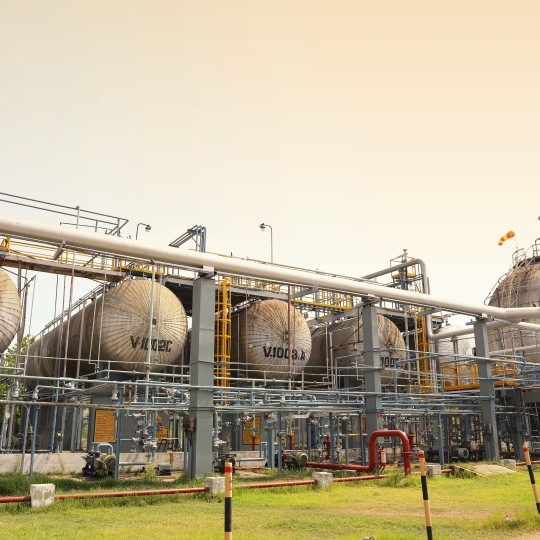
Their Manali facility (Chennai, not Himachal Pradesh) is ISO-certified, USFDA-registered, and environmentally approved — basically the chemical equivalent of a triple-filtered whisky. The current capacity of 48,000 TPA is a result of continuous upgrades and expansion.
Their product portfolio is a PIB alphabet soup:
KVIS 10 / 20 / 30 / 100 / 150 / 200 – various low molecular weight grades for lubrication and plastics.
PIB R-01 – specialized grade for industrial and fuel applications.
Revenue streams? Two:
Contract-based formula pricing – where the company links PIB prices to raw material indices like LPG or Naphtha, protecting margins.
Spot sales – for opportunistic price advantages.
Raw material sourcing: About 30% feedstock comes from CPCL (Chennai Petroleum Corp) via pipelines, and the rest from Reliance Industries. Talk about having both PSU discipline and Ambani efficiency.
Exports contribute ~26% of revenue, with clients like Lubrizol India, HPCL, IOCL, and Infineum Singapore. That’s quite the “oily” client list, literally.
And just to make sure no one mistakes them for a sleepy PSU, they’re diversifying into High Molecular Weight PIB and HR PIB, building a portfolio with more “stretch” than a yoga mat.