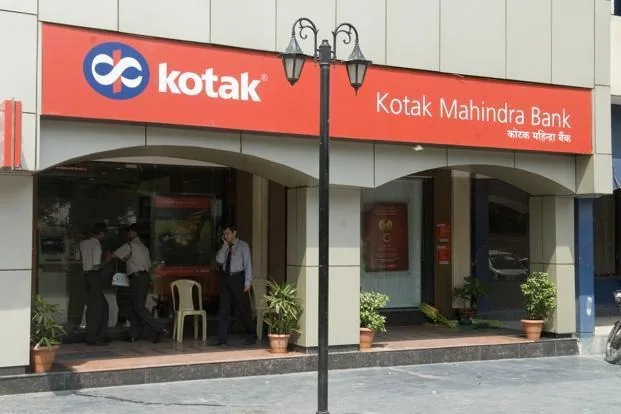
Kotak Mahindra Bank:
₹3,400 Cr Profit. 10.68% ROE.
30% of Earnings Come From Subsidiaries. Now Watch It Scale.
Advances up 16%. Deposits up 15%. Credit costs crashing. A 5-for-1 stock split just approved. And the bank is about to deploy 75% of servers into virtual infrastructure. This is a “scale responsibly” quarter dressed up as boring earnings.
The Conglomerate That Prints Money From Multiple Taps
- 52-Week High / Low₹460 / ₹381
- Q3 FY26 Revenue₹17,507 Cr
- Q3 FY26 PAT₹4,924 Cr
- Q3 Standalone PAT₹3,400 Cr
- Q3 EPS (₹)4.95
- Book Value₹169
- Price to Book2.37x
- Dividend Yield0.13%
- Net Advances Growth+16% YoY
- Deposit Growth+15% YoY
Banking’s Favourite Conglomerate Wants To Become A Tech Conglomerate
Kotak Mahindra Bank is not a bank. Well, technically it is. But what Kotak really is: a financial holding company masquerading as a bank with 19 wholly-owned subsidiaries and associates spreading across insurance, broking, auto-finance, asset management, and infrastructure lending. The consolidated business is a three-legged cash machine. Banking is one leg. Subsidiaries are the other two.
In Q3 FY26, consolidated profits were ₹4,924 crore. The standalone bank’s contribution was ₹3,400 crore. Meaning 30% of consolidated earnings came from non-banking subsidiaries. That’s not a footnote — that’s the architecture. And it’s growing fast. Kotak Mahindra Prime (auto-finance) posted +15% YoY profit. Kotak Securities clocked +31% QoQ profit. Life insurance grew individual APE +18.7% YoY. Asset management AUM jumped +20% YoY. This isn’t diversification for safety; this is a deliberate earnings engine designed to diversify revenue away from traditional banking compression.
But here’s the rub: the bank is also pivoting hard into tech. 75% of servers are now virtual. A new CTO and Head of Innovation appointed in February 2026. Anup Saha brought in from outside (announced Jan 12) to run consumer banking “at scale” with data analytics as the core lever. RBI lifted its onboarding restrictions in February 2025 after the bank passed IT resilience audits. And management is obsessed with cost-to-income ratios and automation. This is a bank trying to be a 2026 fintech while also being a 1998 conglomerate. Execution on both fronts simultaneously? Risky. Rewarding? Potentially massive.
The Octopus Strategy: One Sucker Touching Everything in Finance
The business model is straightforward in design, Byzantine in execution. Core banking (mortgages, SME, corporate, unsecured retail, rural) generates the deposit franchise and provides the license to operate. Then subsidiaries and cross-sell extend the profit pool. Auto-finance takes car loans off balance sheet (subsidiary model). Insurance de-risks the bank and sells protection to customers. Broking captures capital market flows. Asset management manages the money. Investment banking advises. Commercial real estate gets financed through a separate subsidiary. Every customer touch gets monetized across multiple entities.
The competitive advantage is distribution density. 2,154 branches (as of June 2025, up from 1,948 in Mar 2024). 6.79 lakh shareholders as of December 2025. A 5-crore+ customer base. Institutional access. Retail penetration in Tier-2 and Tier-3 via the “Core India” initiative and the restarted “811” digital savings product. This depth is a moat. Not because of technology (their IT got audited and failed, remember), but because every branch, every digital channel, every customer conversation becomes a sales opportunity for 19 products.
Q3 FY26: The Numbers That Matter
Result type: Quarterly Results | Q3 EPS: ₹4.95 | Annualised EPS (Q3×4): ₹19.80 | FY25 Full Year EPS: ₹22.26
Source table
| Metric (₹ Cr) | Q3 FY26 Dec 2025 |
Q3 FY25 Dec 2024 |
Q2 FY26 Sep 2025 |
YoY % | QoQ % |
|---|---|---|---|---|---|
| Revenue | 17,507 | 16,633 | 17,199 | +5.3% | +1.8% |
| PAT (Consolidated) | 4,924 | 4,701 | 4,468 | +4.7% | +10.2% |
| PAT (Standalone) | 3,400 | 3,450 | 3,150 | -1.4% | +7.9% |
| EPS (Consolidated, ₹) | 4.95 | 4.73 | 4.49 | +4.6% | +10.0% |
| Annualised EPS (Q3×4) | 19.80 | 18.92 | 17.96 | +4.6% | +10.2% |
Is This Bank Worth 21x Earnings or Just Expensive?
Method 1: P/E Based
FY25 EPS ₹22.26 / CMP ₹400 = P/E 17.96x (screener shows 21.1x on trailing 12-month basis due to EPS adjustments). Banking sector median P/E: 15.4x. Kotak’s premium reflects conglomerate earnings diversification and tech transition momentum. Justified P/E band: 16x–22x.
Range: ₹356 – ₹490
Method 2: P/B Based
Book value per share: ₹169 (Mar 2025). Current P/B ratio: 2.37x. Banking sector median P/B: ~1.27x. Higher P/B reflects ROE of 15.4% (higher than peer median 13.21%) and conglomerate structure. Justified P/B band: 1.8x–2.6x.
Book value range (1.8x–2.6x): ₹304–439
Range: ₹304 – ₹439
Method 3: RoE-Based (Gordon Growth)
Expected ROE: ~15%. Cost of equity: ~11%. Dividend payout: ~2%. Growth rate: 10% (advances growth trajectory). Terminal value reflects sustainable ROE multiple of 1.6x book value.
→ Terminal book value multiple: 1.6x–2.0x
→ Blended fair value range: ₹380–450
Range: ₹380 – ₹450
Management Chaos and Tech Ambition Collide. Watch and Pray.
🔴 The Big One: Whole-Time Director Reshuffle + Tech Leadership Changes
On January 12, 2026, Kotak appointed Anup Kumar Saha as Whole-Time Director (Executive Director) designate, overseeing consumer banking, data analytics, and marketing — a clear pivot toward tech-enabled retail scaling. Simultaneously, in February 2026, CTO Bhavnish Lathia resigned and was replaced by Nilesh Chaudhari (CTO) and Vijay Narayanan (Head—Innovation & AI). This is a bank preparing for autonomous scale, not organic growth. Management’s own words: “enabling balance sheet growth without corresponding headcount growth.” Translation: automation is not optional.
⚠️ Stock Split Approved (5-for-1)
- • Postal ballot passed Dec 26, 2025
- • ₹1 face value per share (from ₹5)
- • Effective completion within 2 months
- • No change to total market cap, just share count
- Classic liquidity play to widen retail appeal
✅ RBI Restrictions Lifted (Feb 12, 2025)
- • RBI lifted April 2024 onboarding ban on Feb 12, 2025
- • New customer onboarding via online/mobile now allowed
- • Fresh credit cards can be issued again
- • Bank passed IT resilience audits
- • Implies IT systems recovery trajectory confirmed
✅ Sonata Finance Acquisition Done (Microfinance MFI)
- • 100% stake in Sonata Finance Pvt Ltd (NBFC-MFI)
- • Purchase consideration: ₹537 crore (March 28, 2024)
- • Integration with BSS Microfinance underway
- • Target: scale microcredit with bank backing
⚠️ Zurich General Insurance Divestment (70% stake sold)
- • Sold 70% stake to Zurich Insurance for ₹5,560 Crore
- • Bank now holds 30% as associate
- • Completed June 2024
- • Proceeds used for capital strengthening
Capitalisation at 23.3%. Assets Growing at 15%. No Leverage Stress.
Source table
| Item (₹ Cr) | Mar 2023 | Mar 2024 | Mar 2025 | Sep 2025 (Latest) |
|---|---|---|---|---|
| Total Assets | 620,430 | 767,667 | 879,774 | 912,952 |
| Equity + Reserves | 111,814 | 129,972 | 157,489 | 167,935 |
| Deposits | 361,273 | 445,269 | 494,707 | 524,500 |
| Borrowings | 57,534 | 75,106 | 97,622 | 82,700 |
| CAR Ratio | 23.3% | 21.8% | 23.3% | 23.3% |
Equity + Reserves grew from ₹129.9 Cr (Mar 24) to ₹167.9 Cr (Sep 25) — a 29% increase in 18 months. Retained earnings are funding growth, not leverage. This is fortress balance sheet behaviour.
Capital Adequacy Ratio sits at 23.3% against a regulatory minimum of 8%. CET-1 at 22.4%. The bank can grow advances at 15%+ without raising capital for years.
Deposits grew ₹80k Cr in 18 months (Sep 2023 to Sep 2025). CASA ratio at 43% (down from 60.7% in FY22 — a real concern, but stabilizing as the bank restarted “811” acquisitions).
Gross NPA 1.30%. Credit Cost 63 bps. Unsecured Stress “Behind Us Now.”
Source table
| Metric | Q3 FY26 | Q2 FY26 | Q1 FY26 | Q3 FY25 |
|---|---|---|---|---|
| Gross NPA % | 1.30% | 1.51% | 1.48% | 1.39% |
| Net NPA % | 0.31% | 0.44% | 0.45% | 0.38% |
| PCR (Prov. Coverage) | 76% | 71% | 70% | 73% |
| Credit Cost (bps) | 63 | 79 | 93 | 70 |
NIM Flattening. But Cost-to-Income Is Being Targeted Hard.
Source table
| Metric | Q3 FY26 | Q2 FY26 | Q1 FY26 | Change (Q3 vs Q1) |
|---|---|---|---|---|
| NIM % | 4.54% | 4.54% | 4.68% | -14 bps |
| Underlying NIM (adj.) | 4.58% | 4.54% | 4.54% | +4 bps |
| Cost of Funds % | 4.54% | 4.70% | 5.01% | -47 bps |
| Cost-to-Income (ex labour code) | 47.4% | ~48% | ~49% | -150 bps |
The NIM Trap: Reported NIM flat QoQ at 4.54%. But management notes that short-term IPO liquidity (excess deposits with no lending deployment) artificially compressed the number. Excluding those temporary earning assets, underlying NIM improved to 4.58%. Cost of funds came down 47 bps over two quarters (5.01% → 4.54%), but deposit repricing is nearly complete. From Q4 onwards, margin expansion is limited unless yields move higher — unlikely in a cut-cycle.
Cost-to-Income Compression: This is where the bank is really winning. Cost-to-income dropped from ~49% (Q1) to 47.4% (Q3), excluding the labour code one-off. Management explicitly targeted this metric. Headcount growth is flat despite the ₹4.26 lakh crore advances growing at 16%. Automation is the lever. If this trend continues, cost-to-income could drop to 46–47% by FY27, which would expand ROA despite margin compression.
At 21.1x P/E, Kotak is Expensive. But it’s also the Most Diversified.
Source table
| Bank | CMP | P/E | P/B | ROE % | Advances Growth |
|---|---|---|---|---|---|
| Kotak Mah. | ₹400 | 21.1x | 2.37x | 15.4% | +16% YoY |
| HDFC Bank | ₹857 | 17.7x | 2.35x | 14.45% | +2–3% |
| ICICI Bank | ₹1,313 | 17.7x | 2.71x | 17.89% | +8–10% |
| Axis Bank | ₹1,316 | 15.6x | 1.99x | 16.30% | +5–7% |
| IDBI Bank | ₹109 | 12.6x | 1.68x | 13.55% | +10% YoY |
The premium is justified by (a) 16% advances growth vs peers’ 2–10%, (b) ROE of 15.4% above median 14%, (c) conglomerate earnings diversification (30% from subsidiaries), (d) automation momentum. But execution risk on tech is real. ICICI and Axis are cheaper on valuation and growing faster on ROE. HDFC Bank is the quality franchise at a lower multiple.
25.87% Promoter Holding. No Pledges. Family Control Intact.
Promoter Base
- Promoter Holding25.87%
- Pledged %0.00%
- Change (6m)-0.01%
Uday Suresh Kotak: 25.69% (bulk of promoter stake). The Kotak family has held control for two decades with zero pledges — a sign of long-term conviction, not leverage dependency.
Institutional Holdings
- FIIs29.36%
- DIIs32.88%
- Public11.90%
FIIs down from 39.42% (Mar 2023) — a multi-year outflow trend. DIIs up from 21.31%, driven by LIC and SBI mutual funds. Retail participation stable at ~12%.
Promoter Strategy: Uday Kotak is the de-facto CEO-equivalent. Unlike some conglomerates where promoter capital is scattered, Kotak’s ownership is concentrated and non-pledged. This is a strength. It also means execution on strategy depends heavily on Uday’s vision — a single-point-of-failure risk.
50% Independent Directors. AAA Credit Rating. One Regulatory Audit Fear Cleared.
✅ Clean Governance Profile
- ✓ 50% independent board members
- ✓ Clear separation of Chairman and Executive roles
- ✓ CRISIL AAA/Stable rated on fixed deposits (Jul 2025)
- ✓ 26.2% women in workforce; leadership programs active
- ✓ 75% servers virtual (energy efficient)
- ✓ ₹6,000+ crore deployed in green assets
⚠️ Watch List Items
- ⚠ RBI IT audit concerns (April 2024) — lifted Feb 2025
- ⚠ Contingent liabilities: ₹11.76 lakh crore (large)
- ⚠ Management transitions: CTO + Whole-Time Director changed Feb–Jan
- ⚠ Conglomerate complexity rising (19 subsidiaries now)
- ⚠ Cost-of-funds repricing ending — NIM pressure ahead
- ⚠ GST demands: Two recent orders (₹30+ crore penalty + tax)
RBI Resilience Verdict: The April 2024 RBI action (onboarding ban due to IT exam failures) was the bank’s biggest governance scare in the past decade. The February 2025 lifting of restrictions signals RBI satisfied with remedial steps. This is a major positive. The bank’s IT systems recovery trajectory is now validated by the regulator.
Credit Growth Moderating Across the System. Deposits Are the New Pressure Point.
Macro Backdrop (Jan 2026 Concall Data): The banking system is seeing healthy credit growth but also structural deposit pressure. Money is flowing to capital markets and commodities instead of staying in deposits. The RBI has cut rates by 200 bps from Oct 2023 peak, but longer-term yields have firmed. For banks, this means lower loan growth visibility, margin compression, and an arms race for deposit share.
Kotak’s Position: Growing advances at 16% (above system average of ~11–12%) while growing deposits at 15%. This is a rare dual-growth scenario that won’t persist forever. The bank’s “Core India” push (restarted 811 digital savings) and HNW-focussed “Solitaire” product are both deposit-capture plays. But as rates stabilize, deposit competition will intensify. Kotak’s distribution depth (2,154 branches) is a competitive advantage here.
Sector Stress Points: Retail CV lending is showing cracks (as Kotak confirmed). Unsecured lending stress is easing but the portfolio is still elevated. Term deposits are seeing repricing pressure as customers shift to higher-yielding investments. Regulatory capital buffers remain strong, but ROA compression is broad-based as NIMs narrow across the industry.
✅ Kotak’s Conglomerate Advantage
While other banks are pure-play lenders, Kotak earns 30% of profits from non-banking subsidiaries. This diversification is a hidden earnings shock absorber. If lending margins compress further, auto-finance, insurance, and capital markets revenue will compensate. That’s not a guarantee, but it’s leverage other banks don’t have.
🔴 The Complexity Tax
19 subsidiaries, 5+ regulatory regimes, 2,154 branches, a tech transformation underway, and new leadership all at once. Execution risk is non-zero. If any subsidiary falters, or if the bank’s tech pivot stalls, profitability could face headwinds. The conglomerate premium valuation assumes all of this works smoothly. It might not.
The Conglomerate Machine
Kotak Mahindra Bank is not a boring bank. It’s a financial holding company learning to be a fintech, run by a family that owns 26%, audited by RBI regulators, and determined to grow at 16% while keeping headcount flat through automation. Q3 FY26 was a “scale responsibly” quarter — advances and deposits both grew double-digits, credit costs collapsed, and 30% of profits came from subsidiaries. The stock is down 7% in three months. But the business is accelerating.
Execution Status: The bank’s IT resilience was validated by RBI in February 2025. Leadership changes are happening (WTD appointed Jan 2026, CTO changed Feb 2026) to drive tech-enabled scale. A 5-for-1 stock split was approved in December 2025 to expand retail appeal post-split. Cost-to-income has compressed 150 bps in two quarters. This is not stagnation — this is transition. Risky, but real.
Valuation Reality: At 21.1x FY25 EPS, Kotak is expensive vs peers (median 15.4x). But it’s growing advances faster (+16% vs peer median ~8%), has higher ROE (15.4% vs 13.2%), and earns 30% of profits from non-lending businesses. The premium is defensible. It’s not cheap, but it’s not a value trap either. Fair value range: ₹350–490. CMP ₹400 is in the middle.
Key Headwinds: (1) NIM compression will persist as deposit repricing ends and rates stabilize. (2) Cost-to-income compression has limits once automation peaks. (3) Conglomerate complexity rising — execution risk is real. (4) FII outflows continue (down from 39% to 29% over two years). (5) Contingent liabilities are massive (₹11.76 lakh crore) — GST disputes, regulatory matters, etc. (6) A pure rate-hike cycle would pressure both margins and asset quality.
Key Tailwinds: (1) Advances growth at 16% is sustainable given loan demand from mortgages, SME, and rural. (2) Subsidiary earnings growing faster than core bank (Kotak Prime +15%, Life Insurance +18.7% APE growth). (3) Technology transition unlocks cost savings and scale. (4) Share split in Feb 2026 improves retail accessibility. (5) Leadership bench-strengthening (Anup Saha) signals long-term vision, not short-term fixes. (6) The market is still treating this as a mature bank (P/E 21x) when it’s behaving like a growth conglomerate (+16% advances).
✓ Strengths
- 16% advances growth — fastest among Tier-1 private banks
- 30% of profits from high-margin subsidiaries (auto, insurance, broking)
- ₹3.97 lakh crore market cap with 26% promoter stake — stable leadership
- CAR 23.3%, CET-1 22.4% — excess capital for growth
- Credit costs at 63 bps and falling — unsecured stress behind us
- Cost-to-income dropping (49% → 47.4% in 2 qtrs) via automation
- 2,154 branches + 5 crore customers = distribution moat
✗ Weaknesses
- P/E 21.1x is premium to peers — zero margin of safety at current price
- NIM compression is structural; deposit repricing ending
- Conglomerate complexity rising (19 subsidiaries, multiple regulators)
- FII outflows ongoing (39% → 29% in two years)
- CASA ratio 41.3% (down from 60.7% in FY22) — costlier deposits
- Contingent liabilities ₹11.76 lakh crore — legal/regulatory overhang
- Tech transition is execution-heavy and capital-intensive
→ Opportunities
- Subsidiary earnings acceleration (Prime, Securities, Life Ins, Asset Mgmt)
- Microfinance acquisition (Sonata) + BSS merger unlocks scale
- Data centre cooling fluids (tech partnerships in pilots) — long-term optionality
- Rural and Core India distribution under-penetrated vs metro banks
- Stock split (5-for-1, Feb 2026) drives retail participation
- Automation leverage — headcount flat despite 16% advances growth
- Rising SME lending (₹1.16 lakh crore book, +17% YoY) with low credit stress
⚡ Threats
- Rate hike cycle (even 50–75 bps) compresses margins + asset quality
- Retail CV lending stress spreads to other consumer segments
- Conglomerate discount if any subsidiary underperforms (insurance pricing pressure, etc.)
- Tech pivot fails / integration costs exceed expectations
- Deposit growth decelerates if competition intensifies
- Regulatory scrutiny on complex structures (GST disputes ongoing)
- FII flows turn negative if valuation re-rates to peer multiples
Kotak Mahindra Bank is the conglomerate trying to become a fintech at full speed.
It’s growing faster than peers, earning from more places than peers, and transforming its cost structure faster than peers. But it’s also priced for perfection at 21.1x earnings. The 5-for-1 stock split (Feb 2026) is the right move to unlock retail participation, and the new Whole-Time Director signals long-term institutional buildout. However, execution risk on tech is real, deposit competition is rising, and NIM compression is structural. For conservative investors, this is expensive. For growth-oriented investors, this is a conglomerate with genuine leverage to earnings surprise if tech transition and subsidiary growth accelerate in sync. Fair value sits at ₹350–490. CMP ₹400 offers no margin of safety. Wait for a 10–15% correction or decisive evidence of margin stabilization before adding positions.