Kirloskar Oil Engines Q4 FY26: Massive ₹1,400 Crore Expansion Triggers Capital Cyclical Peak While Arka Debt Expands to ₹5,042 Crore
1. At a Glance
Kirloskar Oil Engines Limited (KOEL) is navigating a complex financial transition. On one side, the core B2B engineering engine is performing optimally. Standalone quarterly sales surged by 24% year-on-year to reach ₹1,521.7 crore for Q4 FY26. Meanwhile, the consolidated full-year revenue scale hit an all-time high of ₹7,701.0 crore.
However, beneath the surface of these record-breaking numbers lies a structural capital reallocation that changes the company’s risk profile. The company’s financial services subsidiary, Arka (AFHPL), has expanded its total borrowings to ₹5,042 crore. This massive leverage now drives the entire consolidated balance sheet to a heavy ₹10,852 crore liability structure.
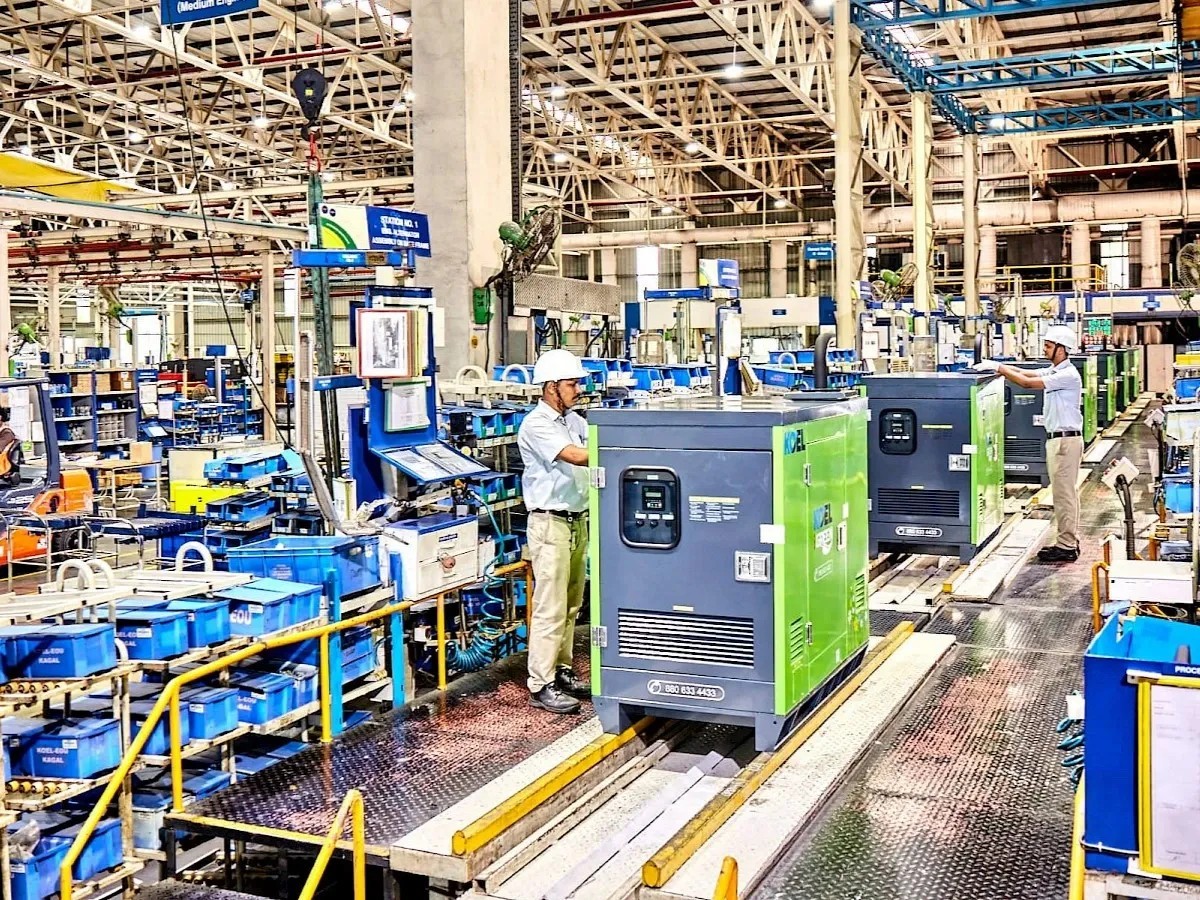
Concurrently, the standalone net cash position was drawn down to ₹348 crore from its Q2 FY26 high of ₹639 crore. This drop was driven by an ambitious capex program and a major capacity expansion at the Kagal manufacturing plant.
The company is committing ₹1,400 crore to add 20,000 engines annually over the next two years. This represents an aggressive bet on long-term cyclical demand. It leaves the balance sheet with minimal structural buffers just as global structural shifts emerge.
Operationally, KOEL completed its planned portfolio restructuring by executing a slump sale of its standalone B2C pump business to its wholly-owned subsidiary, KOEL Fluid Dynamics (KFD). While this internal reorganization isolates commercial consumer dynamics from the core heavy machinery line, it introduces significant non-operating noises.
The company recorded an exceptional charge of ₹32.5 crore for the full year. This, combined with ongoing tax disputes including multiple GST show-cause notices for input tax credit mismatches, highlights compliance challenges behind the operational growth.
KOEL is chasing a massive five-year scale ambition to become a $2 billion enterprise by fiscal year 2030. However, the intersection of intensifying manufacturing capital expenditure, high retail finance leverage, and compressed standalone liquidity pools creates an environment where execution mistakes could be costly.
2. Introduction
Kirloskar Oil Engines Limited operates as a major player within India’s industrial machinery and power generation landscape. For decades, the company built its foundations on the steady manufacturing of diesel engines, diesel generator sets, and agricultural pump systems. It serves three primary market vertices: power generation, industrial engineering, and water management solutions.
The company’s historical footprint is deeply anchored in its manufacturing infrastructure across Pune, Kagal, Nashik, Rajkot, and Bhare. This base has traditionally insulated it from localized disruptions.
In recent fiscal cycles, the corporate narrative shifted away from conservative engineering. Management has adopted a strategy centered on premium product upgrades and structural expansion. The organization is aggressively trying to break out of its legacy positioning by targeting high-horsepower (HHP) generator ecosystems, expanding deep-sea marine propulsion, and pursuing institutional defense system integration.
This operational expansion is occurring alongside a rapid buildout of its financial services arm, Arka Fincap, which focuses on small-ticket property loans and used vehicle financing.
This dual-engine strategy has successfully attracted investor attention. The stock closed at ₹1,740 on May 15, 2026, marking a 94.3% capital appreciation over the preceding twelve months.
Yet, this rapid transformation introduces significant structural complexity. The industrial engineering sector is highly cyclical and vulnerable to shifts in infrastructure capex, changes in emission standards, and variations in private sector capacity utilization. By running a highly leveraged retail lending business next to a capital-intensive manufacturing business, KOEL has linked its corporate health to both industrial demand cycles and retail credit risks.
3. Business Model – What Do They Actually Do?
KOEL runs a dual-segment operating framework split into business-to-business (B2B) industrial engineering and business-to-consumer (B2C) fluid dynamics, alongside a standalone non-banking financial services platform.
The B2B Engine Rooms
The B2B business is the primary driver of core corporate profitability, generating 90% of standalone sales.
Power Generation: This segment manufactures power backup infrastructure. The company’s recent launch of the OptiPrime platform pushed its capabilities into the high-horsepower segment up to 3,000 kVA. This enables it to bid for mission-critical infrastructure projects like data centers, commercial high-rises, and real estate hubs.
Industrial Business: This unit delivers specialized internal combustion engines and power solutions to heavy equipment manufacturers, marine builders, and the defense sector. It secures large institutional accounts, such as the Nuclear Power Corporation of India Limited (NPCIL). For example, KOEL is currently executing a ₹798 crore contract to supply ten 6.3 MWe emergency diesel gensets for the Kudankulam nuclear project.
Distribution & Aftermarket: This division manages the high-margin secondary sales ecosystem. It distributes corporate tractor spares, specialized engine oils, industrial batteries, and annual maintenance contracts across a distributed domestic network.
The B2C and Financing Verticals
B2C Fluid Dynamics: Reorganized under KOEL Fluid Dynamics (KFD) via a recent internal slump sale, this segment focuses on domestic electric pumps, agricultural kerosene-based pump sets, and small farm mechanization tools. It faces intense competition from fragmented unorganized players and requires significant ongoing working capital to maintain dealer distribution channels.
Financial Services (Arka Group): Operating through Arka Fincap, this unit manages a total Asset Under Management (AUM) book of ₹7,947 crore. Historically focused on corporate wholesale lending, Arka is shifting toward retail and SME assets, specifically used vehicle financing and small-ticket loans against property (LAP) handled across 110 branches.
Are the underlying cash flows from selling diesel gensets stable enough to support a highly leveraged retail lending business over a multi-year economic cycle?
4. Financials Overview
KOEL’s Q4 FY26 financial statements show strong top-line momentum alongside changing bottom-line performance. This shift reflects the recent structural separation of the consumer pump business.
Quarterly Performance Breakdown
The table below presents the financial results for the quarters ended March 31, 2026, December 31, 2025, and March 31, 2025.