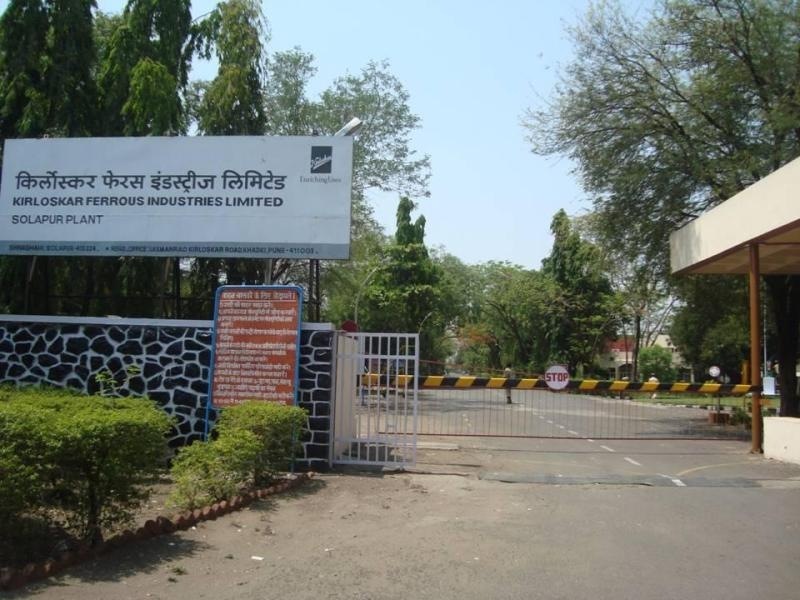
If molten metal could tell stories, Kirloskar Ferrous Industries Ltd (KFIL) would be narrating a blockbuster full of iron, steel, and occasional family settlements. With a market cap of ₹8,001 crore, this Pune-based member of the Kirloskar Group is showing what happens when a century-old legacy meets the smell of pig iron and corporate governance drama.
At ₹486 per share (as of 7 November 2025), KFIL isn’t exactly on fire — down 11.9% in the last 3 months and a painful 26% drop in one year — but it’s definitely smelting something. The Q2FY26 numbers show resilience: Revenue ₹1,728 crore (+3.6% YoY) and PAT ₹92.3 crore (+8.7% YoY). Margins held steady with OPM at 12% and EPS of ₹5.61.
The company’s stock P/E of 23.2x trails the industry average of 27x, suggesting the market gives it a “decent but not diamond” rating. Promoters hold 50.9%, institutions own ~13%, and the public — clearly iron-hearted — holds ~36%.
So yes, the stock’s been dented, but unlike cheap steel, KFIL isn’t rusting just yet.
2. Introduction – From Pig Iron to Family Ironies
Kirloskar Ferrous is that classic industrial veteran from Pune who’s been around since liberalisation and refuses to fade away — think Nana Patekar in a steel helmet.
Founded in 1991, this company’s DNA lies in castings, pig iron, special steels, and now seamless tubes — courtesy of its high-profile merger with ISMT Limited. With this move, KFIL went from “just another foundry” to “India’s integrated iron-to-tube storyteller”.
The fun part? Even as it melts metal, it’s also juggling family drama — SEBI disclosures about old family settlements (yes, with payments of ₹80.5, ₹12.65, and ₹19.14 crore, no less), board reshuffles, and new Kirloskars joining as directors. You know things are serious when even SEBI says, “Tell us about your relatives.”
Yet beneath all the soap opera lies solid performance:
Sales growth of 28.8% over five years,
ROCE of 12.6%, and
ROE of 9.6%, which may not sound explosive but is steady enough to keep lenders calm and shareholders awake.
The company recently restarted its Baramati plant, bagged an ONGC contract worth ₹358 crore, and kicked off iron ore mining operations that should lower input costs. That’s vertical integration with a cherry on top.
And guess what? Management is dreaming big — a $2 billion revenue target by 2030. Ambitious, considering it’s currently at ₹6,758 crore (~$810 million). But hey, what’s capitalism without optimism?
3. Business Model – WTF Do They Even Do?
Let’s decode this industrial buffet:
KFIL doesn’t sell fancy brands — it sells the metal that makes your brands work. It makes pig iron, castings, special steels, and seamless tubes, which find their way into cars, tractors, power plants, and oil rigs. Basically, everything except your mom’s kitchen utensils (for now).
Pig Iron (30.8% of FY25 revenue): Foundry-grade material used by auto and engineering firms. It’s the raw soul of metallic India.
Castings (25.7%): Cylinder blocks, heads, and housings — the bones of your engines.
Steel (8.1%): Bearing and alloy steels for automotive and general engineering — the kind of steel that spins silently in your car’s wheels.
Tubes (32.3%): The glamorous new entrant post-ISMT merger — seamless tubes for oil, gas, and hydraulics.
If that sounds like diversification, wait till you see their end-user mix. They sell to tractors, CVs, auto OEMs, engines, hydraulics, and even defense. When one sector sneezes, KFIL coughs mildly — that’s diversification done right.
Oh, and they generate 56 MW captive power, because why buy electricity when you can melt your own?
Their foundry operates at 92% utilisation, which is the corporate version of “ghar mein full attendance hai”. And with 200 MW renewable capacity planned, they’re turning greener than your neighborhood ESG consultant.
4. Financials Overview
Metric
Latest Qtr (Sep’25)
YoY (Sep’24)
Prev Qtr (Jun’25)
YoY %
QoQ %
Revenue (₹ Cr)
1,728
1,667
1,685
+3.65%
+2.55%
EBITDA (₹ Cr)
214
195
214
+9.7%
0%
PAT (₹ Cr)
92.3
85
96
+8.75%
-3.85%
EPS (₹)
5.61
5.16
5.82
+8.7%
-3.6%
Annualised EPS = ₹22.4, implying a P/E of 21.7x (reasonable compared to peers).
Commentary: Margins stayed flat — classic “steady is sexy” industrial play. Despite global metal price volatility, KFIL maintained OPM at 12%. The sequential dip in PAT is more of an accounting sneeze than an infection.
5. Valuation Discussion – Fair Value Range Only
Let’s crunch some iron numbers:
a) P/E Method
Annualised EPS = ₹22.4
Industry P/E = 27x
Apply a conservative 20–26x range (since it’s cyclical but integrated).
Fair Value Range (P/E) = ₹22.4 × (20–26) = ₹448 – ₹582
b) EV/EBITDA Method
EV = ₹9,229 Cr
EBITDA (FY25 TTM) = ₹803 Cr
EV/EBITDA = 11.5x
Industry average ~9–11x → so the stock is fairly valued.
If EV/EBITDA normalises to 10x, EV = ₹8,030 Cr → Equity Value = ₹6,740 Cr → ₹410/share. If rerates to 12x, ₹540/share.
c) DCF (simplified) Assume FCF ~₹225 Cr/year, growth 6%, discount 12%. DCF Value ≈ ₹480–₹520/share.
👉 Fair Value Range: ₹440 – ₹560
Disclaimer: This fair value range is for educational purposes only and not investment advice. (Don’t @ us when your cousin’s WhatsApp group disagrees.)
6. What’s Cooking – News, Triggers, Drama
Where do we start?
Iron Ore Mines Operational: Finally! The mines KFIL won in 2018 are now producing. This could reduce raw material costs and stabilise margins — basically, the company now owns its own grocery store.
New Orders: A sweet ₹358 crore contract from ONGC for seamless tubing supply. That’s not peanuts — that’s oil money.
Baramati Plant Resumes: Operations back online after a