Khadim India Ltd Q2 FY26 Results: The Footwear Player That’s Trying To Lace Up After a Demerger Hangover
1. At a Glance
Welcome to the world of Khadim India Ltd, the footwear veteran that’s been walking India’s streets since 1981 — sometimes sprinting, sometimes limping, and lately, trying to find its balance after a demerger marathon. With a market cap of ₹379 crore and the stock chilling around ₹206 per share, Khadim’s current sprint seems more like a Sunday stroll. The stock is down 35% over the last year— yes, even your old Bata sneakers have seen better traction.
Despite its long retail legacy, the company’s latest Q2 FY26 results show a struggle to find rhythm. Sales for the quarter came in at ₹101.6 crore, down 36.7% YoY, and net profit managed a slim ₹1.68 crore, down 28.8% YoY. The P/E ratio stands at 26.4x, which in footwear-speak means Khadim is priced like a mid-tier sneaker but running with slipper-like speed. Debt remains heavy at ₹255 crore, while ROE limps at 2.2%.
The company’s distribution business demerger became effective in April 2025, so these numbers represent the “new” Khadim — lighter, nimbler, but still figuring out how to tie its laces right.
2. Introduction
Once upon a time, Khadim was the undisputed king of “value footwear.” If you wore sandals with socks in college, chances are they were Khadim. Today, it’s the second-largest footwear retailer in India, but its financial jog has turned into a treadmill session — lots of motion, little progress.
With 864 branded stores (221 company-owned and 643 franchised) and 747 distributors, Khadim’s network looks impressive. But like many large Indian families, managing all these “relatives” comes with drama.
Khadim’s two-segment model — Retail and Distribution — gave it both glamour and grunt work. Retail gave brand visibility; Distribution gave volume. But the recent demerger of the Distribution business has left investors wondering if the glamour alone can pay the bills.
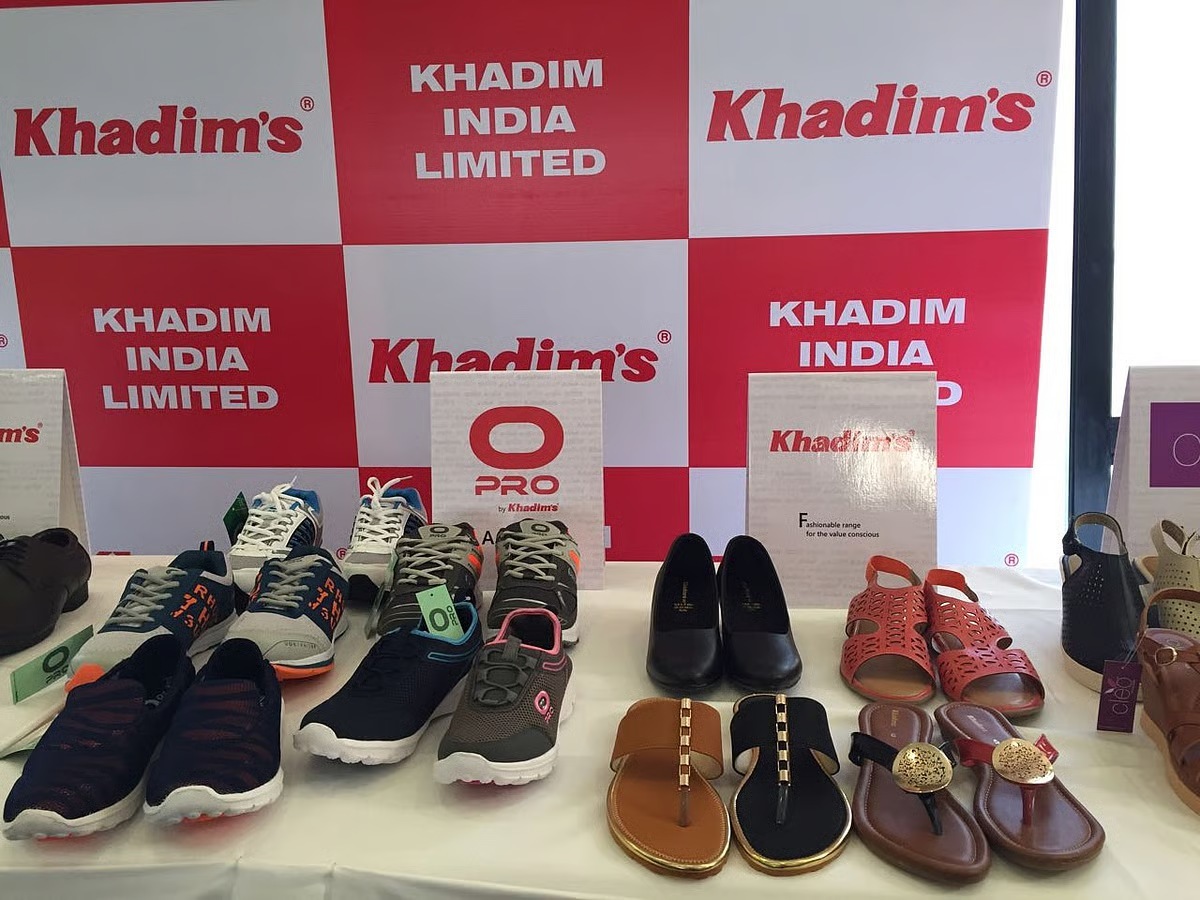
Still, Khadim continues to make moves — from expanding its Bangladesh subsidiary to introducing quirky new sub-brands like Pro and Fitnxt. Yet, its financial story reads like an old shoe catalog: lots of models, but not enough buyers.
3. Business Model – WTF Do They Even Do?
In plain Hindi: Khadim sells shoes — from hawai chappals to leather formals — through two main channels:
Retail Segment – This is where the brand flexes. Think premium sandals, semi-formals, and urban lifestyle products under labels like British Walkers, Lazard, Softouch, Cleo, and Aorianna. Retail stores cater to the value-conscious middle class who want “style on EMI.”
Around 91% of retail products are outsourced, meaning Khadim acts as the middleman in stylish packaging.
Roughly 74% of stores are franchise-run, which saves Khadim the headache of managing rent and operations — a smart asset-light move.
Distribution Segment (now demerged) – Earlier, Khadim used to manufacture and supply affordable footwear to distributors under brands like Kalypse, Wash n Wear, and Pugo. These guys sold to multi-brand outlets (MBOs) across India. The segment was volume-heavy but margin-light — think “hawai chappal with an MBA.”
Now, post-demerger, the retail segment stands alone — smaller in revenue but higher in brand control. It’s like divorcing your practical spouse to chase your influencer dreams.
4. Financials Overview
Quarterly Results Lock: Q2 FY26
Metric
Latest Qtr (Sep 2025)
YoY Qtr (Sep 2024)
Prev Qtr (Jun 2025)
YoY %
QoQ %
Revenue
₹101.6 Cr
₹160.6 Cr
₹95.7 Cr
-36.7%
+6.2%
EBITDA
₹13.8 Cr
₹19.3 Cr
₹12.3 Cr
-28.5%
+12.2%
PAT
₹1.68 Cr
₹2.36 Cr
₹0.86 Cr
-28.8%
+95.3%
EPS (₹)
0.91
1.28
0.47
-28.9%
+93.6%
Commentary: Khadim’s revenue drop is sharper than a new pair of leather formals on wet marble. A 36.7% YoY decline post-demerger shows the scale lost from cutting out the Distribution segment. EBITDA margins at 13.6% remain decent, but net profit margins are as thin as their insole foam.