Search for Stocks /

Keto Motors FY26 Q4: The Merger That Arrived With ₹2.13 Cr in Revenue

Spotted a factual error — a wrong number, date, or fact? Tell us and we will check the source.

General information and entertainment, not investment advice. The author is not a SEBI-registered adviser or research analyst. No recommendation, no promised returns. Markets carry risk including loss of capital. Figures may not be current. Consult a registered adviser before acting.


1. At a Glance

Keto Motors, formerly Taaza International, completed a reverse merger that doubled its equity base. In the final quarter of FY26, the restructured company reported ₹2.13 crore in revenue—a debut performance for the consolidated entity. The operating margin landed at 38%, but the year-to-date picture tells a different story: a net loss of ₹0.18 crore on ₹2.13 crore sales.

The balance sheet shows ₹51.46 crore in fixed assets and ₹1,074 crore in inventory, a post-merger state that bears little resemblance to the shell it replaced. At ₹162.80 per share, the market has assigned a 19.5x price-to-book multiple to a company that has yet to prove it can sustain revenue at scale.

The company holds ₹0.43 crore in cash against ₹37.97 crore in borrowings. That debt load, acquired through the merger, now defines the balance sheet’s character.

Reader question: When a merger doubles your share count and saddles you with inherited debt, does the opening quarter’s 38% OPM fade into a curiosity, or signal the underlying business?


2. Introduction

Taaza International spent two decades in a slow fade: a bio-pesticide and retail-store operator that had run out of momentum. By FY26, it was a stationary entity with minimal operations, held publicly for form rather than function.

In December 2025, promoters initiated a capital reduction and a name change to Keto Motors. The intention was clear: housekeeping for a merger. On March 31, 2026, the NCLT approved a 3:2 share-merger with what the board described as an automotive play—a ₹300-crore electric-bus project under development.

The merger was effectuated on that date. Share allotments followed. The auditors issued an unmodified opinion. Management called it a “restructuring” and said all prior-period comparatives were “not comparable” because the reporting entity had fundamentally changed.

By May 2026, the CFO had resigned, and a new independent director was appointed. The stock price, referenced at ₹162.80 on June 8, 2026, was unchanged from the listing price.


3. Business Model: WTF Do They Even Do?

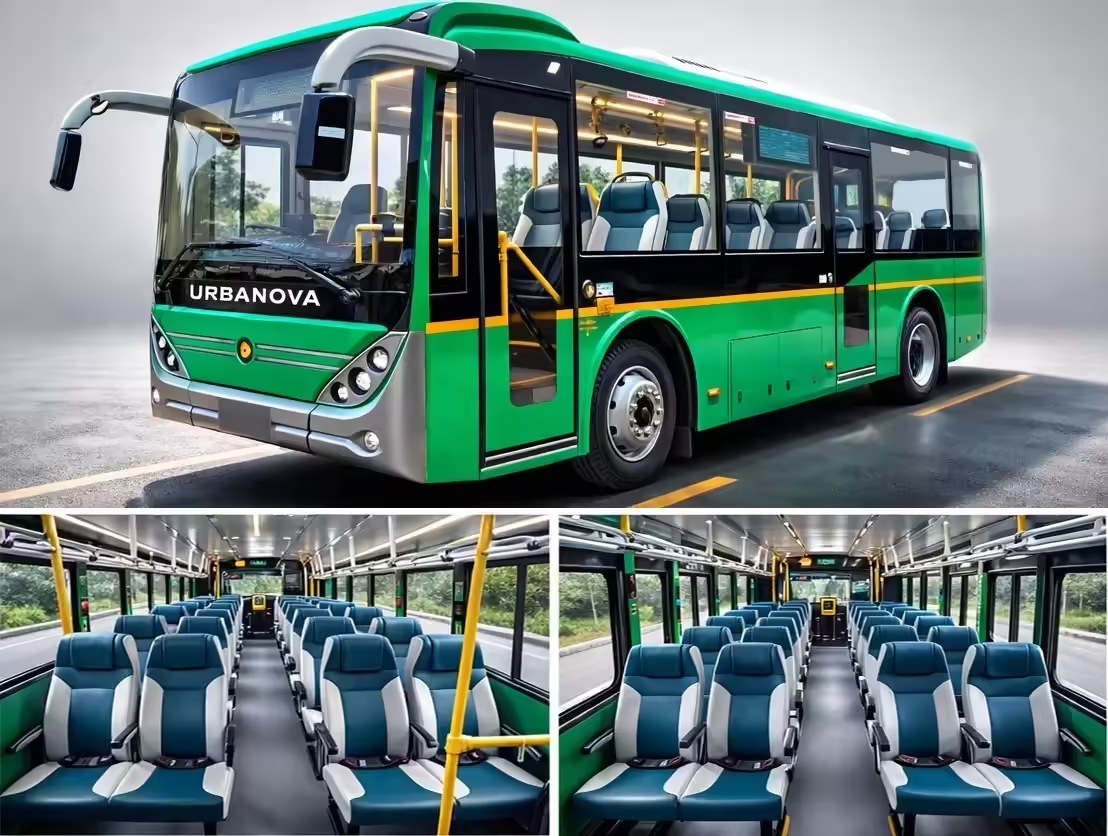
Officially, Keto Motors is now an automotive company in the electric-bus development phase. The board alludes to an order book, capex plans, and a “drone ports” concept. None of these appear in the audited financials.

What does appear in FY26 Q4: ₹2.13 crore in revenue, categorized as “Revenue from Operations” with no segment detail. The cost of materials consumed was ₹0.51 crore. Employee costs were ₹0.61 crore. There is no indication of what was sold, to whom, or whether it relates to electric buses or inherited inventory.

The merger agreement included machinery and intangible assets. The balance sheet shows ₹1,901.69 crore in goodwill and ₹3,026.31 crore in intangible assets under development. These figures dwarf the revenue by over 1,000x.

The company operates in an undescribed state: it has assets, a debt burden, and just enough revenue to appear operative. The business model is, by all evidence, a placeholder waiting for the electric-bus venture to materialize.


4. Financials Overview

Figures are consolidated, in ₹ crore.

MetricLatest Q (Q4 FY26)YoY ChangeQoQ Change
Revenue from Operations2.13
Other Income0.03
Operating Profit0.81
Net Profit0.07
EPS (Full FY26)-0.03

The full-year FY26 net loss was ₹0.18 crore on ₹2.13 crore revenue, a loss margin of 8.5%. The Q4 quarter alone turned in operating profit of ₹0.81 crore on ₹2.13 crore sales, a 38% OPM. This swing is not comparable to prior years because the prior entity had negligible operations.

Finance costs amounted to ₹0.02 crore in Q4, down from historical peaks of ₹1.86 crore (FY26 full-year inherited interest). Depreciation on the new assets totaled ₹0.75 crore for the year.

From Announcements (28 May 2026): Management disclosed that the merger, approved by NCLT on June 12, 2025, was given effect in the Q4 FY26 results on a fully consolidated basis. Prior comparatives are deemed non-comparable by policy.

5. Market Expectations & Historical Multiples

This section describes how the market is currently pricing the company and how that compares with its own history and peer group. It is descriptive, not predictive.

MetricCurrentPre-Merger (Mar 2025)Peer Median
P/EN/A (loss-making)N/A (loss-making)39.5x (retail peers)
EV / EBITDA2,007xN/AN/A
P/B19.5x1.93x5.77x
ROE-0.55%-0.55%12.15%
ROCE-0.30%-0.72%12.65%

The market currently pays 19.5x its book value for Keto Motors, against a median of 5.77x for comparable retail companies. The multiple has jumped from 1.93x at March 2025, when the company was still a dormant shell. This repricing reflects the market’s response to the merger announcement and the promise of the electric-bus venture.

Return metrics are deeply negative. ROCE stands at -0.30%, meaning capital deployed is consuming value rather than generating it. ROE mirrors this at -0.55%.

The company appears to be priced on the prospect of future cash generation from the automotive venture, not on current operations. The order book size, capex timeline, and ramp assumptions are not disclosed in the audited results or the concall transcripts available.


6. What’s Cooking

NCLT Merger (Effective Mar 31, 2026): The reverse merger between the old Taaza International shell and an automotive-focused entity was approved by the National Company Law Tribunal on June 12, 2025, and effectuated on March 31, 2026. Share allotments (3:2 ratio) followed. This expanded the equity base from 0.73 crore shares to 7.04 crore shares.

Intangible Assets Under Development (₹3,026.31 Cr): The balance sheet carries this figure, described as intellectual property or development-stage ventures, but there is no narrative of what it represents or when it reaches commerciality.

Goodwill (₹1,901.69 Cr): Standard in a merger, this amount will be tested for impairment annually. Any writedown would further erode the equity base.

CFO Resignation (May 25, 2026): Rohit Aidasani, who had been appointed post-merger, resigned effective May 25, 2026. No replacement was named in the board announcement.

New Independent Director (May 28, 2026): Avula Venkata Narayana Reddy, described as a serial entrepreneur with 30+ years in business and agri-tech interests, was appointed as an Additional Director (Non-Executive, Non-Independent). He holds 49,999 shares.

Inventory Build (₹1,074 Cr): The current-assets section shows inventory of ₹10.74 crore, a 28,000% increase over the prior-year nil. The nature of this inventory is not disclosed.


7. Balance Sheet

ItemMar 2025Mar 2026
Total Assets10.81107.24
Equity Capital7.2670.43
Reserves-0.25-11.62
Total Borrowings3.2337.97
Other Liabilities0.5810.46

The balance sheet swelled from ₹10.81 crore to ₹107.24 crore in total assets. Fixed assets grew from near-zero to ₹51.46 crore. Equity capital exploded from ₹7.26 crore to ₹70.43 crore, a 10x jump reflecting the share-split mechanics of the merger.

Borrowed capital rose from ₹3.23 crore to ₹37.97 crore. The company is now leverage-heavy: debt-to-equity sits at 0.65, not ruinous but material on a balance sheet that has ₹43 crore in cash equivalents and ₹0.43 crore in actual cash.

Reserves, the retained earnings line, fell from -₹0.25 crore to -₹11.62 crore. The equity base is eroding.

Three observations: (1) The goodwill and intangible assets represent 96% of total assets—the balance sheet is weighted toward hope. (2) Trade payables of ₹8.91 crore sit against receivables of ₹5.14 crore, a net payables position that suggests the company is funding its operations on vendor credit. (3) The cash figure of ₹0.43 crore is less than the monthly interest expense on borrowings would require.


8. Cash Flow: Sab Number Game Hai

YearCFO (₹ Cr)CIF (₹ Cr)CFF (₹ Cr)
FY240.000.000.00
FY250.000.000.91
FY26-0.600.00-0.02

Operating cash flow turned negative at -₹0.60 crore in FY26, the first year of the merged entity. Working capital movements consumed ₹36.05 crore of cash, almost entirely due to inventory build and changes in receivables. The company paid down ₹0.02 crore in financing activity (net debt reduction), a rounding gesture against a ₹37.97 crore borrowing book.

The money is moving: ₹0.60 crore out the door in operations, no inflows from investing, and no material financing activity beyond servicing. The company ended with ₹0.43 crore in cash, a level that will not sustain operations for long if the pattern holds.

One wisdom line: A company can report operating margin of 38% in a quarter and still bleed cash if the working capital machine is broken. Here, inventory and receivables are the machine’s broken parts.


9. Ratios: Sexy or Stressy?

RatioValueImplication
ROE-0.55%Equity is eroding. Shareholders’ capital is being consumed.
ROCE-0.30%Invested capital is not generating returns; it is destroying them.
Interest Coverage-8.0xThe company cannot service debt from operations.
Current Ratio5.31xLiquidity appears healthy, but is inflated by inventory and receivables of uncertain realisability.
Debt-to-Equity0.65xModerate leverage on a damaged equity base.

ROCE at -0.30% is the loudest signal. It means that every rupee of capital deployed (equity plus debt) is losing value. This is not a temporary downturn—it reflects a company in investment phase without revenue to offset the burn.

Interest coverage of -8.0x means the company cannot cover interest from its operating profit. It is relying on cash reserves or refinancing to pay creditors. That buffer is ₹0.43 crore.


10. P&L Breakdown: Show Me the Money

YearRevenue (₹ Cr)EBITDA (₹ Cr)Net Profit (₹ Cr)
FY240.00-0.06-0.07
FY250.00-0.01-0.05
FY262.130.83-0.18

The old Taaza International was a negative-revenue entity from FY24 onwards. FY26 brought a jolt: ₹2.13 crore in revenue, EBITDA of ₹0.83 crore, but a net loss of ₹0.18 crore after depreciation and tax effects.

The jump is not organic growth. It reflects operations of the acquired entity post-merger. Without a segment breakdown or a management narrative, it is impossible to determine whether this revenue is a one-time item, a sustainable line of business, or the beginning of a ramp toward the electric-bus venture.

The company spent ₹0.75 crore on depreciation in FY26, an annual burn that exceeds net profit. Until depreciation-adjusted EBITDA can eclipse both interest and tax, the company will remain a loss-maker.


11. Peer Comparison

CompanyRevenue (₹ Cr)Net Profit (₹ Cr)P/EOPM (%)
Avenue Supermarts68,820.742,970.4990.0x7.54
Vishal Mega Mart12,906.32839.2365.98x14.59
V-Mart Retail3,789.36124.9543.99x13.55
Electronics Mart7,183.26102.6039.51x6.10
Shoppers Stop5,043.32-17.79N/A14.75
Keto Motors2.13-0.18N/A23.94
Patel Retail1,048.3339.0517.97x6.88

Keto Motors sits at the bottom of the revenue list at ₹2.13 crore, roughly 200x smaller than the peer median. Its operating margin of 23.94% is the highest in the cohort, but it is applied to a scale so small that it produces an absolute loss after fixed costs.

The median peer in this set turns 10.54% operating margin on ₹2,800 crore in revenue and still commands a 39.51x P/E. Keto Motors commands 19.5x price-to-book, a multiple justified by the merger narrative, not by operational traction.


12. Miscellaneous: Shareholding & Promoters

Holder%
Promoters92.50
DII0.86
Public6.65

Promoter holding surged from 21% (pre-merger) to 92.50% post-merger, a consequence of the NCLT-mandated share allotments and subsequent open-market purchases. The largest holders post-merger include Trinity Infraventures Limited (67.08%), Jhansi Sanivarapu (7.17%), and Avula Venkata Narayana Reddy (0.31%).

DII participation is minimal at 0.86%. Public holding has collapsed to 6.65%, diluted by the 3:2 share split. This is a promoter-controlled entity with negligible institutional or retail engagement.

Small promoter roast: A 92.5% holding does not guarantee operational competence. The previous promoter regime (Ravinder Rao Polsani and others) held the shell for years, generating losses and building no enterprise. The new promoters have capital, a merger, and a grand narrative. The test is whether they can convert ₹300 crore in promised capex into a revenue machine. The next 12 months will be revealing.


13. Corporate Governance: Angels or Devils?

The company is audited by Boppudi & Associates, a mid-size CA firm. The audit opinion for FY26 Q4 was unmodified—no red flags on the statements themselves.

The board, appointed post-NCLT in September 2025, includes Jhansi Sanivarapu (Whole-Time Director, 7.17% shareholder) and Avula Venkata Narayana Reddy (Non-Executive Non-Independent, new appointee). A third director role remains to be filled (the CFO resigned in May without a replacement announced).

There are no pledges, no related-party transactions disclosed, and no tax demands flagged. The governance structure is skeletal but clean.

One flag: A company in capital-formation phase, burning cash, and dependent on a single equity tranche for funding has minimal room for governance friction. Jhansi Sanivarapu controls the board. If the ₹300-crore capex stalls or the electric-bus order book fails to materialize, decisions will rest on one person’s judgment.


14. Industry Roast & Macro Context

The electric-bus space in India is in policy-push mode. Government procurement schemes, FAME subsidies, and state transport tenders have opened avenues for new entrants. But it is also crowded: Tata Motors, BYD, Ashok Leyland, and dozens of startups are active.

The order-book claims from Keto Motors are opaque. There is no third-party validation, no customer names, and no delivery timeline in the public disclosures. In an industry where order books are currency, this silence is either confidence misplaced or preparation deferred.

The business model—electric buses—is capital-intensive and margin-thin. Incumbent OEMs have scale, supply-chain relationships, and financing terms that a post-merger startup cannot match. The ₹300-crore capex mentioned in board announcements is not quantified in the audited results, raising questions about whether it is secured or aspirational.

On retail and bio-pesticides (the old business): The retail space has been hollowed by e-commerce. Taaza Stores, once a modest chain, had faded to zero revenue by FY25. The merger effectively junked this legacy. Bio-pesticides remain a segment in the company’s DNA, but there is no indication it will be revived.


15. EduInvesting Verdict

StrengthsPromoter-backed merger with automotive intent; tangible assets (₹51 Cr); positive OPM in Q4 (38%); auditor endorsement.
WeaknessesNegative net profit (₹0.18 Cr loss in FY26); negative ROCE (-0.30%); negative ROE (-0.55%); minimal cash (₹0.43 Cr) against ₹37.97 Cr debt; unproven order book.
OpportunitiesElectric-bus market growth; government procurement tenders; capex commencement if ₹300 Cr raised successfully.
ThreatsCompetition from Tata, Ashok Leyland, BYD; cash burn if revenue stalls; goodwill impairment if capex delays; debt refinancing risk if orders slip.

Closing observation:

A balance sheet stuffed with ₹5,000 crore in intangibles, a debt load of ₹37.97 crore, and ₹0.43 crore in cash is not a recipe for patience. The market has given Keto Motors one window: 12 to 18 months to prove that the electric-bus venture is real, funded, and ramping. The Q4 FY26 revenue of ₹2.13 crore is a noise signal against that test. If the capex stalls, or orders fail to materialize, the goodwill and intangibles become liabilities, and the equity base implodes.

For now, the company exists in the state all pre-revenue automotive plays occupy: all promise, no proof.


Prices referenced are not live. Data sourced from Screener, BSE filings, and audited results dated May 28, 2026. This article does not update for market moves post-publication.

Leave a Reply