1. At a Glance – 90 Saal Purani Company, 9 Rupees Ka Stock, Aur Zero Patience
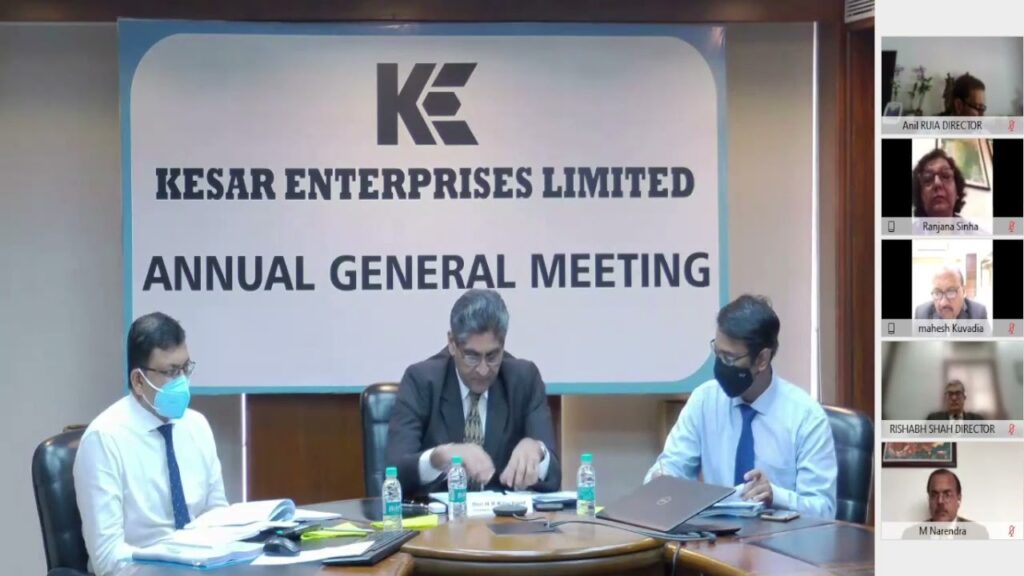
Kesar Enterprises Ltd is that uncle in the sugar industry who has seen British Raj, License Raj, LPG reforms, ethanol blending dreams, and still wakes up every year wondering “iss baar profit hoga kya?” Market cap is a humble ₹67 crore, current price hovering around ₹6.65, and three-month return is a brutal -41.7%, which is not volatility — that’s emotional damage.
The company reported ₹13.7 crore quarterly revenue and ₹-19.5 crore quarterly loss, which mathematically means Kesar is spending more money than it earns, a strategy usually recommended only for startups with VC funding — not 1933-vintage sugar mills. ROCE is -26.2%, ROE -46.8%, and interest coverage -3.99, which means interest is covering the company, not the other way around.
Yet… promoters hold 70.7%, debt has fallen to ₹8.96 crore, and the stock trades at 0.77× book value. So the question naturally arises — is this a deep value play, or deep trouble served with ethanol shots?
Let’s open the files. 🕵️♂️
2. Introduction – When History Meets Losses (Again)
Founded in 1933, Kesar Enterprises Ltd is older than RBI, older than Air India losses (barely), and definitely older than most sugar sector cycles. Part of the Kilachand Group, the company operates across sugar, spirits, ethanol, bagasse-based power, and even seeds — because why stick to one struggling business when you can have five?
On paper, Kesar looks diversified. In reality, it behaves like a sugar mill that keeps adding side hustles hoping one of them finally pays the EMIs. FY22 revenue mix shows ~81% from sugar, with power, spirits, and by-products contributing crumbs. So despite ethanol hype and renewable energy buzz, sugar still runs the show — and sugar, as we all know, is a cyclical soap opera.
What complicates matters further is the company’s history with lenders. Accounts classified as NPA, SARFAESI proceedings, and insolvency drama — until a One Time Settlement with UCO Bank in June 2023 rescued it from NCLT hell. Survival? Yes. Comfort? Not yet.
So is Kesar a turnaround candidate… or just a sugar-coated balance sheet masking chronic indigestion?
3. Business Model – WTF Do They Even Do? 🍬⚡🍶
Let’s simplify Kesar’s business for a lazy but smart investor:
Sugar Division
This is the main breadwinner (or glucose provider). The Baheri, Uttar Pradesh plant has crushing capacity of 7,200 TCD. In FY22, it crushed 115.39 lakh quintals of sugarcane over 185 days. Sugar sales dominate revenues and also dominate losses when prices go south. Basically, when sugar cycle smiles, Kesar smiles. When it frowns, Kesar cries in molasses.
Power Division
Bagasse-based cogeneration of 44 MW. In FY22, Kesar generated 1.33 lakh MW, exported 0.86 lakh MW to UP Power Corp, earning ₹31.66 crore. This segment is stable but not sexy — think of it as the dependable cousin who pays rent but never buys dessert.
Spirits & Ethanol
Distillery capacity stands at 45 KLPD, earlier restricted to 30 KLPD due to pollution norms. Management plans to expand to 80 KLPD, which sounds exciting, but until capex actually happens, it’s just PowerPoint optimism.
Seeds Business
Yes, seeds. Open-pollinated and hybrid seeds under Kesar Seeds, developed at an in-house R&D facility in Hyderabad. This is the smallest segment and currently more of a “future optionality” than a revenue engine.
So overall, Kesar is a sugar mill with side quests, still heavily dependent on a volatile commodity cycle.