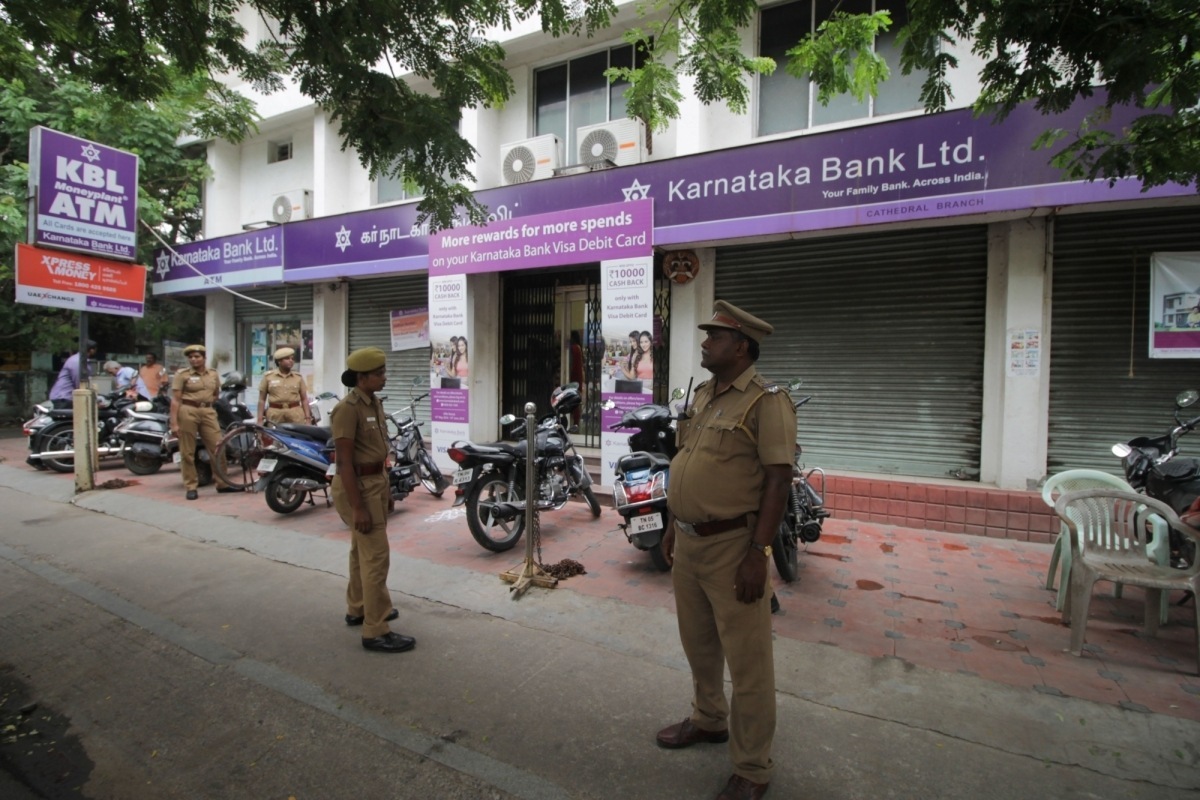
Karnataka Bank Q3 FY26: ₹290.79 Cr Profit, GNPA 3.32%, P/E 6.64 — Is This South Indian Banker Quietly Compounding?
1. At a Glance – The Calm Banker With a Cheap Valuation
At a current price of ₹203 and a market cap of ₹7,662 crore, Karnataka Bank Ltd is trading at just 0.61x book value and a P/E of 6.64. Yes, you read that correctly. A profitable bank with ₹1,155 crore TTM profit is available at less than 7 times earnings in a market where the industry median P/E stands at 15.76.
Q3 FY26 (December 2025 quarter) net profit came in at ₹290.79 crore with GNPA at 3.32% and Net NPA at 1.31%. Net Interest Margin stands at 3.6% (9M FY24 reference), and CRAR is 19.94% as per latest quarterly disclosure.
The stock is up 16.5% in 3 months and 19.3% in 6 months. Dividend yield? 2.47%.
So here’s the spicy question:
Is this a boring old regional bank… or a misunderstood compounding machine trading at half price?
Let’s investigate.
2. Introduction – The Veteran Banker Trying to Act Young
Karnataka Bank isn’t some flashy fintech startup pretending to be a bank. It’s an old-school, branch-heavy, South Indian banker with 904 branches and 1,482 ATMs & recyclers.
64% of its branches are in Karnataka. This is not just geographical presence. This is emotional dominance.
But here’s where it gets interesting.
Retail advances are now 47.5% of total advances (9M FY24), down from 57.8% in FY22. Meanwhile:
Mid corporate: 26.5%
Large corporate: 26%
Deposits stand at ₹92,195 crore (Q3 FY24 reference), with CASA at 31%.
And then comes the twist.
In April 2024, the bank collaborated with FISDOM to offer 3-in-1 accounts (Savings + Demat + Trading). Traditional banker meets stock market app energy.
Now tell me — when a 100+ year-old bank suddenly starts talking Demat and mobile investing, is that evolution… or mid-life crisis?
3. Business Model – WTF Do They Even Do?
Let’s simplify this.
Karnataka Bank earns money primarily from:
Lending money (Retail, MSME, Corporate)
Treasury operations
Para-banking (insurance distribution, etc.)
Retail loans include:
Housing
Gold loans
Vehicle loans
LAP
Personal loans
Education loans
MSME financing includes working capital and term loans.
Agriculture banking includes farm development and land purchase.
Revenue mix (9M FY24):
Retail banking: 44%
Corporate banking: 36%
Treasury: 18%
Others: 3%
In short, they are a full-service bank — but without the massive scale of HDFC or ICICI.
They are not the cool kid. They are the disciplined kid who finishes homework early.
But here’s the uncomfortable question:
If you’re neither the biggest nor the fastest growing… how do you compete?
Answer: Price discipline and asset quality control.
Let’s check if numbers support that theory.
4. Financials Overview – Numbers Don’t Gossip, They Reveal