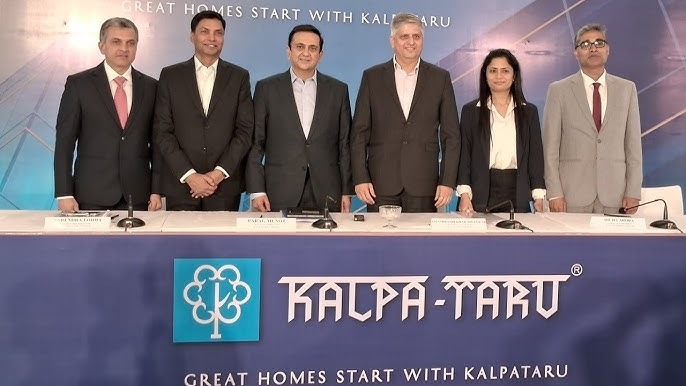
Kalpataru Projects International Ltd Q4 FY26: Operating Income Surges Past ₹27,140 Million As Net Debt Plummets 53% YoY
1. At a Glance
The infrastructure and engineering landscape often functions like a volatile, high-stakes arena where multi-billion crore capital promises collide with the harsh operational realities of execution bottlenecks, delayed state payments, and margin-eroding commodity fluctuations.
For global engineering, procurement, and construction (EPC) conglomerates, the primary metrics defining structural longevity are the velocity of execution, working capital discipline, and cash conversion cycles.
Financial Velocity and Capital Re-alignment
Kalpataru Projects International Ltd (KPIL) has registered a sharp operational acceleration during the final quarter of the fiscal year 2026. The consolidated full-year revenue scaled up to ₹27,143 crore, representing a robust 22% year-on-year growth trajectory against ₹22,316 crore in the previous fiscal period.
Simultaneously, the enterprise successfully achieved an aggressive balance-sheet deleveraging maneuver, with its consolidated net debt collapsing by 53% on a year-on-year basis to sit tightly at ₹915 crore down from the previous year’s benchmark of ₹1,953 crore. This significant deleveraging was strongly anchored by strategic divestments and structured asset monetization schedules.
Beneath this massive balance sheet clean-up layout lies a set of operational friction points that institutional investors track closely. The company’s water infrastructure vertical continues to witness muted revenue execution cycles, heavily constrained by historical state-level collection delays, particularly in large-scale rural water distribution mandates like the Uttar Pradesh Jal Jeevan Mission (JJM).
Furthermore, the international step-down operations in Latin America, primarily through the legacy subsidiary Fasttel Engenharia S.A. in Brazil, served as a distinct margin drag throughout the rolling nine-month period, necessitating complete financial impairments to fully ring-fence the core domestic business from continuous cross-border cash bleeding.
The ultimate corporate puzzle remains centered around whether the company can sustain this newfound asset-light momentum while scaling its massive cross-border order bank of ₹65,457 crore without inducing a severe working capital stretch.
2. Introduction
Kalpataru Projects International Ltd, established in 1981 under the foundational guidance of Mr. Mofatraj P. Munot, has evolved from a domestic power transmission tower fabricator into a diversified global engineering and infrastructure construction giant.
Operating a highly decentralized multi-segment infrastructure pipeline, the company manages active contract delivery across 30+ countries with an established footprint touching 75 nations globally, employing over 11,000 workers across diverse execution specializations.
The company handles the absolute execution lifecycle of complex infrastructure assets, encompassing extra-high-voltage power transmission lines, complex substations, cross-country oil and gas pipeline webs, multi-story commercial and residential buildings, data centers, airports, and urban mass rapid transit network systems.
Following its strategic corporate consolidation with its civil engineering subsidiary JMC Projects (India) Limited, the unified corporate architecture was optimized to bid for massive mega-scale composite infrastructure tenders that demand deep multi-disciplinary technical pre-qualifications.
Financial sustainability in this high-risk sector requires strict cost controls and an efficient cash conversion cycle. When a company locks its working capital into unbilled revenue items and retention money pools for over 200 days, it must rely heavily on costly banking consortia lines, which can erode operating profits.
KPIL’s fiscal year 2026 consolidation strategy demonstrates an active focus on operational metrics, prioritizing high-margin contract inflows over pure top-line expansion, while systematically divesting legacy, capital-heavy non-core build-own-operate-transfer (BOOT) road concessions to build a clean cash runway.
3. Business Model – What Do They Even Do?
Strip away the complex engineering jargon, the long boardroom presentations, and the massive corporate offices, and you will find that Kalpataru Projects International Ltd acts as an elite, global contractor for massive industrial and state infrastructure projects.
They don’t typically buy these assets to keep them on their books forever; they build them on behalf of massive entities like Power Grid Corporation of India (PGCIL), cross-border sovereign entities, and institutional real estate corporations.
The Core Segment Layout
The modern business engine of KPIL runs on six distinct operational cylinders, each demanding different working capital cycles and offering vastly divergent margin profiles:
Transmission & Distribution (T&D): The absolute crown jewel of the group, making up 46% of H1 FY26 revenues. They manufacture massive galvanized steel transmission towers (with a total domestic output capacity of 2,40,000 metric tons per annum) and string high-voltage wires across continents, ranging from the rugged terrains of India to parts of Sweden and Africa.
Buildings & Factories (B&F): Contributing 24% of H1 FY26 revenues. This division focuses on constructing concrete structures for residential complexes, industrial manufacturing facilities, state-of-the-art data centers, and multi-specialty hospitals.
Water Infrastructure: Accounting for 9% of H1 FY26 revenue. This wing lays down extensive piped water distribution networks, sets up massive desalination setups, and designs sewage management networks.
Oil & Gas Pipelines: Constituting 9% of H1 FY26 revenue. This segment lays down high-pressure cross-country petroleum and gas distribution pipelines, builds gathering stations, and constructs compressor hubs for international oil companies like Saudi Aramco.
Railways & Urban Infra: The remaining portion of the order book. They specialize in track electrification, elevated corridor development, high-speed rail structures, and complex underground metro rail projects.
Do you think a global contractor can successfully protect its operating margins when every project across these six segments faces unique, volatile shifts in commodity input costs?
4. Financials Overview
The core financial results for the quarter and full year ended March 31, 2026, indicate an inflection point in operational scalability and margin conversion. The financial reporting shows strong execution across core segments, coupled with exceptional non-recurring entries from corporate restructuring.
Consolidated Financial Performance Matrix
The following table presents a detailed comparison of the company’s financial performance over the latest quarter, the corresponding quarter of the previous fiscal year, and the sequential preceding quarter.