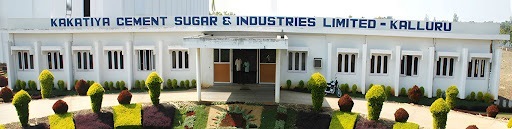
1. At a Glance
When a company sells cement, sugar, and power — you’d expect it to have three engines running. But Kakatiya Cement Sugar & Industries Ltd seems to have left all three idling on neutral. The Q2 FY26 results show a net loss of ₹11.49 crore, with sales at ₹25.4 crore, down from ₹30 crore in the previous quarter. The stock now trades at ₹137, giving it a market cap of ₹107 crore — or roughly what UltraTech might spend on lunch for a single kiln.
The company has an EPS of -₹35, ROE of -6.15%, and ROCE of -3.11%, which means they’re burning cash faster than bagasse in their power plant. The book value stands tall at ₹247, while the price-to-book ratio is a measly 0.56. Almost debt-free with only ₹9.32 crore borrowings and a current ratio of 3.75, Kakatiya’s balance sheet screams “safe,” but the P&L whispers “help.”
Add in a fraud of ₹86.5 lakh by an employee (disclosed in October 2024), a ₹14.1 crore grid charge demand, and an ₹4.36 crore tax dispute, and you’ve got yourself a financial soap opera — the “K-serial” no investor wanted to binge.
2. Introduction
Kakatiya Cement Sugar & Industries Ltd (KCSIL) was incorporated back in 1979, when “diversification” meant doing everything you could think of under one roof — cement, sugar, and power. Forty-five years later, the formula seems unchanged, but the market clearly isn’t buying the old-school charm.
Once upon a time, this Andhra-Telangana-based hybrid business was a solid rural industrial story — crushing sugarcane on one hand and grinding limestone on the other. Today, it’s struggling to crush losses instead.
The last five years have been a rollercoaster — but only the downhill part. Sales have dropped at a 10.6% CAGR over five years and 16.7% over three years, while profits have vanished faster than a subsidy announcement before elections.
Cement demand is cyclic, sugar depends on government pricing, and power distribution is a regulatory headache. Combine all three, and Kakatiya is like a student who chose all the tough subjects and skipped tuition.
Despite all this, the company has one loyal fan — Managing Director Mr. P. Veeraiah, who in February and March 2023 bought 30,802 shares. When your promoter buys during chaos, either he knows something we don’t… or it’s just optimism disguised as courage.
3. Business Model – WTF Do They Even Do?
Let’s break this diversified madness down:
a) Cement Division – Capacity: 2,97,000 tonnes per annum, utilization ~83%. They manufacture, refine, and pack ordinary Portland cement. It’s the company’s largest contributor, accounting for roughly 60% of revenue.
b) Sugar Division – 3,200 TCD (tonnes crushed per day). This unit converts sugarcane into sweet losses. In FY23, it crushed 1.43 lakh MT of cane vs 1.01 lakh MT in FY22 — decent growth, but financially it’s like putting sugar in bitter coffee.
c) Power Division – They use bagasse (a sugar byproduct) to generate electricity. Unfortunately, Telangana’s regulations forbid them from using coal as an alternate fuel, so no off-season power generation. It’s like running a car that only drives downhill.
The combined setup looks beautiful on paper — integrated, synergistic, and sustainable — until you see the operating profit margin at -29.3%. That’s not synergy; that’s synchronized drowning.
4. Financials Overview
Figures in ₹ crore
| Metric | Q2 FY26 |