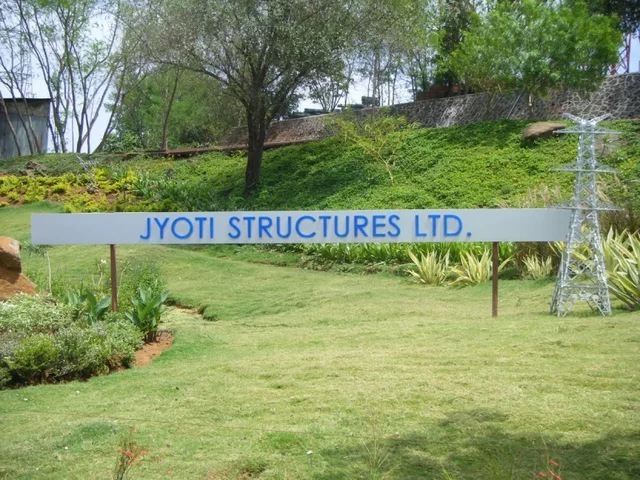
1. At a Glance
If you like stories about resurrections, forget Lazarus; let’s talk about Jyoti Structures Limited (JSL). This is a company that didn’t just hit rock bottom—it set up a tent there, lived through a brutal insolvency process, and is now trying to climb back up the transmission tower. We are looking at a veteran of the power EPC (Engineering, Procurement, and Construction) space that was once a titan, then a ghost, and is now a “work-in-progress” phoenix.
The latest numbers for Q4 FY26 suggest the turbines are finally spinning. Revenue for the quarter clocked in at ₹234 Crore, a massive 42.2% jump compared to the same period last year. Net profit followed suit, surging 52% YoY to reach ₹18.1 Crore. On an annual basis, the company reported a PAT of ₹56.04 Crore for FY26—a 56.5% increase from the previous year.
But don’t start the parade just yet. Behind these shiny growth percentages lies a balance sheet that looks like a battlefield. We are talking about ₹2,084 Crore in debt against a market cap of roughly ₹1,577 Crore. Yes, the debt is larger than the entire company’s equity value. The Debt-to-Equity ratio sits at a dizzying 4.39.
The company is currently operating in the high-voltage transmission segment (up to 800 KV), which is basically the “big leagues” of moving electricity. With the Indian government screaming about renewable energy evacuation and the Green Energy Corridor, JSL is in the right place at the right time. They have an order book exceeding ₹1,800 Crore as of April 2025, including a massive project from Power Grid.
Is this a genuine turnaround or a dead cat bounce? The company is ramping up its Nashik manufacturing plant and even restarting its second unit to hit 70% of its old capacity. However, with Debtor Days at a staggering 1,085 days, JSL is effectively waiting three years to get paid by some of its customers. That’s not a business model; that’s a long-term loan to clients. If you’re looking for a boring, safe stock, keep walking. This is high-stakes finance.
2. Introduction
Jyoti Structures is the ultimate “old-school” infrastructure play that got caught in the “new-world” debt trap. Founded in 1974, it spent decades building 31,000 kilometers of transmission lines and electrifying 37,000 villages. It was the backbone of India’s power grid before it collapsed under the weight of aggressive expansion and poor capital management, leading to a long stint in the NCLT (National Company Law Tribunal).
Today, the company is back in the hands of new management and lenders who are trying to squeeze value out of the remaining assets. They do everything from designing massive 106-meter towers to testing them at their specialized Ghoti station—one of the few in the world that can handle 1200 KV structures.
The business is split into three main buckets:
- Transmission Lines: The big towers you see in the countryside.
- Substations: The hubs where voltage gets managed.
- Rural Electrification: Bringing lights to the “last mile.”
The geographical mix is shifting. In FY24, 88% of their business was domestic. By FY25, that dropped to 78%, showing a renewed hunger for Export markets (22%). They are chasing projects from Adani, Vedanta, and Sterlite, trying to prove they can still execute like the big boys.
However, the shadow of the past looms large. The company is still fighting legal battles with lenders over “Non-Fund Based” (NFB) limits—basically the bank guarantees they need to bid for new work. Without these, an EPC company is like a soldier without a rifle. They recently won a round in the NCLT, but the lenders have appealed to the NCLAT. It’s a soap opera, but with more spreadsheets.
3. Business Model – WTF Do They Even Do?
Imagine you need to move massive amounts of electricity from a solar park in Rajasthan to a factory in Pune. You can’t just use a heavy-duty extension cord. You need massive steel towers, specialized conductors, and substations that don’t explode when 800,000 volts hit them.
Jyoti Structures is the guy who builds that “highway” for electricity. They aren’t just laborers; they are engineers. They design the towers to withstand cyclones, manufacture the galvanized steel in Nashik and Raipur, and then go out into the middle of nowhere to erect them.
- Design & Engineering: They have a library of over 450 tower designs. This is their intellectual “moat,” though it’s currently a bit dusty.
- Manufacturing: They