Jindal SAW Ltd is that classic Indian industrial stock which looks cheap, behaves expensive emotionally, and tests patience like a CA final exam. At a market capitalisation of ₹9,888 Cr, a current price of ₹155, and a P/E of 8.79, the stock screams “value” on paper—until the last six months punch you with a -32.3% return. Welcome to the pipe business, where cash flows are long, projects are longer, and investor nerves are shortest.
The latest Q3 FY26 quarterly results show consolidated revenue of ₹4,943 Cr, down 6.2% YoY, while PAT collapsed 49% YoY to ₹248 Cr. EPS for the quarter came in at ₹4.03, a far cry from the ₹7.92 reported in the same quarter last year. Meanwhile, operating margins held up better than your average PSU tender drama at ~12%, but tax volatility made a cameo like a surprise villain.
On the balance sheet front, ROCE stands tall at 19.4%, ROE at 16.3%, and Price-to-Book at 0.82, making it cheaper than the canteen samosa at an AGM. Debt remains chunky at ₹5,194 Cr, though management proudly reminds everyone it was higher earlier. Order book? A solid $1,328 Mn standalone, spread across domestic and exports, with the Middle East playing sugar daddy again.
So what do we have here? A global pipe heavyweight, trading like a stressed midcap, juggling arbitration headaches, cyclical demand, and infra optimism—while investors argue whether this is a bargain or a value trap with good PR.
2. Introduction – The Pipe That Connects Everything (Including Headaches)
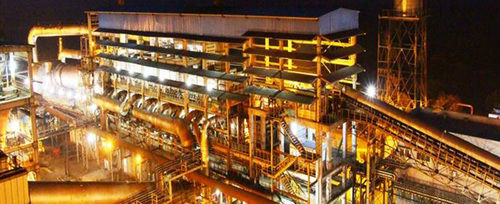
Jindal SAW is not a “new-age” story. There is no app, no AI buzzword, no SaaS multiple. This is old-school capitalism: iron ore, furnaces, welding, coating, shipping, and praying that government payments arrive before interest bills do. The company manufactures LSAW, HSAW, DI pipes, seamless pipes, and pellets, which sounds boring until you realise these pipes literally carry water, oil, gas, sewage, and political promises.
The irony is delicious. When infrastructure spending is booming, everyone wants pipes. When it slows, pipes still exist—but cash flows don’t. Jindal SAW sits right in this cyclical crossfire. Over the last five years, revenue grew at ~12% CAGR, profits at ~24% CAGR, and the stock rewarded investors with ~32% CAGR. Then the last year happened, and the stock politely erased 40% like it was correcting an Excel error.
The company is the world’s third-largest producer of rust-free iron pipes, with a strong export footprint in MENA and Latin America, and manufacturing facilities across India, the US, and the UAE. It also owns low-grade iron ore mines in Rajasthan, because vertical integration is sexy in investor presentations.
But here’s the twist: despite all this scale, pedigree, and global presence, the market currently treats Jindal SAW like a cyclical cousin who only gets invited to weddings when infra capex is trending on Twitter.
Is the pessimism justified—or is this one of those classic Indian industrial stocks that looks ugly before it ages like whisky?
3. Business Model – WTF Do They Even Do?
Imagine explaining Jindal SAW to a smart but lazy investor who thinks pipes are just long hollow cylinders. You’d say this:
Jindal SAW manufactures pipes that governments and oil companies cannot live without. These pipes are used for water supply, sewerage, oil & gas transportation, irrigation, and industrial applications. When a city wants clean water, or a refinery wants crude, Jindal SAW’s pipes are probably involved somewhere—quietly, without marketing campaigns.
The product mix is wide:
LSAW & HSAW pipes for oil, gas, and large infrastructure
Ductile Iron (DI) pipes for water and sewage
Seamless pipes for industrial use
Pellets, because why waste iron ore when you can monetise it?
The company also offers coating solutions, fittings, bends, and flanges—basically a one-stop shop for pipe systems. This increases ticket size per project and reduces customer hassle, which is corporate speak for “we sell more stuff per order.”
Geographically, 67% of revenue comes from India, while 33% comes from exports, primarily the Middle East and Latin America. The UAE operations are particularly important, with rust-free pipe volumes touching 1.99 lakh MT in FY25.
Then there’s the mining angle. Jindal SAW operates low-grade iron ore mines in Rajasthan, spread over 1,989 hectares with estimated reserves of ~180 million tonnes. This doesn’t turn them into NMDC overnight, but it does provide cost stability and raw material security—something pipe manufacturers dream of when iron ore prices start behaving like crypto.