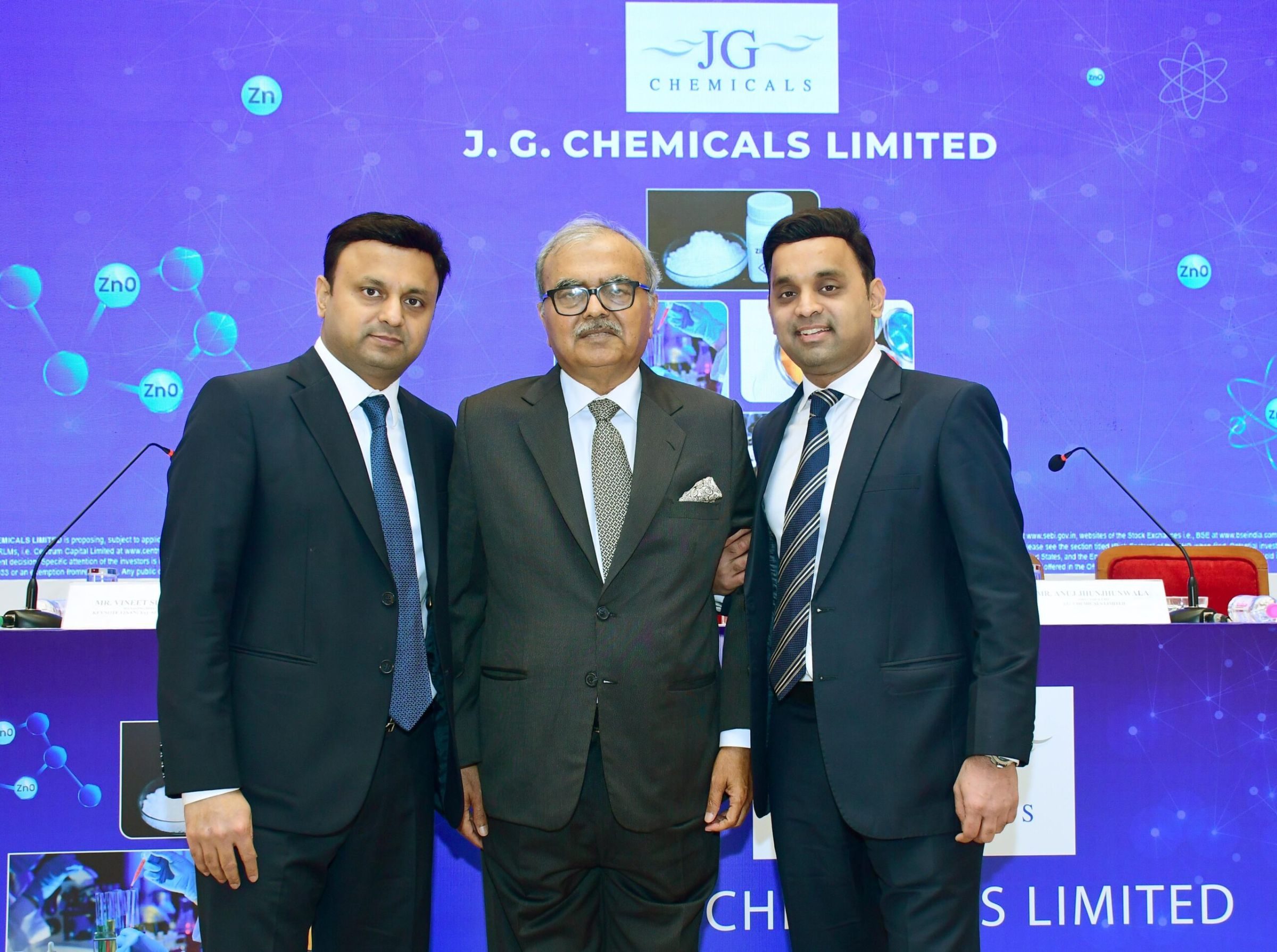
J.G.Chemicals Ltd Q4 FY26: Operating Income Hits ₹972.93 Crore While R&D Delays Leave Unutilized Millions Dormant
1. At a Glance
The industrial ecosystem relies on essential core components that often go unnoticed by the general public. J.G.Chemicals Ltd occupies a critical position within this landscape. As the largest manufacturer of zinc oxide in India, it commands a 30% domestic market share and ranks among the top five producers globally. This specialized chemical acts as a vital vulcanizing agent in the tire manufacturing sector. The company’s corporate trajectory, highlighted by its listing on March 13, 2024, after raising ₹221 crore via an IPO, has drawn considerable public interest. Operating income for the consolidated financial year ended March 31, 2026, reached ₹972.93 crore, showing a significant increase from ₹847.94 crore in the previous fiscal year.
Beneath the steady rise in operational revenue, a closer examination of the financial structure reveals notable challenges. Despite an expanding top-line, the consolidated profit before tax stood at ₹92.11 crore for FY26, up from ₹89.90 crore in FY25. This indicates compressed margins, driven by intense volatility in global raw material costs and shifts in the product mix. The company remains highly dependent on the tire and rubber segment, which accounts for 85% of its total revenue. This concentration exposes operations directly to the cyclical fluctuations of the automotive supply chain.
Furthermore, structural irregularities have begun to appear in the deployment of strategic capital. Official compliance filings from May 14, 2026, indicate a significant variance from the corporate objectives outlined in the 2024 IPO prospectus. The company had committed to fully deploying capital expenditure for establishing a dedicated Research & Development Centre by March 31, 2026. However, institutional monitoring reports from ICRA Limited reveal that ₹42.62 million remains entirely unutilized. Management has blamed this on construction bottlenecks and equipment procurement delays, pushing the timeline out into late FY27. This delay stalls the company’s shift toward high-margin non-rubber applications like pharmaceuticals and electronics.
The underlying operational parameters show additional strain. While sales volumes grew, the consolidated inventory levels surged from ₹121.90 crore in FY25 to ₹171.03 crore by March 31, 2026. This reflects an increased absorption of working capital. This high inventory accumulation exposes the company to severe write-down risks if London Metal Exchange zinc prices face a downward correction.
While the headline numbers might look attractive to a casual observer, a deeper look at the balance sheet reveals underutilized capital and persistent pricing pressures. Let us examine the specific structural components of this chemical operator.
2. Introduction
Analyzing industrial chemical businesses requires looking beyond simple production metrics to examine the efficiency of raw material transformation. J.G.Chemicals Ltd runs a highly specialized operation, processing secondary zinc and virgin metal into over 80 distinct grades of zinc oxide. The company caters to stringent global manufacturing standards, and its main competitive edge lies in its deep integration with primary industrial supply chains.
The company operates three manufacturing plants located in Jangalpur and Belur in West Bengal, and Naidupeta in Andhra Pradesh. Its total production footprint is supported by specialized French process thermal technology. The Naidupeta site, run through its material subsidiary BDJ Oxides Private Limited, serves as a key asset. It holds an IATF certification alongside WHO-GMP clearance, creating a substantial entry barrier. Qualifying a new facility with global tier-1 tire original equipment OEMs typically requires an extensive validation timeline of 4 to 5 years.
From a structural perspective, the capital raised from the public markets in 2024 was meant to accelerate growth and optimize working capital efficiency. The fresh issue of ₹165 crore was earmarked for direct equity investments in BDJ Oxides to clear legacy liabilities, optimize procurement cycles, and fund the now-delayed R&D facility.
Are the underlying cash generation cycles keeping pace with this expanded equity base, or is the business simply holding cash in low-yield bank deposits while waiting for execution to clear? We will analyze the financial mechanics section by section.
3. Business Model – WTF Do They Even Do?
To the uninitiated, zinc oxide sounds like a boring white powder found in calamine lotion or sunscreen. While J.G.Chemicals does sell to the pharma and cosmetics sectors, its primary business model is essentially tethered to the black rubber spinning on highway asphalt. If a vehicle moves on wheels, this company likely provided the chemical bridge holding those tires together.
In plain terms, zinc oxide is a critical vulcanizing activator. Without it, raw rubber remains sticky and lacks the structural integrity required for industrial use. J.G.Chemicals acts as an intermediary processor. It sources zinc dross, scrap, and pure ingots, subjects them to high-temperature French process oxidation, and delivers highly customized chemical grades directly to industrial clients.
The company uses a direct-to-consumer B2B architecture, bypassing standard distributor networks for over 95% of its domestic volume. This configuration allows them to maintain a sticky customer retention rate of over 90%. However, it also means their fortune is tied directly to the capital expenditures of companies like MRF, Apollo Tyres, CEAT, and Continental. If logistics and automotive sectors slow down, the demand for zinc oxide drops in tandem.
4. Financials Overview
The company’s performance for the final quarter of the financial year ended March 31, 2026, presents an interesting case study in operational leverage. To ensure an accurate view, all figures listed below maintain the consolidated reporting architecture of the entity.