01 — At a Glance
The Steel Company That Took A Planned Nap. And Woke Up Stronger.
- 52-Week High / Low₹94.3 / ₹26.1
- Q3 FY26 Revenue₹1,727 Cr
- Q3 FY26 PAT₹74 Cr
- Q3 FY26 EPS₹0.76
- TTM Revenue₹6,833 Cr
- Book Value₹26.5
- Price to Book2.69x
- Dividend Yield0.00%
- Debt / Equity0.90x
- Net Debt (Dec 25)₹2,275 Cr
The Setup: Jayaswal Neco is India’s largest alloy steel producer, integrated from captive iron ore mines to finished products. They had a blast furnace that needed some TLC—serious TLC, the kind where you shut down for 115 days (May to August 2024) and pray the numbers still make sense when you restart. Spoiler: They made even better sense. 9M FY26 revenue jumped 19.3% YoY to ₹5,158 crore. PAT exploded from ₹11 crore to ₹272 crore (yep, that 2,364% profit jump you’re reading is real). And they’re planning to double steel capacity to 2 MTPA in Gadchiroli. This is what happens when a steel company actually invests in itself and the gods of capacity utilization smile upon it.
02 — Introduction
When Your Blast Furnace Decides To Take A Summer Holiday
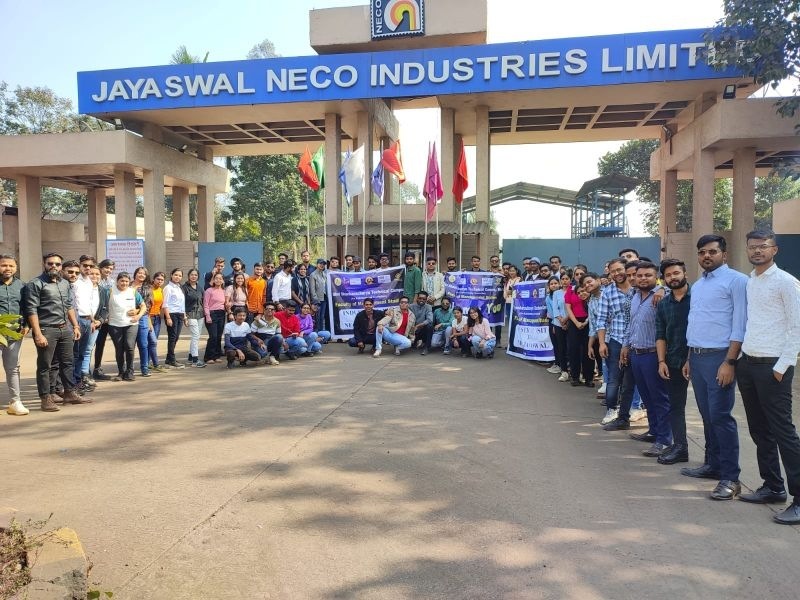
Jayaswal Neco Industries Limited. Founded in 1972. Integrated steel producer. Fully backward-integrated from captive iron ore mines (1,000+ acres, operating till 2052) through to rolled steel products, bars, billets, pig iron, sponge iron—you name it, they make it. The company sits in Raipur, Chhattisgarh, about 13 km of in-house railway tracks, two captive iron ore mines with 30-year reserve life, and a 62 MW captive power plant that covers 60% of their electricity needs.
In May 2024, they did something bold. They shut down the blast furnace. Not because something broke. Because they wanted to fix something that might break. Category One Capital Repairs & Upgradation. Translation: Deep maintenance that happens once in a decade. By August 1, 2024, they were back. Three weeks to stabilization. Now, post-upgrade, the blast furnace produces 2,600 TPD of hot metal instead of the old 1,850 TPD. That’s a 40% capacity jump without building a new furnace.
Meanwhile, in December 2025, they refinanced ₹3,200 crore of high-cost debt (14.5% coupons) into ₹1,800 crore of new NCDs at 12.5% with a 72-month repayment schedule. Interest savings: ₹1,100 crore annually. Then, they signed two MOUs: one with the Government of Maharashtra for a 2 MTPA steel plant in Gadchiroli (₹12,262 crore investment, 2,600 jobs), and another with the Ministry of Steel for PLI support. The stock response to all this? Down 24% from peak. Welcome to equity markets, where good news is just noise until an analyst on TV mentions it three times.
Concall Highlight (Jan 2026): Management emphasized Q3 is a “stabilization quarter” post-BF repair. Production records achieved: Rolling mills hit 1,77,875 MT (highest ever quarterly), oxygen plant 429 TPD, DRI campaign life at 353 days. EBITDA margin improved to 18.5% despite lower absolute PAT due to one-time Labour Code impact. The message: “Operational excellence is our new baseline.”
03 — Business Model: WTF Do They Even Do?
They Make Alloy Steel. For Everything. That Needs To Be Strong.
JNIL operates a fully integrated 1 MTPA alloy steel plant. “Alloy steel” is the fancy term for steel that’s stronger, more durable, and used in demanding applications. Think automotive parts—axles, gears, bearings, springs, connecting rods. Think industrial equipment, railways, defense. Think anywhere engineers need something that won’t snap under pressure. That’s JNIL’s market.
The integration is brutal. They own iron ore mines (100% captive sourcing). They run coke ovens, sinter plants, DRI units, oxygen plants, pelletization plants, multiple rolling mills, and a captive power setup. Every stage of steelmaking is in-house. Cost advantage? Massive. Supply chain risk? Near-zero. Dependency on external suppliers for critical inputs? Doesn’t exist.
Product split: Rolled products (billets, bars, wire rods) make up ~61% of revenue. Pellets 14%. Sponge iron 11%. Castings 8%. Pig iron 5%. Iron & steel castings division (ACD, ECD, CCD, Centricast) adds another dimension—automotive OEM approvals, tier-1 supplier status. The steel plant division contributed ~91% of FY25 revenue; castings ~8.5%.
Capacity1.0 MTPAAlloy Steel
Capex Done₹3,331 CrFY24-25 (BF Upgrade)
Iron Ore Mines2Captive Owned
Power62 MWCaptive Generation
Revenue mix by geography: 98% India, 2% exports. Customer concentration: Top 10 customers = 30-35% of revenue. They’re approved vendors for Maruti, Hyundai, Force Motors, Bosch, and other Tier-1 automotive suppliers. In castings, they’re an approved Tier-1 supplier to OEMs. Not fancy, but methodically profitable.
💬 Quick thought: If JNIL owns its mines, controls its power, and makes everything in-house, why does leverage matter so much in this space? Drop your thoughts on how cost control translate to returns.
04 — Financials Overview
Q3 FY26: The Numbers That Confused Everyone