Jasch Gauging Technologies FY26: A ₹57 Crore Company Sitting on ₹87 Crore of Cash
Spotted a factual error — a wrong number, date, or fact? Tell us and we will check the source.
General information and entertainment, not investment advice. The author is not a SEBI-registered adviser or research analyst. No recommendation, no promised returns. Markets carry risk including loss of capital. Figures may not be current. Consult a registered adviser before acting.
1 — At a Glance
Jasch Gauging Technologies closed FY26 with revenue of ₹57.46 Cr and net profit of ₹14.74 Cr — a profit almost identical to the ₹14.68 Cr it earned the year before. On the surface, a steady little manufacturer of industrial thickness gauges holding its ground.
Look one line down and the picture gets stranger. Of the ₹19.91 Cr profit before tax, ₹5.80 Cr was other income — money that came from somewhere other than selling gauges. And on the balance sheet sits ₹87.53 Cr in cash and bank balances, against a market cap of ₹227 Cr. This is a ₹57 Cr revenue company carrying a cash pile larger than most of its annual sales added together.
The market pays 15.4x earnings for it. The company is debt-free, pays a dividend, and is run by a father-and-son team who were just re-signed for three more years. The fourth quarter, though, showed profit down 27% year-on-year to ₹2.98 Cr.
A business that earns a fifth of its pre-tax profit from interest, and a treasury bigger than the factory — the record for FY26 is less about gauges and more about what the company does with the money the gauges made.
2 — Introduction
Jasch Gauging Technologies exists because of a corporate split. It was carved out of Jasch Industries Ltd, taking over the demerged Industrial Gauges & Equipment division on a going-concern basis. The NCLT New Delhi Bench approved the scheme; shareholders of Jasch Industries received 2 JGTL shares for every 5 they held, and the company’s shares were listed on BSE.
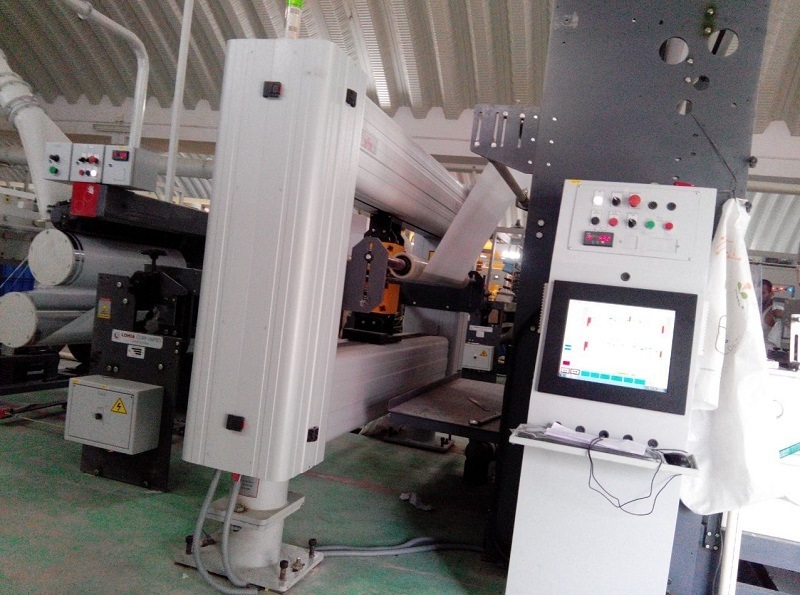
Incorporated originally in 1998, the business makes electronic gauges that measure thickness, grammage, moisture and ash content — the sort of equipment that sits on a paper-making line or a galvanizing line and quietly reports numbers all day. It also serves plastics, steel, aluminium foil and non-ferrous rolling.
The recent record is administrative rather than dramatic. In FY26 the audited results were approved on 26 May 2026. The same board meeting re-appointed Jai Kishan Garg as Managing Director and his son Manish Garg as Executive Director, each for three years from October 2026. An AGM is scheduled for 25 August 2026. Earlier moves on file include a South Korea branch office set up in March 2025 and a family settlement in April 2024 that reshuffled promoter shareholding.
For a company that measures things for a living, its own story is measured too: small, steady, and increasingly defined by its bank balance.
3 — Business Model: WTF Do They Even Do?
Jasch sells precision. Its gauges do online measurement — thickness, coating weight, moisture — on production lines that can’t afford to guess. In FY24 the revenue mix was roughly 95% sale of electronic gauges and allied products, with the rest interest income. Geographically that year it ran about 87% domestic and 13% exports.
It is genuinely a niche within a niche. The product list runs across building materials, continuous galvanizing lines, paint gauges, textiles and non-wovens, paper and board, plastics, and isotope/X-ray strip thickness systems. The company keeps service and support offices in Belgium, Brazil, Australia, South Africa, Vietnam and Taiwan — a global footprint stapled onto a ₹57 Cr revenue base and a headcount that stood at 96 people.
Which is the first oddity worth sitting with. Ninety-six employees, six overseas service offices, and one of the more asset-light P&Ls you’ll meet: raw material of ₹24.5 Cr and employee cost of ₹12.84 Cr against ₹57.46 Cr of sales. The operating margin lands around 26% — respectable for anyone, generous for a company this size.
The business isn’t complicated to describe. It’s complicated to value, because so little of the company’s balance sheet is the business. The factory is real, the gauges are real, the export offices are real. But the largest single thing Jasch owns isn’t machinery or inventory — it’s ₹87.53 Cr of cash. The gauges are the story the company tells; the treasury is the story the numbers tell.
Does a niche instrument-maker need a war chest four-fifths the size of its market cap to keep making instruments?