At a Glance
The financial landscape of the northernmost territories is witnessing a tectonic shift, and at the center of this transformation sits a banking titan that has just silenced its critics with a powerhouse performance. Imagine a financial institution that, despite the systemic tremors of a 125-basis point rate cut cycle and the aggressive migration of household savings into the equity markets, managed to post its highest-ever quarterly net profit of ₹798 crore. This isn’t just a marginal improvement; it is a calculated masterclass in regional dominance and risk recalibration.
The bank’s journey from the shadows of legacy non-performing assets to a fortress-like balance sheet is nothing short of a detective’s dream. We are looking at a Gross NPA (GNPA) that has plummeted to 2.50%, a figure that seemed impossible just a few years ago. But before you get swept away by the euphoria of record profits, look closer at the plumbing. The CASA ratio, the lifeblood of low-cost funding, has slipped to 45.65%. While still comfortably above the industry average, the structural shift of retail money moving toward mutual funds is a persistent ghost in the machine.
Furthermore, the bank’s geographical concentration remains its greatest strength and its most glaring vulnerability. With over 82% of its deposits and a massive chunk of its branches anchored in Jammu, Kashmir, and Ladakh, the bank is essentially a leveraged bet on the socio-political and economic stability of the region. While management talks about a “balanced growth” strategy, the reality is that the “Rest of India” portfolio is still the younger sibling in this house. The capital adequacy, though improved to 16.55%, faces the looming shadow of dilution as the board eyes a ₹750 crore equity raise.
The intrigue lies in the numbers that aren’t immediately shouting. The Yield on Advances has compressed to 8.51% in the latest quarter, down from 9.44% a year ago. The bank is fighting a war on two fronts: protecting its turf from aggressive private players and maintaining margins in a falling interest rate environment. Is this a peak performance before a cyclical plateau, or is the engine just getting started?
Introduction
The story of Jammu and Kashmir Bank (J&K Bank) in FY26 is one of structural repair meeting opportunistic growth. For decades, this institution was viewed through a lens of skepticism—often dismissed as a regional lender bogged down by local disturbances and legacy bad loans. However, the audited results for the financial year ended March 31, 2026, tell a story of a bank that has finally decided to “walk the talk.”
With a Total Business crossing ₹2.88 lakh crore, the bank has leveraged its “Lead Bank” status in the Union Territories to capture the infrastructure boom currently sweeping through the region. The management’s focus has shifted from mere survival to aggressive efficiency. This is evident in the Net Profit per Employee, which has surged to ₹19.47 lakh, and a Cost-to-Income ratio that has been trimmed down to 56.18%.
However, the banking sector in 2026 is not the same as it was in 2021. The digital transaction percentage for the bank now sits at a staggering 86%, up from 75% just four years ago. This digital pivot is no longer a luxury but a survival mechanism as it attempts to win back the transaction-led CASA that has been leaking to more tech-savvy competitors.
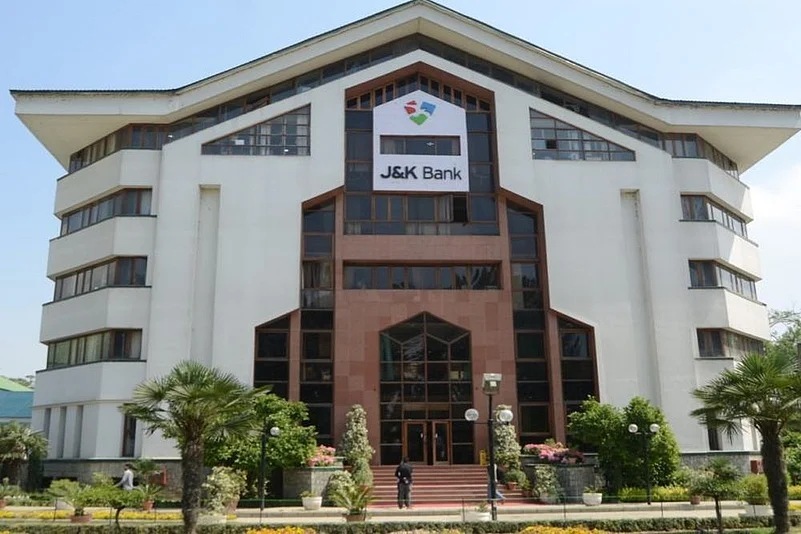
In this article, we will dissect the “Srinagar Fortress” to see if the foundation is truly made of granite or if the recent profit surge is a result of one-off recovery windfalls. We will look at why the management is desperate to raise capital even when the vaults are seemingly full, and whether the “Rest of India” strategy is actually de-risking the bank or just adding higher-risk corporate exposure.
Business Model – WTF Do They Even Do?
At its core, J&K Bank acts as the financial custodian for the Union Territories of J&K and Ladakh. If you live in Srinagar or Leh, chances are this bank is your landlord, your employer’s banker, and the place where your grandmother keeps her fixed deposits. It is the only private sector bank in India designated as a “Lead Bank,” a title that gives it an almost monopolistic grip on government business