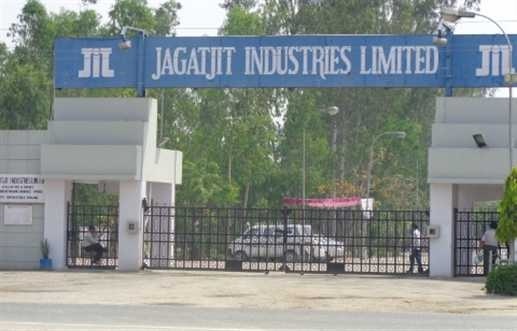
Jagatjit Industries FY26: Profit ₹10 Cr, Sales ₹254 Cr—A Distillery at the Crossroads
General information and entertainment, not investment advice. The author is not a SEBI-registered adviser or research analyst. No recommendation, no promised returns. Markets carry risk including loss of capital. Figures may not be current. Consult a registered adviser before acting.
Prices referenced are not live and reflect June 10, 2026 intraday levels around ₹136/share.
1. At a Glance
Jagatjit Industries ended FY26 with consolidated net profit of ₹10 crore on revenue of ₹254 crore—a collapse. Not from scandal, not from fraud: from a business that lost ₹23 crore the year before and is now barely breaking even on an operating loss of ₹47 crore.
The math is brutal. A ₹112-crore write-back on the sale of a Gurgaon property masked what should have been a ₹102-crore loss. Strip that out, and core operations generated no profit—just operating red ink. Revenue fell 48% year-to-year.
Yet the stock trades at 64x earnings. The multiple sits above peer median (42x). The company carries ₹363 crore in debt against ₹16 crore in reserves—negative net worth that management claims is temporary, fixed by the sale of more property. A ₹200-kl-per-day ethanol plant spun up production in July 2025 and is the only hope.
The teaser: Can an asset-light pivot to ethanol save a liquor business that can no longer distil profit?
2. Introduction
Jagatjit Industries was born in 1944 and owns Asia’s oldest integrated distillery complex. For decades, it dominated country liquor in Punjab and shipped Indian-made foreign liquor (IMFL) across 17 states. A malted milk food (MMF) division supplied Hindustan Unilever.
In 2023, the board approved a ₹180-crore term loan to build a 200-kl-per-day grain-ethanol plant. Ethanol sales to oil marketing companies would replace a shrinking liquor market and a terminated HUL contract.
The plant began commercial production in July 2025. But FY26 shows the ramp barely started: ethanol contributed ₹19 crore in revenue and lost ₹17 crore operationally. The beverages segment—the core—lost ₹17 crore. The food division lost ₹6 crore.
Meanwhile, the company swapped ₹10,700 crore in high-cost debt for proceeds from asset sales. It appointed a new CEO in April 2026 and flagged plans for a ₹350-crore qualified institutional placement. On May 11, the board noted a single-malt launch, a shift to Chhattisgarh, and the new CEO. The moves sound like reset, not recovery.
3. Business Model: WTF Do They Even Do?
Three threads. None healthy.
Beverages (31.5 crore revenue in FY26, down from 52.5 crore) make country liquor in Punjab and IMFL branded spirits for domestic and export markets. The company owns 40 liquor brands—King Henry, Aristocrat, AC Black, Royal Pride. Most sell into a market collapsing under state taxation and smuggling. IMFL volumes fell from 3.82 million cases in FY24 to 3.03 million in FY25. The segment lost money.
Food (1.7 crore, down from 10.5 crore) made malted milk food (MMF) for HUL and sold malt extract. The company had capacity to make 42,600 metric tons per year. In December 2024, HUL terminated the contract. Revenue evaporated. The segment lost ₹6 crore.
Ethanol (19 crore, started FY26) is new: a 200-kl-per-day grain-based distillery selling alcohol to oil companies, not bottles to drinkers. It can theoretically produce 73,000 metric tons per year. The capex was ₹180 crore. Ramp is just beginning.
The real sting: real estate. The company owns leasehold land in Sahibabad (glass-division remnant). Agreements to develop and sell portions generated ₹97 crore in partial consideration (shown in current liabilities as deferred revenue). In October 2025, it signed to sell Gurgaon property (16,200 sqm, two buildings) for ₹215 crore. Proceeds will service debt and plug working capital holes. Without these sales, the balance sheet implodes.
This is not a liquor company anymore. It is a liquor company that is also a land bank.
4. Financials Overview
Figures are consolidated, in ₹ crore.
Metric
FY26
FY25
YoY Change
Revenue
253.5
491.5
-48.4%
EBITDA
-28.2
-13.2
-113.6%
PAT
9.9
-23.5
↑ (loss narrowed)
EPS (₹)
2.11
-5.01
↑ (loss to profit)
Q4 FY26 performance: In the final quarter alone, revenue fell to ₹76 crore (from ₹115 crore in Q3 FY26), and net loss was ₹17 crore. The ethanol plant was still ramping. The old beverages and food divisions were in freefall.
Reconciliation note: The ₹10-crore profit includes ₹112 crore from the sale of investment property (the Gurgaum write-back on earlier security deposits and exceptional item). Operating losses would have left PAT in negative territory without this one-time gain. Other income soared to ₹111.9 crore precisely because of property sales.
From the concall on results (management framing): The board noted plans to infuse interest-free funds through equity placement and further asset sales to augment working capital. The company is “dependent on continuous and stable operations” of the ethanol plant and margin improvement.
5. Market Expectations & Historical Multiples
This section describes how the market is currently pricing the company and how that compares with its own history and peer group. It is descriptive, not predictive.
Metric
Current
5-Yr Average
Peer Median (7 cos)
P/E
63.6
80.9
42.2
EV/EBITDA
15.4
n/a
13.2
ROE
17.1%
-0.6%
11.9%
ROCE
10.5%
1.0%
12.4%
The market pays 63.6x earnings here against a peer median of 42x—a 51% premium. But the multiple is actually below its