1. At a Glance – The Conveyor Belt That Prints Money (Sometimes Literally)
There are companies that manufacture products. There are companies that generate profits. And then there is International Conveyors Ltd, a company that somehow manufactures conveyor belts… but prints profits from stock market investments like a seasoned Dalal Street operator.
Imagine this: a company doing ₹35 crore quarterly revenue but ₹30 crore profit. That’s not a typo. That’s not a miracle. That’s called “other income doing heavy lifting like a Punjabi wedding uncle carrying the entire baraat.”
This is a business where coal mines, potash belts, and conveyor engineering meet mutual fund SIP energy. A company where core operations are stable, but profits behave like crypto charts.
You have:
A niche monopoly-like product (PVC conveyor belts)
Strong export exposure (~62%)
Long-term contracts (5–7 years)
High entry barriers
And then…
Massive investment portfolio
Equity market profits inflating earnings
Promoter transactions happening quietly in the background
So the real question is: Are you investing in a mining consumables company… or a cleverly disguised investment firm with a conveyor belt side hustle?
Let’s investigate.
2. Introduction – The Curious Case of Conveyor Meets Capital Markets
International Conveyors Ltd (ICL) is not your typical boring industrial company.
Founded in 1973, this company operates in a niche but critical segment—PVC conveyor belts used in underground mining. These belts are not optional. They are like oxygen for mining operations. Without them, coal doesn’t move, potash doesn’t flow, and profits don’t happen.
So far, so good.
But somewhere along the journey, the company decided: “Why just move coal… when we can also move money?”
And thus began ICL’s parallel career as:
Equity investor
Loan provider to group companies
Treasury operator
The result? A hybrid creature:
Half industrial company
Half investment portfolio
And honestly, even the balance sheet looks confused.
The company:
Has strong relationships with global mining giants
Exports heavily to North America
Operates in a high-entry-barrier niche
But also:
Earns massive income from investments
Has exposure to group companies
Shows volatile profits due to non-operating income
So let’s break this down like a proper financial detective.
3. Business Model – WTF Do They Even Do?
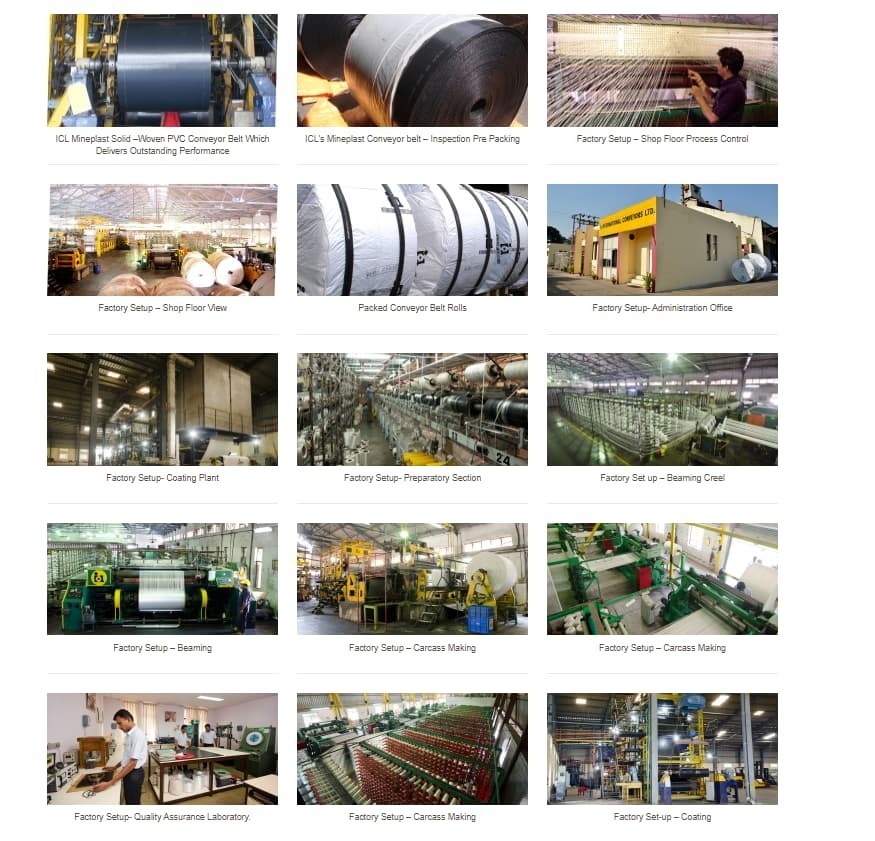
At its core, ICL manufactures PVC conveyor belts.
Now before you yawn, let me explain.
These belts:
Carry coal, potash, salt, and minerals
Are used in underground mining
Have strict regulatory approvals
Require customization per geography
Which means: Once a client approves you, you’re basically in a long-term relationship.
Core Segments:
Conveyor Belting (~94%)
Trading (steel cord belts & accessories) (~5%)
Wind Energy (~1%)
Revenue Mix FY24:
Conveyor belts: ~94%
Investment income: ~27% (yes, you read that right)
Interest income: ~5%
So basically: The belts carry coal… and the treasury carries profits.
Why Entry Barrier is High:
Dual-stage approval (regulatory + client)
5–7 year contracts
Few global players
Sounds great, right?
But here’s the twist: Even if operations are stable, profits depend heavily on stock market gains.
So ask yourself: Are you comfortable owning a manufacturing company where profits depend on market mood swings?