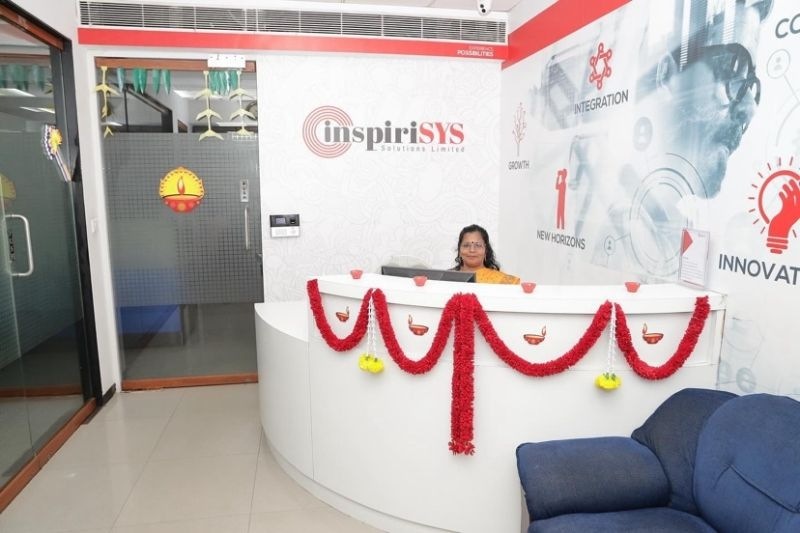
Inspirisys Solutions Limited (ISL) just dropped its audited financial results for the year ended March 31, 2026, and the numbers are screaming for attention. We are looking at a company that has managed to pull off a ₹42.5 Crore PAT on a ₹476 Crore revenue base, all while maintaining a market cap of just ₹348 Crore.
If you look closely, the stock is trading at a P/E of 8.19, which is essentially a basement-level valuation compared to the industry median of 27.7. But before you get too excited, the detective in me sees some shadows. The Working Capital Days have exploded from 13.8 days to 79.7 days. That is a massive red flag. Money is getting stuck in the system.
The company has a Japanese parent, CAC Holding Corporation, which owns 69.95% of the equity. They have been the lifeline, providing unsecured loans and corporate guarantees. However, ISL recently attempted a voluntary delisting which failed in April 2024. Why does a company with a 53.5% ROE want to leave the public eye?
The revenue concentration is also a bit tight, with the top 2 customers accounting for roughly 25-30% of the business. While the PAT growth of 39% TTM looks sexy, the stalled sales growth over a 5-year period (3.34% CAGR) suggests this is a story of efficiency and cost-cutting rather than aggressive market expansion.
2. Introduction
Inspirisys Solutions Limited is not your typical high-flying Tier-1 IT firm. It operates in the trenches of Infrastructure Management, System Integration, and Warranty Management. Headquartered in Chennai, it has been around since 1995, evolving through various branding iterations before settling under the Japanese CAC umbrella.
The company operates across five key geographies: India, Japan, USA, UK, and UAE. However, the international journey hasn’t been smooth. They recently liquidated their Dubai (DMCC) and Japan (ISJKK) subsidiaries because they were either bleeding money or sitting idle.
What makes ISL intriguing right now is the massive disconnect between its Return on Equity (53.5%) and its Price-to-Earnings ratio (8.19). Usually, a company with such high returns commands a premium. Here, the market seems to be discounting something—perhaps the “small-cap” risk or the previous delisting attempt drama.
The company’s focus has shifted heavily toward Services, which now account for about 66% of the revenue, leaving the low-margin hardware/product sales at 31%. This shift is likely what drove the margin expansion we are seeing in the FY26 results.
3. Business Model – WTF Do They Even Do?
In simple terms, Inspirisys is the “plumber” of the IT world. They don’t just write code; they make sure the pipes (servers, networks, kiosks) work and stay working.
- Systems Integration (SI): They sell you the hardware—servers, networking gear, and software. This is a tender-based, “lumpy” business. One year it’s huge, the next year it vanishes.
- Infrastructure & Cloud Services: They manage data centers and cloud migrations. This is where the recurring “sticky” money is.
- Warranty Management Services (WMS): This is their niche. When a foreign company (OEM) sells expensive equipment in India but doesn’t have a service center in Jhumri Telaiya, they hire Inspirisys to handle the repairs and maintenance.
- Product Engineering: Designing and testing software applications, specifically for BFSI and Healthcare.
They are essentially a middleman with technical expertise. They take products from global giants and implement them for Indian banks, government PSUs, and