Indo Borax FY26: A ₹25.58 Crore Side Hustle and a Brand New Control Panel
Section 1 — At a Glance
A massive structural overhaul has taken center stage for Indo Borax & Chemicals Ltd in FY26. The long-standing promoter group completely exited the company on January 23, 2026, transferring their entire 50.80% stake to a new consortium of institutional acquirers, including Zenrock Chemicals and India Special Assets Fund. This total transition of corporate control has triggered a comprehensive boardroom restructuring, bringing in new executive leadership to guide the chemical player’s next chapter.
Operationally, the fiscal year concluded with consolidated revenue rising 22.91% to reach ₹215.45 crore, bouncing back from a multi-year cyclical deceleration. However, this expanding top-line did not cleanly translate into core operational efficiency. Core operating profit actually experienced a mild structural contraction of 4.35%, landing at ₹44.02 crore as raw material inflation severely compromised gross margins.
The headline net profit figure paints a completely different, remarkably optimistic picture, expanding by 18.25% to touch ₹50.27 crore. This dramatic bottom-line divergence is entirely attributable to an unprecedented spike in non-operating items, with other income ballooning to ₹25.58 crore. This non-operational windfall single-handedly masked deep manufacturing cost pressures. High returns on paper are structurally empty if they are generated by cash balances rather than manufacturing assets. While investors are processing these massive leadership adjustments and a heavy special dividend proposal, the underlying divergence between treasury income and manufacturing realities remains the central financial theme.
Section 2 — Introduction
Indo Borax & Chemicals Ltd has operated as an established micro-cap specialist in the niche industrial chemical manufacturing arena since 1980. For decades, the enterprise functioned under the quiet, conservative control of its founding promoters, focused heavily on its core production facility located at Pithampur, Madhya Pradesh.
The historical predictability of this family-run operation was entirely dismantled in January 2026. The wholesale exit of the founding family via a formal share purchase agreement handed over the corporate keys to a fresh institutional group led by Zenrock Chemicals. This transaction immediately transformed Indo Borax from a sleepy, slow-growth chemical manufacturer into an active, professionally-managed turnaround play.
Section 3 — Business Model: WTF Do They Even Do?
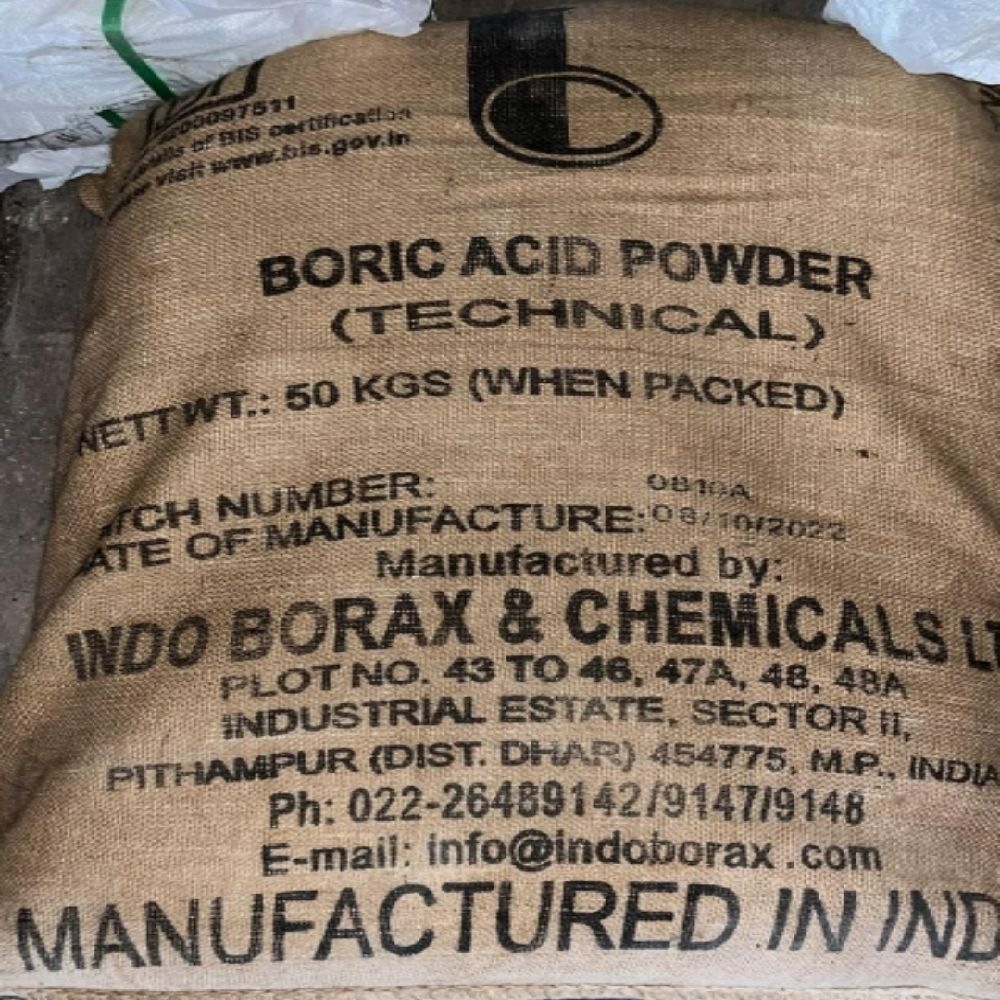
To put it simply, Indo Borax turns raw chemical feedstocks into highly specific powders that keep modern industrial manufacturing from grinding to a halt. Their core bread-and-butter offering is Boric Acid, and they have spent years collecting regulatory badges for it. They were the very first manufacturer in India to lock down a BIS certification for Technical Grade Boric Acid, which is used to manufacture everything from heavy glass and ceramics to the fluxes required for metal welding and soldering.
They also run a highly lucrative side line as the only domestic manufacturer of IP Grade Boric Acid backed by an official FDA license. If you have ever applied a medicated skin cream, washed your eyes with a specialized solution, or treated a pet with a veterinary formulation, there is a very high probability you have interacted with Indo Borax’s output.
They round out their portfolio with value-added agriculture micro-nutrients like Disodium Octaborate Tetrahydrate (D.O.T.) and a highly fashionable entry into Lithium Hydroxide Monohydrate, aimed squarely at electric vehicle battery supply chains. It is a solid chemical portfolio, even if it spent the last five years generating a deeply uninspired revenue CAGR of just 8.37%.
Section 4 — Financials Overview
Figures are consolidated, in ₹ crore.
Quarterly Performance Trend
Metric
Q4 FY26
YoY (%)
QoQ (%)
Revenue
63.01
25.72%
53.61%
EBITDA
13.52
12.67%
42.46%
PAT
14.53
27.01%
56.74%
EPS (₹)
4.53
27.25%
56.75%
The final quarter of FY26 delivered a massive sequential jump in revenue to ₹63.01 crore, recovering from a weak winter quarter where sales dipped to ₹41.02 crore. While the quarterly top-line expansion looks beautifully aggressive, a look at the expenses reveals a familiar pattern: costs jumped to ₹50.19 crore during the quarter, indicating that volume growth is being bought at the expense of premium pricing power.
The Walk the Talk Subsection
Given the complete overhaul of corporate control in late January 2026, historical management guidance has been rendered entirely obsolete. The previous promoter group operated with a distinctly conservative, low-profile playbook that rarely offered definitive forward-looking milestones. The focus now shifts entirely to the incoming executive