1. At a Glance – Fertiliser Ki Dukaan, Detergent Ka ATM
Indian Phosphate Ltd is currently chilling at a market capitalisation of roughly ₹161 crore, trading around ₹64.5 per share, and behaving like that one relative who suddenly cleared all exams after years of average performance. In the last three months, the stock is up ~13.6%, six months ~11.2%, while the one-year return still looks like it had a bad breakup at -19.9%. The latest half-yearly results show quarterly sales of ₹499 crore and quarterly PAT of ₹10.17 crore, with profit growth exploding by 156% YoY. The stock trades at a P/E of about 11.7, EV/EBITDA of 6.69, and price-to-book of 0.92, which means the market is valuing the company at less than the worth of its own balance sheet furniture. ROCE stands at 8.51%, ROE at 6.38%, and debt-to-equity is a very desi, manageable 0.42. The fun part? This is technically a fertiliser company where 93–95% of revenue comes from LABSA, a detergent chemical. Confused already? Good. That means you’re paying attention.
2. Introduction – Yeh Fertiliser Hai Ya Surf Excel Ka Supplier?
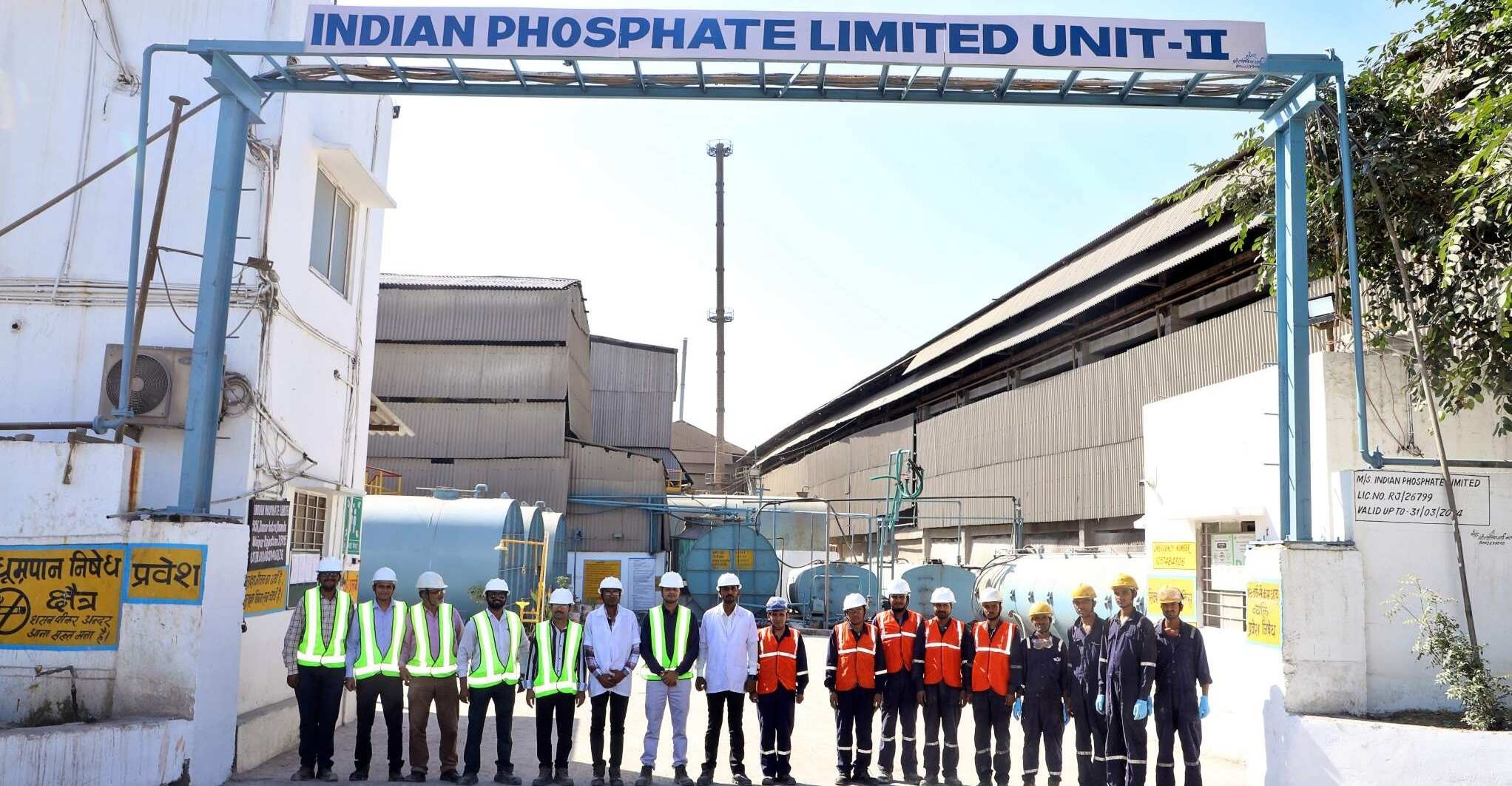
Indian Phosphate Ltd (IPL, not the cricket one unfortunately) was incorporated in 1998, which means it has survived liberalisation hangovers, fertiliser subsidy drama, demonetisation, GST tantrums, COVID chaos, and SME IPO mood swings. The company manufactures, purchases, and sells fertilisers and chemical products, but if you dig one layer deeper, this is not your typical “khet mein daal do” story.
IPL made its name in Single Super Phosphate (SSP) fertilisers under the brand “Ankur SSP” across Rajasthan and parts of North and West India. Sounds boring? Wait. Over the years, the company quietly pivoted into manufacturing Linear Alkyl Benzene Sulphonic Acid (LABSA), a key raw material used in detergents. Yes, every time you wash clothes, IPL is probably earning more money than when farmers use its fertiliser.
By FY24, the business had clearly chosen its favourite child. LABSA contributes ~93–95% of revenue, while fertilisers are now more like a side hustle. Government subsidy? Just ~2% of revenue. So no daily “sarkar paisa degi ya nahi” anxiety here.
The company listed on NSE SME in August 2024 via a ₹68 crore IPO, primarily to fund expansion in Tamil Nadu, working capital, and general corporate needs. Post listing, results have suddenly started looking spicy, margins have improved, and profits have woken up from a long nap. The big question: is this a structural turnaround or just a good detergent cycle? Let’s dig.
3. Business Model – WTF Do They Even Do?
Let’s explain Indian Phosphate Ltd like you’re smart but lazy and scrolling after dinner.
Fertilisers (The Original Avatar)
IPL manufactures Single Super Phosphate (SSP) in powdered and granulated forms, including zincated and boronated variants. SSP is a phosphatic fertiliser used to improve soil fertility, especially in phosphate-deficient regions like Rajasthan. The company has two manufacturing facilities in Udaipur with an installed capacity of 400 MT/day of SSP powder.
This segment once defined the company, but now contributes only ~7% of revenue. Think of it as that old family business that still exists, but the real money is coming from somewhere else.
Chemicals – LABSA (The Cash Machine)
LABSA 90% is used in detergents, soaps, and cleaning products. IPL has a LABSA manufacturing facility with installed capacity of 350 MT/day. Its biggest customer is Hindustan Unilever Ltd. Yes, that HUL. When your biggest client makes Rin, Surf Excel, and Wheel, your volume visibility suddenly looks better than most smallcaps.
By FY24, LABSA contributed ~93–95% of revenue. This is not a fertiliser company pretending to be a chemical company; this is a chemical company still carrying fertiliser baggage for brand nostalgia.
Expansion Mode
IPL plans to set up a new manufacturing plant at SIPCOT Industrial Park, Cuddalore, Tamil Nadu. This expansion will:
- Increase LABSA capacity by 100 MT/day
- Add 200 MT/day of sulphuric acid (backward integration)
- Introduce 60 MT/day of magnesium sulphate
Translation: reduce raw material dependency, improve margins,