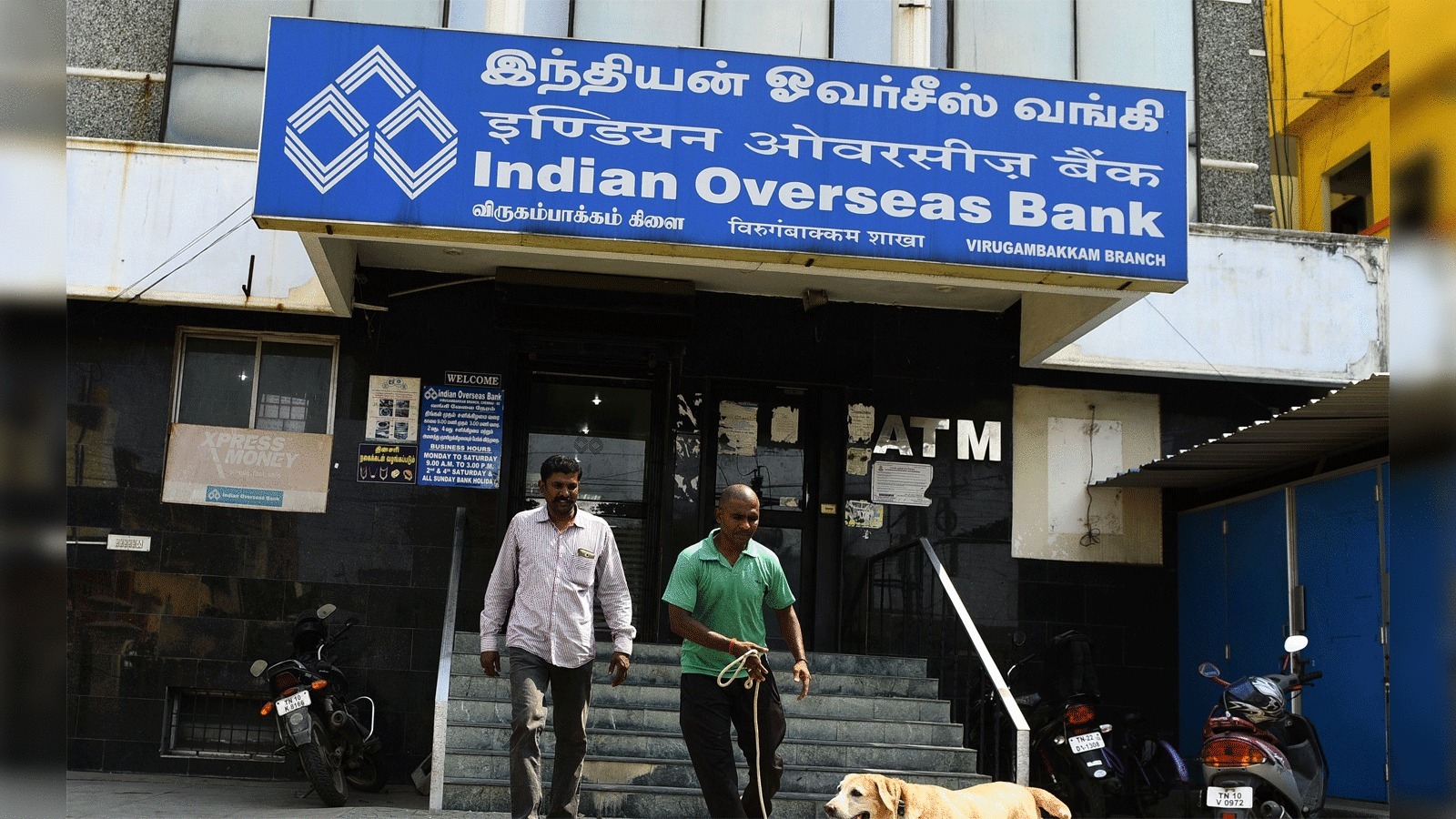
Indian Overseas Bank Q3 FY26 – ₹1,427 Cr Quarterly Profit, GNPA Crushed to Sub-3%, Yet Market Still Treats It Like 2015 PCA PTSD
1. At a Glance – The PSU Bank That Refuses to Die (and Quietly Makes Money)
Indian Overseas Bank (IOB) is currently trading at ₹36.4, sitting on a market cap of ₹69,936 crore, and behaving like that one uncle at weddings who was written off years ago but now owns three apartments and still comes on a scooter. In the last three months, the stock is down ~9%, over one year it’s down a painful ~33%, yet underneath this moody price chart sits a bank that just reported Q3 FY26 net profit of ₹1,427 crore, up 63% YoY, with quarterly revenue of ₹8,172 crore growing at 14.8% YoY.
Asset quality has gone from horror movie to family drama: Gross NPA at 2.89%, Net NPA at 0.51%, and PCR at an ultra-conservative 96.96%. CRAR is healthy at ~16–17% range, ROE is now 11.4%, and ROA has crawled up to 0.91%—not great, not terrible, very PSU-coded.
Valuation? P/E of 14.1× versus industry PE of 8.26×. That premium is either optimism… or the market pricing in a “don’t mess this up again” tax. Question is: is IOB finally boring in a good way, or is the market still rightfully traumatised?
2. Introduction – From PCA Jail to Probation Officer of Its Own Past
Founded in 1937 by Chidambaram Chettyar, Indian Overseas Bank was nationalised in 1969 and then, decades later, practically nationalised by NPAs. By 2015, the bank was shoved into Prompt Corrective Action (PCA)—the RBI equivalent of “beta, abhi tum ghar se bahar nahi jaoge.”
Between FY18 and FY21, the Government of India injected ₹22,974 crore to keep the lights on. PCA exit finally came in September 2021, and since then the bank has been on a slow, cautious, almost paranoid clean-up drive.
Fast-forward to FY25–FY26, and the numbers tell a very different story. Slippages are under control, recoveries are improving, profitability is consistent, and the bank is no longer bleeding from legacy loans. But—and this is important—the market hasn’t fully forgiven it. PSU bank investors have elephant-level memory.
So today, IOB exists in an awkward zone: fundamentals improving faster than sentiment. Is this the beginning of a respectable PSU banking story, or just another cyclical high before complacency kicks in? Let’s dissect it properly.
3. Business Model – WTF Do They Even Do? (Besides Collect Deposits and Stress Investors)
At its core, IOB is a plain-vanilla public sector bank, which is actually a compliment in today’s over-financialised world.
Revenue Mix (Q1 FY25):
Corporate / Wholesale Banking: 38%
Retail Banking: 36%
Treasury: 24%
Other: 2%
This is not a hyper-aggressive retail lender nor a reckless corporate lender. It’s a balanced PSU cocktail with agriculture, MSME, retail, and corporates all fighting for management attention.
Branch network strength is old-school PSU muscle: ~3,250 branches, ~3,500 ATMs, and ~7,000 business correspondents, with heavy exposure to semi-urban (30%) and rural (28%) India. Translation: CASA stability, modest yields, and fewer fintech-style heart attacks.
They’ve also quietly opened 22 specialised SME branches and identified 144 MSME-focused branches. No flashy PowerPoint jargon—just boring execution. And in PSU banking, boring is bullish.
Question for you: do you trust a bank more when it’s boring, or when it promises “digital transformation” every quarter?
4. Financials Overview – Numbers That Actually Behave Themselves
Result Type Locked:Quarterly Results (Q3 FY26) Annualised EPS Method: Latest quarterly EPS × 4
Quarterly Performance Comparison (₹ Crore, EPS in ₹)
Metric
Latest Q3 FY26
Q3 FY25
Q2 FY26
YoY %
QoQ %
Revenue
8,172
7,116
7,851
14.8%
4.1%
PBT
1,367
1,238
1,729
10.4%
-21.0%
PAT
1,427
875
1,259
63.0%
13.3%
EPS (₹)
0.74
0.46
0.65
60.9%
13.8%
Annualised EPS: ₹0.74 × 4 = ₹2.96 Implied P/E at ₹36.4: ~12.3× (lower than headline P/E due to trailing math)
Commentary: Revenue is steadily climbing, PAT growth is aggressive (helped by lower credit costs), and EPS momentum is finally real. The QoQ dip in PBT is noise, not narrative.
5. Valuation Discussion – Not Cheap, Not Crazy, Just PSU-Confused
Method 1: P/E Multiple
Annualised EPS: ₹2.96
Conservative PSU P/E range: 8× – 11×
Fair value range: ₹24 – ₹33
Method 2: EV / EBITDA
EV: ₹4,51,653 crore
EBITDA (TTM proxy): ₹25,000–27,000 crore
EV/EBITDA: ~17–18× (rich for PSU banking)
Method 3: DCF (Simplified)
Credit growth: 13–14%
ROE stabilising around 12%
Conservative terminal assumptions
DCF implied range: broadly aligns with ₹28 – ₹35
Fair Value Range (Educational): ₹25 – ₹35 This fair value range is for educational purposes only and is not investment advice.