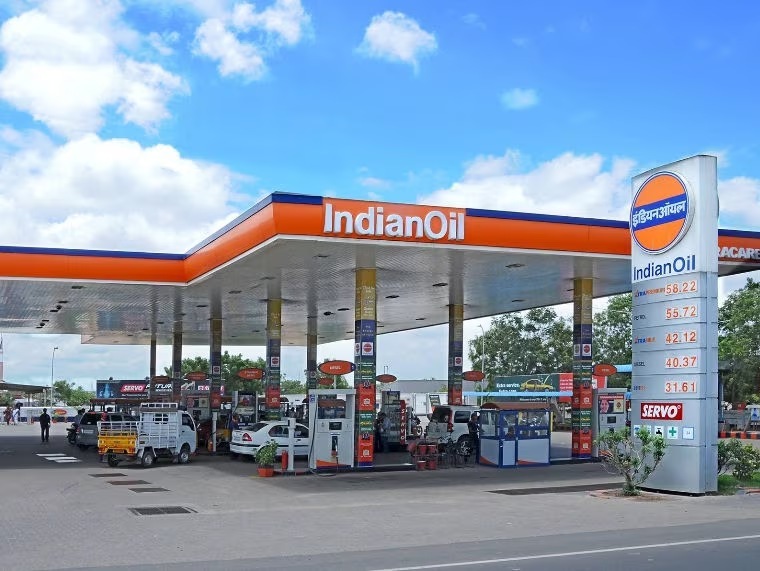
1. At a Glance
Welcome to Indian Oil Corporation Ltd (IOC), the desi uncle of the energy world who’s been around since forever, controls 31% of India’s refining capacity, and still finds ways to both amaze and confuse you every quarter. As of October 27, 2025, the stock lounges around ₹155, barely sweating after a 3-month 4.9% gain, with a market cap of ₹2.19 lakh crore — roughly the GDP of a small European nation that actually works weekends.
The company delivered a net profit of ₹7,818 crore this quarter, compared to ₹541 crore a year ago — a mind-blowing 1,388% YoY jump. But before you start celebrating, remember: part of that “profit” came from ₹14,486 crore in government compensation. Basically, the government gave IOC money for selling cheap fuel — kind of like giving someone an award for losing money patriotically.
With 11 refineries running at 105% utilization (yes, they’re literally overworking), and 61,000+ customer touchpoints across India, IOC is everywhere — from your car’s fuel tank to your neighbour’s LPG cylinder to that one public toilet that smells vaguely of diesel.
Still, investors are torn between “it’s a cash cow” and “it’s a government cow being milked too hard.” Let’s dissect this fossil-fuel fossil.
2. Introduction
You know that one uncle at every wedding who pays everyone’s bill but keeps cribbing about it? That’s IOC — the eternal sponsor of India’s petrol addiction, simultaneously profitable, patriotic, and perennially under political pressure.
In the last decade, IOC has been through it all: crude crashes, excise shocks, OMC pricing wars, refinery fires, environmental allegations, and the existential dread of EVs eating its lunch. Yet, like an Indian hero in a Bollywood climax, it walks out of every explosion slightly burnt but still holding the national flag.
FY25 saw IOC clock ₹7.6 lakh crore in sales — that’s 7,60,000 crore, not a typo — with a modest 6.8% operating margin and a P/E ratio of just 8.99. Cheap? Maybe. But “cheap” is relative when you owe ₹1.52 lakh crore in debt and depend on government subsidies to stay alive.
The company’s green energy pivot looks promising on PowerPoint slides — 1 GW renewable target, hydrogen ambitions, and EV charging JVs with Panasonic — but let’s be honest: for now, their biggest green contribution is the colour of their fuel card.
So grab your popcorn (and LPG cylinder), because this is not a boring oil story — it’s India’s energy soap opera, complete with politics, pollution, and profit.
3. Business Model – WTF Do They Even Do?
Indian Oil is basically a vertically integrated fuel mafia (legally sanctioned, of course). It refines crude, moves it through pipelines longer than most friendships, sells it through 37,000+ petrol bunks, fills your gas cylinder, sells aviation fuel to Indigo, produces petrochemicals for plastics, and now wants to make hydrogen and batteries too — because why not?
Let’s break it down:
- Petroleum Products (94%): The bread, butter, and briyani. Diesel and petrol make up almost 70% of IOC’s revenues. It owns 11 refineries and 31% of India’s refining capacity — basically every third litre of petrol you buy owes them something.
- Petrochemicals (3%): The “chemistry topper” of the portfolio. Its 4.4 MMTPA capacity churns out plastics under the “PROPEL” brand. But margins here swing faster than crude prices during election season.
- Natural Gas & Exploration (3%): 13% market share in gas, 6.5 MMT of sales, and upstream investments in 29 blocks. Let’s call this the