At a Glance
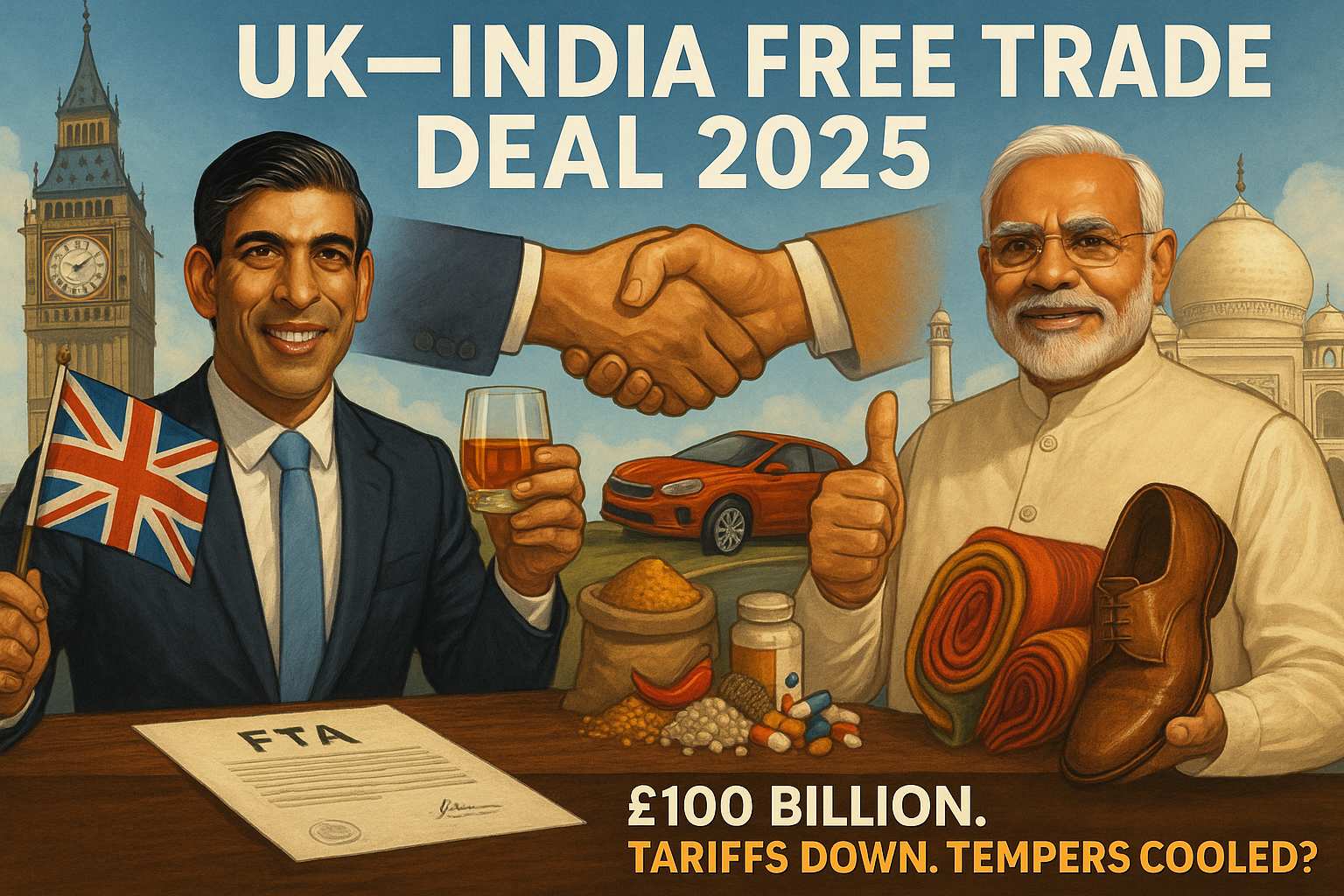
After 3.5 years, 14 formal rounds, two prime ministers, and 17 diplomatic headaches, the UK–India Free Trade Agreement has finally been signed. Think of it as the Brexit rebound relationship—only this time, both parties brought spreadsheets instead of flowers. Expected to boost annual trade by £25–34 billion, this deal cuts tariffs, boosts jobs, and hopefully makes your Scotch and smartphone imports cheaper.
1. Introduction: When Colonial History Meets Export Strategy
Imagine your ex-boss asking to partner on a new business. That’s basically what this deal is.
Britain, still trying to figure out life post-Brexit like someone left off the guest list to a party they used to host, finally managed to woo India—a trade juggernaut and the UK’s former colony—with promises of reduced tariffs, freer movement, and yes, cheaper gin.
And India? Well, it just scored duty-free access to 99% of UK’s marketable goodies, from basmati rice to generic drugs. Namaste, tariffs.
Let’s unpack what went down.
2. What’s in the Deal? (TL;DR: Everything Except the Kohinoor)
a. Tariff Reductions
- UK goods entering India now face just 3% average tariffs, down from 15%+
- India slashed duties on premium UK exports:
- Scotch whisky: 150% → 75% immediately, 40% in 10 years
- Luxury cars: 100% → 10% (but under quota)
- UK allows duty-free access on 99% of Indian exports, including:
- Textiles, Leather, Footwear
- Pharmaceuticals (including generics)
- Agri products like spices, tea, coffee
- Jewellery and gems
b. Services & Visas
- Indian professionals in 35+ sectors get easier visa access for UK contracts
- Mutual recognition of professional qualifications (e.g., accountants, lawyers)
- Social Security pact signed to avoid double dipping in pension