1. At a Glance
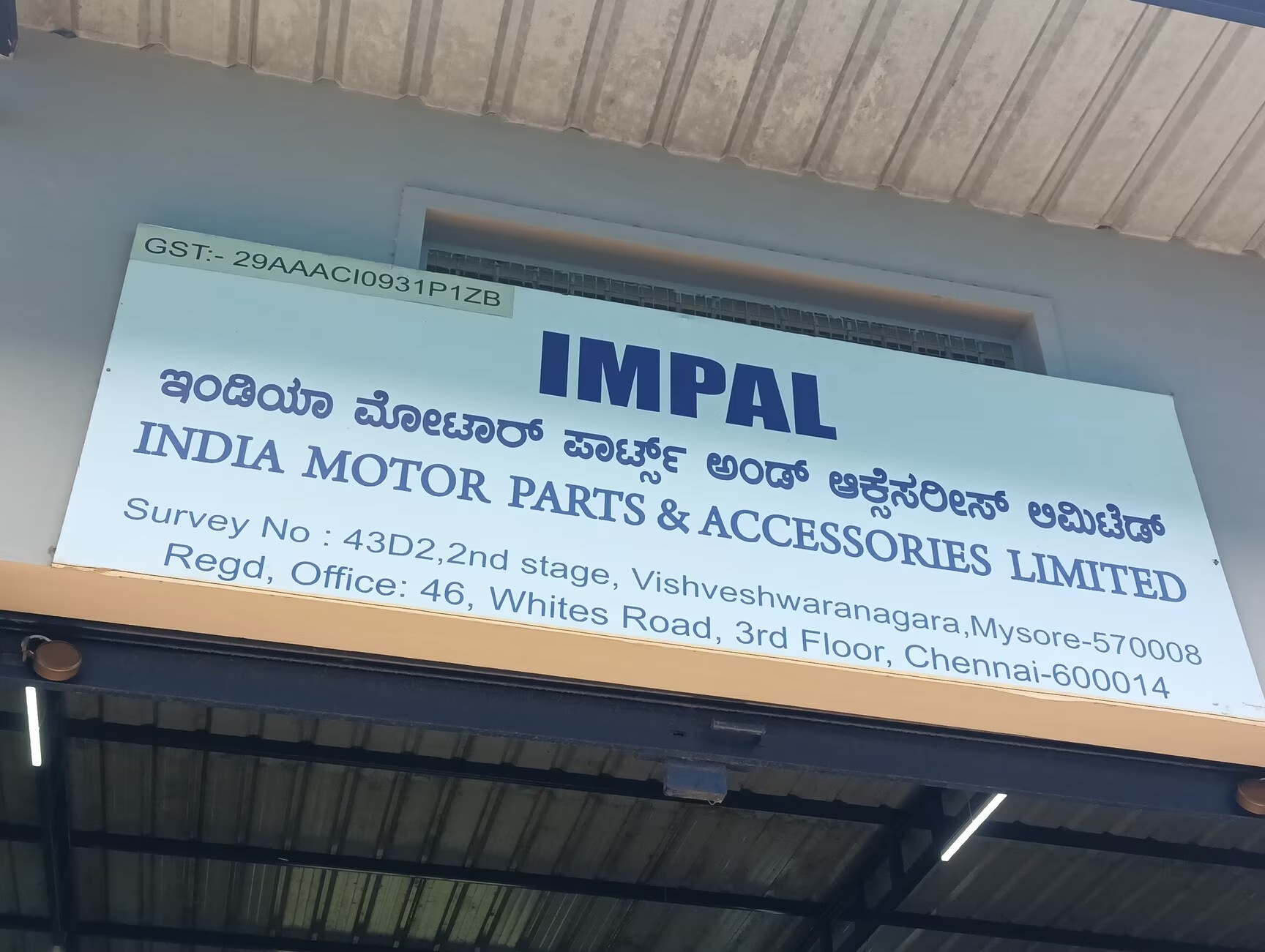
The numbers at India Motor Parts & Accessories Ltd (IMPAL) are a complete paradox that would make any conventional analyst squint in disbelief. Here is a company with a Market Cap of ₹1,276 crore, yet it sits on a mountain of investments valued at ₹2,075 crore as of March 2026. This isn’t a typo. The market is essentially valuing the core distribution business—a pan-India network of 81 branches and over 18,000 dealers—at a negative value.
While the surface looks like a “deep value” goldmine, the internal mechanics tell a story of extreme conservatism and stagnant capital efficiency. The ROCE stands at a measly 5.03%, a figure that would barely beat a savings bank account in some years. This is primarily because the Balance Sheet is bloated with long-term investments in TVS Group (TSF Group) entities like Sundaram Finance and Royal Sundaram, which are recorded at cost or fair value but don’t generate immediate operating cash flow for IMPAL’s trading arm.
The revenue growth is another area of concern, crawling at a 10-year CAGR of just 5%. In a country where the automobile sector has exploded over the last decade, IMPAL’s growth feels like it’s stuck in the slow lane. However, the company is debt-free and maintains a dividend payout of 43%, acting more like a holding company for the TSF Group than a high-octane auto parts distributor.
Is this a hidden treasure chest of the TVS legacy, or a value trap where capital goes to sleep? The massive gap between the Book Value of ₹1,850 and the Market Price of ₹1,022 suggests the market has serious questions about when, if ever, this value will be unlocked.
2. Introduction
India Motor Parts & Accessories Ltd (IMPAL) is a veteran in the Indian automotive aftermarket. Part of the prestigious T.S. Santhanam Group (a faction of the TVS Group), the company has spent decades building a distribution moat that is hard to replicate.
They don’t manufacture a single bolt. Instead, they are the vital bridge between 50+ high-profile manufacturers—like Brakes India and Sundram Fasteners—and the thousands of local mechanics and retailers across India. With a network of ~78-81 branches and a staggering 23,000 dealers (as per latest credit reports), they own the “last mile” of the spare parts world.
The company’s history is deeply intertwined with the TVS family restructuring of FY21. This exercise allowed different branches of the family to consolidate control over specific entities. For IMPAL, this resulted in a stable promoter structure, but it also cemented its role as a strategic investment vehicle for the group.
Financially, the company is a fortress. It has zero debt and a current ratio of 9.10, which is almost unheard of in the trading business. But this fortress is also a bit of a prison; the management’s refusal to leverage or aggressively expand has led to a decade of lackluster top-line growth.
If you are looking for a high-growth tech-style trajectory, you are in the wrong place. This is a story about legacy, safety, and a massive pile of undervalued assets hidden in plain sight.
3. Business Model – WTF Do They Even Do?
Think of IMPAL as the “Amazon” of heavy-duty auto parts, but without the fancy website and with a lot more grease. They are a pure-play trading and distribution house.
The Middleman Moat
They buy spare parts in bulk from the big boys—Brakes India, Rane (Madras), Sundram Fasteners, and ZF Commercial Vehicle. They then ship these parts to their 81 branches and eventually to 18,000+ dealers. If a truck breaks down in a remote village in Tamil Nadu or a tractor stops working in Punjab, there is