1. At a Glance – The Glow-Up Quarter That Broke the Internet
₹9,787 crore market cap.
₹301 share price.
Stock P/E: 63.4.
Price-to-book: 7.72x.
ROCE: 7.44%.
ROE: 5.51%.
And then Q3 FY26 walks in like a viral reel.
Revenue: ₹602 crore.
EBITDA: ₹66 crore (151% YoY growth).
PAT: ₹50 crore (92.9% YoY growth).
EBITDA margin jumps to 10.9% from 5%.
This is the highest-ever quarterly revenue reported by the company.
So yes, the brand that sells sunscreen and serums has suddenly decided to apply operating leverage to itself.
But here’s the catch — this beauty influencer of Dalal Street is trading at 63x earnings with single-digit ROCE.
Are we looking at India’s next FMCG powerhouse?
Or a growth story still learning how to moisturize its margins?
Let’s remove the makeup and look at the numbers.
2. Introduction – From D2C Darling to Dalal Street Drama
Honasa Consumer Limited was incorporated in 2016.
In startup years, that’s basically kindergarten.
But in less than a decade, Honasa built a house of brands that includes:
- Mamaearth
- The Derma Co.
- Dr. Sheth’s
- BBlunt
- Aqualogica
- Staze
- Ayuga
Mamaearth alone contributed 43% of FY23 revenue.
The company positions itself as India’s largest digital-first beauty and personal care (BPC) company by revenue in FY24.
Digital-first. That means Instagram-first. Influencer-first. Algorithm-first.
65% of revenue comes from online channels.
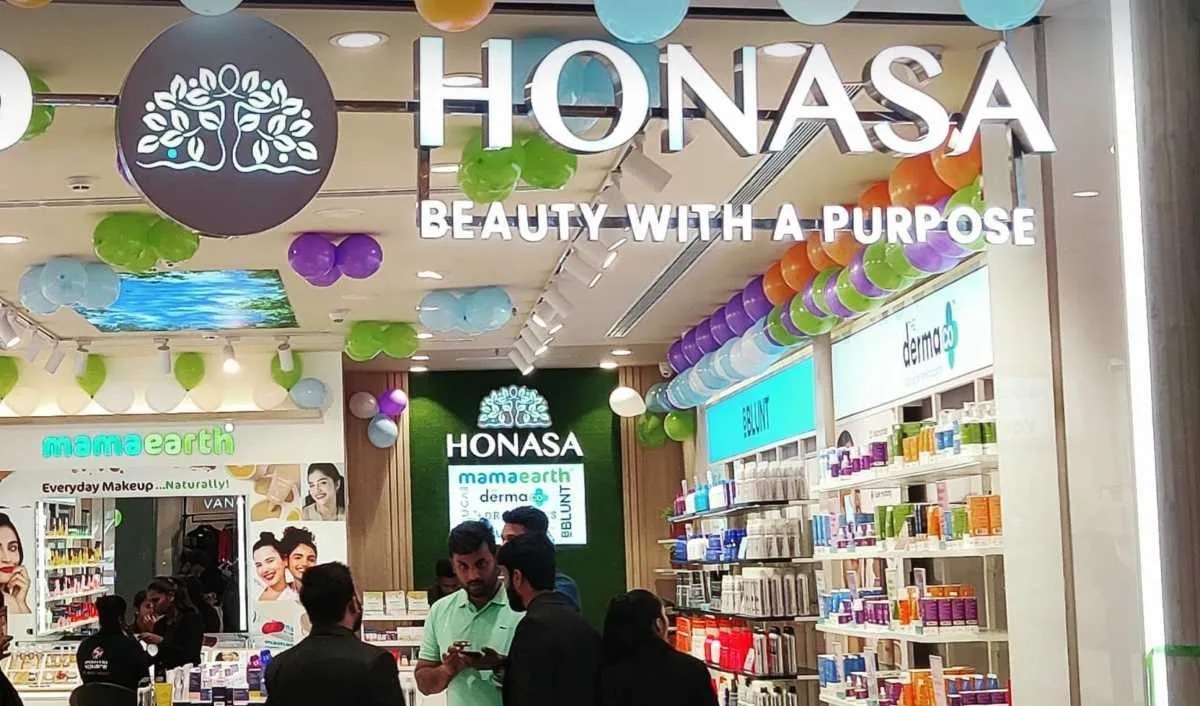
Offline distribution now spans 2,70,000+ retail outlets and 10,000+ pin codes.
So this is no longer just a D2C startup. It’s trying to become a full-fledged FMCG operator.
But here’s the tension:
Traditional FMCG giants grow at 8–12% with 20%+ ROCE.
Honasa is growing faster — but returns are still modest.
So what are they really selling? Products? Hype? Or scalable profitability?
3. Business Model – WTF Do They Even Do?
Honasa operates a house-of-brands model in beauty and personal care.
Product Categories:
- Skin care (face wash, serums, sunscreens)
- Hair care (shampoo, conditioners)
- Body care
- Baby & kids care
- Oral care
- Color cosmetics
They launched 122 products in CY23 — contributing 18% of revenue.
122 products.
That’s not innovation. That’s SKU warfare.
They maintain 13 warehouses across 7 districts.
200+ direct distributors.
Negative working capital cycle of 9 days.
Negative working capital is FMCG royalty behavior. It means