1. At a Glance
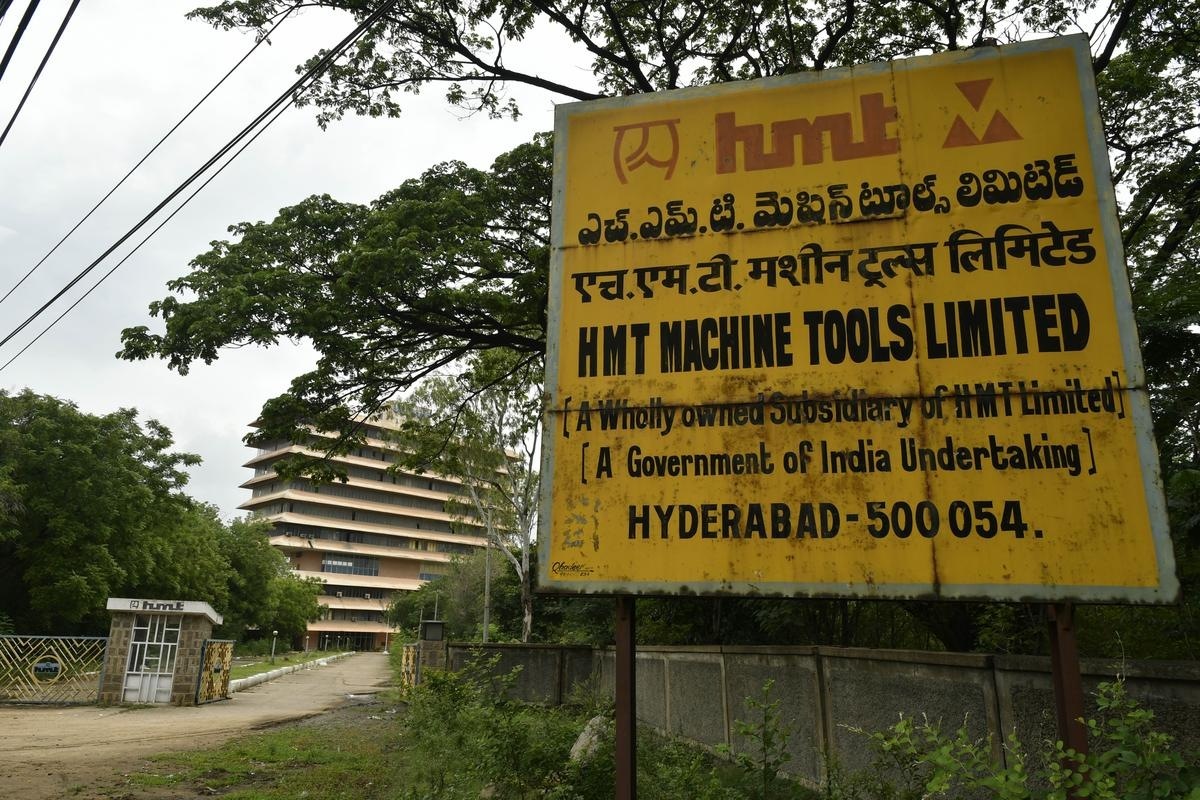
Once upon a time, HMT was to India what Rolex was to Switzerland. Now, it’s the government’s most expensive nostalgia project — clocking losses faster than its dead watches could tick. In Q2FY26, this Central PSU under the Department of Heavy Industries reported a quarterly sales of ₹25.8 crore (down 37.9% YoY) and a loss of ₹39.1 crore, extending its lifelong losing streak.
The company’s Operating Profit Margin (OPM) stands at a majestic -117%, as if management mistook losses for Olympic scores. Market Cap is still a respectable ₹1,796 crore, probably because retail investors believe “HMT” still makes watches. Debt remains towering at ₹1,029 crore, with a current ratio of 0.20 (which means if HMT owes you ₹100, it has ₹20 to give… in dreams).
Promoters — the Government of India — hold 93.7%, because nobody else wants that responsibility. ROE, ROCE, P/E? Not applicable. Because you can’t divide by zero when there’s no E.
2. Introduction – The Vintage PSU That Refuses to Die
If there’s a Museum of Lost Indian Dreams, HMT deserves a separate wing — between BSNL and Air India’s old Maharaja chairs.
Born in 1953 as Hindustan Machine Tools, the company was India’s pride, symbolizing self-reliance in manufacturing. It built machine tools, tractors, and, of course, the iconic HMT watches that made dads across the 80s beam with pride. Fast forward to 2025 — the watches are dead, tractors are gone, and machine tools are coughing under government ventilator support.
In FY25, HMT somehow managed sales of ₹119 crore but a loss of ₹151 crore, proving that even nostalgia has limits. Its subsidiaries — HMT Machine Tools Ltd and HMT International Ltd — now carry the operational torch, or perhaps just the ashes.
But let’s give credit where due: the government finally decided to sell off land from the dead divisions (HMT Watches, Bearings, Chinar, Tractors). They even booked a profit of ₹226 crore in FY20 by selling 446 acres to HSIIDC and Indian Railways — basically turning graveyards into real estate.
So yes, HMT might be broke, but it’s also sitting on prime land. And in India, land is often the only asset keeping a PSU’s obituary on hold.
3. Business Model – WTF Do They Even Do?
At this point, even seasoned investors ask: “Wait, what does HMT still make?”
Answer: Machine tools (81% of revenues), food processing equipment (9%), and projects/export services (10%). Basically, they make the machines that make other machines — and sometimes, they make headlines for fines.
The Machine Tools division builds everything from basic lathes to CNC systems. In its glory days, HMT supplied half the machines used by India’s industrial sector. Now, it’s more like the last uncle at a wedding insisting he can still dance. The subsidiary HMT Machine Tools Ltd carries this segment, reportedly having built 100,000+ machines since inception — many still running in Indian factories that time forgot.
The Food Processing division makes machinery like milk pasteurizers, bottle sterilizers, and separators — basically, they can process everything except profits.
Then comes HMT International, handling export projects and government assignments abroad — like setting up vocational training centres under