1. At a Glance
When you see a company with “Electro” and “Mech” in its name, you expect something futuristic — maybe robots, or EV chargers. But no, H.M. Electro Mech Ltd (HMEL) prefers old-school, heavy-duty business: pumps, pipes, and public contracts. Based in Gujarat, it’s an EPC player that can install a water pipeline faster than your local plumber can fix a tap.
At ₹56.6 per share, the company is valued at ₹77.5 crore, with a P/E of 10.5x, ROCE of 22.4%, and ROE of 17.1% — the kind of financials that scream “solid contractor, but don’t expect fireworks.” Sales for FY25 TTM stand at ₹110 crore, with PAT of ₹7.39 crore, and Operating Margin at 10.2%.
In H1FY25, the company clocked ₹34 crore in sales and ₹2.37 crore in profit, a 25.6% drop QoQ and 29% dip in profit — possibly due to monsoon season delays or government payment lag. Still, HMEL continues to execute 37 ongoing projects worth ₹410 crore, with ₹227 crore revenue already recognized, proving that this water-warrior isn’t drying up anytime soon.
So, what’s flowing inside H.M. Electro Mech — clean contracts or murky municipal money? Let’s pump into it.
2. Introduction
There’s a running joke in infrastructure — the only things that flow faster than water are tenders. And H.M. Electro Mech Ltd seems to be riding this flow very efficiently. Incorporated in 2003, HMEL has mastered the art of turnkey projects, particularly those involving pumping machinery, pipelines, and public sector contracts.
Think of them as the government’s plumber-in-chief — laying pipes across Gujarat, Rajasthan, and Maharashtra, and making sure water (and invoices) reach the right destination.
Post its ₹27.7 crore IPO in January 2025, the company’s stock surged briefly, touching ₹101 before reality (and a few unpaid invoices) brought it down to ₹56. Still, the IPO wasn’t a bad idea — it strengthened working capital, which for an EPC firm means “cash to chase government dues.”
HMEL’s business model is like that of a railway contractor meets a water engineer — half machinery, half patience. Its projects often involve SITC (Supply, Installation, Testing, and Commissioning) of pumping systems, O&M contracts, and the sale of equipment like pumps, transformers, and motors. Basically, if it moves water or current, HMEL’s got it covered.
But how does a smallcap EPC company keep the lights on when government departments pay like your local cable guy — only after a dozen reminders? Let’s decode.
3. Business Model – WTF Do They Even Do?
HMEL runs on two main fuel tanks — Work Contract Services and Product Sales.
Work Contract Services (78% of revenue):
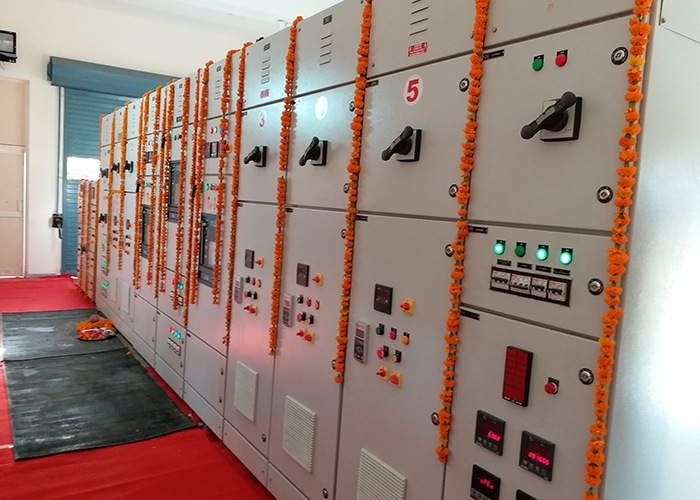
These are large-scale projects where HMEL takes care of the entire setup — from designing and installing pump houses to laying kilometers of pipelines and connecting them to municipal water systems. The company even handles railway electrification and PLC-SCADA system integration, meaning it blends water engineering with automation tech.
O&M Services (5%):
This is the steady cash-flow generator — annual maintenance contracts for the very systems HMEL sets up. Think of it as AMC for your RO purifier, except this one’s worth crores and runs city-wide.
Product Sales (17%):
HMEL also sells pumps, pipes, motors, and transformers, acting as an authorized dealer for WILO Mather and Platt Pumps Pvt. Ltd. — a solid OEM tie-up that gives it credibility and margin cushions.
Geographically, the business is extremely Gujarat-heavy (84.4% of FY24 revenue), with Rajasthan (6.8%) and Maharashtra (8.2%) making up the rest. Translation: one