1. At a Glance
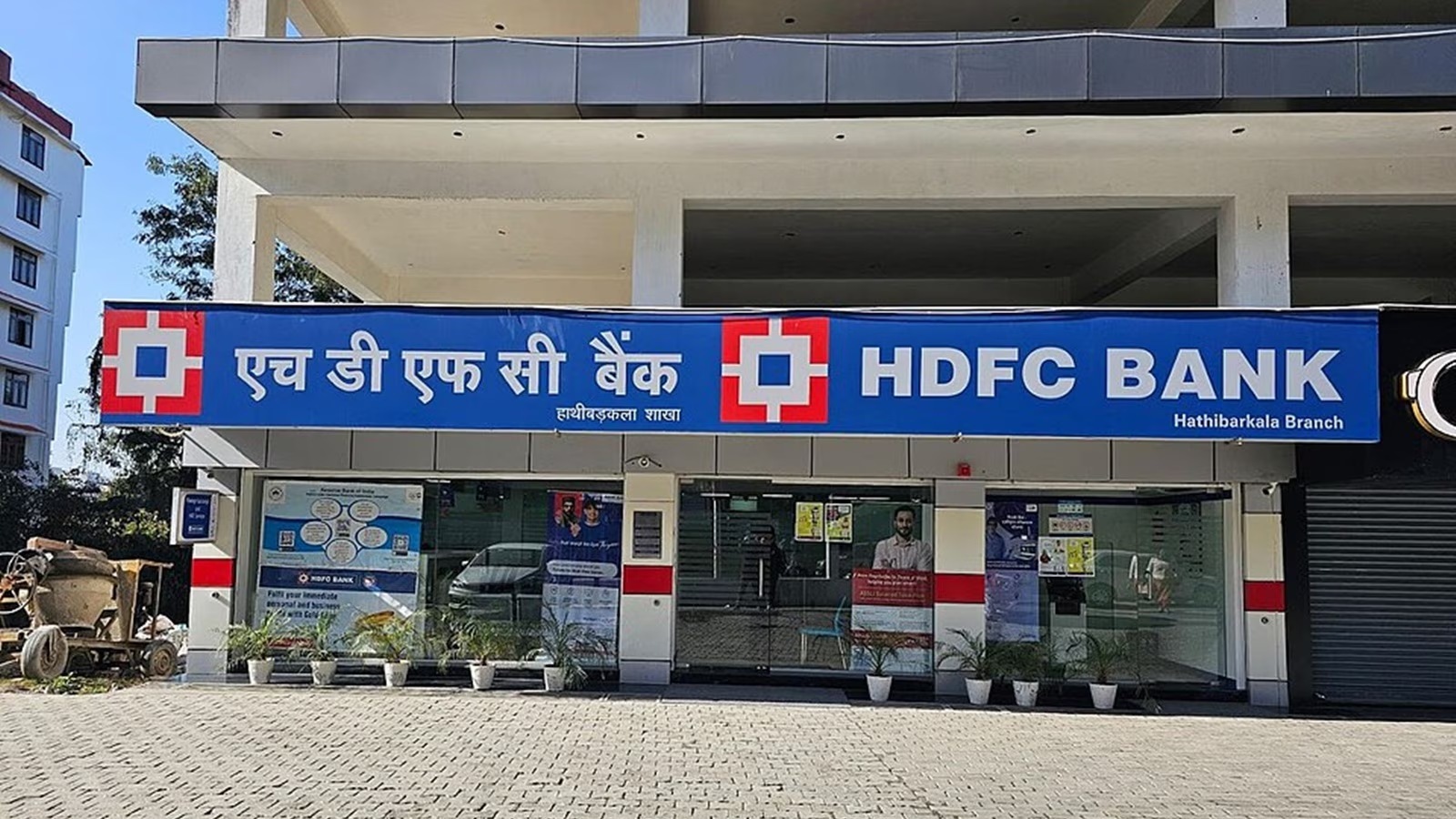
There are banks. Then there is HDFC Bank, the giant that is now so large it practically has its own weather system. This is a bank with nearly ₹49 lakh crore in consolidated assets, over 9,600 branches, 21,000+ ATMs, 100 million customers, insurance arms, mutual funds, broking, NBFCs, and enough subsidiaries to make some midcap holding companies look like kirana stores.
And yet, despite reporting FY26 consolidated profit of ₹76,026 crore, dividend of ₹15.5 per share, GNPA down to 1.15%, and capital adequacy near 20%, the stock is still sitting around ₹800, down nearly 16% over one year.
Why?
Because the market has become deeply suspicious of large banks after the merger with HDFC Ltd. Growth slowed. CASA ratio slipped. Margins compressed. Chairman drama arrived. Anonymous social media allegations showed up. Then Atanu Chakraborty resigned with language around “values” and “ethics,” which caused investors to behave like someone found termites in the foundation.
Management spent an entire call practically saying: “Nothing is wrong, please stop panicking.”
The board described the resignation as “baffling.” Keki Mistry suggested it may have been interpersonal rather than operational. Sashidhar Jagdishan kept repeating that trust and integrity are the bank’s biggest assets. Which is reassuring, but also slightly concerning because usually when someone keeps saying “everything is fine,” retail investors start checking where the fire extinguisher is.
The real irony is this: HDFC Bank today is stronger financially than many investors think, but weaker emotionally than many investors want. It has become too big to fail, too big to grow explosively, and too important for the system to be ignored. CARE still rates it AAA and calls it systemically important. RBI continues to back it. Capital levels remain very comfortable. Asset quality is strong. Profitability is healthy.
But the market no longer gives HDFC Bank a premium just because it exists.
Now it has to earn it again.
2. Introduction
For years, HDFC Bank was the perfect Indian banking story.
Consistent growth. Predictable management. Strong CASA. Low NPAs. High valuation. Investors would happily pay 4x book value because the bank was treated like a banking version of a luxury brand.
Then came the merger with HDFC Ltd in July 2023.
Suddenly, the bank inherited a mountain of home loans, term deposits, higher borrowings, a higher credit-deposit ratio, and lower margins. It became larger, but also heavier.
The old HDFC Bank was like a marathon runner.
The new HDFC Bank is like a marathon runner carrying a refrigerator.
Yes, it is still running. But nobody is pretending it is effortless anymore.
The biggest issue after the merger has been the deposit side. CASA ratio has fallen from around 38% to 34%. Credit-deposit ratio jumped above 100% post merger and only recently improved to around 98.6%. Net interest margins have also drifted lower to around 3.2%-3.5%.
Still, there are reasons not to underestimate the bank.
Gross advances are now close to ₹29.6 lakh crore. Deposits crossed ₹31 lakh crore. Net worth has crossed ₹5.46 lakh crore. PAT for FY26 reached ₹74,671 crore standalone and ₹76,026 crore consolidated.
That is not a weak bank.
That is a bank generating more annual profit than the market cap of many listed companies.
So the real question is not whether HDFC Bank is broken.
The question is whether investors are underestimating how long it takes to digest a merger of this size.
3. Business Model – WTF Do They Even Do?
At its core, HDFC Bank does what all banks do.
It borrows money cheaply from depositors and lends it at a higher rate to borrowers.
But unlike smaller banks that depend on one or two products, HDFC Bank earns from almost every corner of the financial ecosystem.
Retail banking contributes 42% of revenue mix, wholesale banking contributes 23%, insurance business 17%, treasury 10%, and others 8%.
This means the bank is not just relying on loans.
It is making money from insurance, mutual funds, brokerage, treasury gains, forex, cards, fees, distribution, and every possible cross-sell opportunity available. One customer can have a savings account, home loan, life insurance, SIP, demat account, credit card, and car loan — all under the same umbrella.
That is why the subsidiaries matter so much.
HDB Financial Services is the shadow banking arm.
HDFC Life Insurance Company is the life insurance engine.
HDFC ERGO General Insurance handles general insurance.
HDFC Asset Management Company runs the mutual fund business.
HDFC Securities handles broking and investment services.
These subsidiaries are becoming mini